
Active Recall Study Simulator
How to use: Instead of reading the answer immediately, force your brain to struggle and retrieve the information first. This creates the "cognitive strain" necessary for long-term memory.
Loading question...
Click the card to reveal the answer
Here is the reality: your brain is designed to forget. It's a survival mechanism to clear out useless clutter. To convince your mind that a chemistry formula or a historical date is actually important, you have to create 'cognitive strain.' The harder it is to remember something right now, the more likely it is to stick for the exam.
Quick Wins for Faster Memorization
- Stop Re-reading: It creates an illusion of competence. You feel like you know it because it looks familiar, but you can't produce it from scratch.
- Test Yourself First: Try to answer a question before you've even studied the material. This primes your brain to look for the answer.
- Change Your Environment: Study the same topic in two different rooms. This prevents your memory from becoming tied to a specific desk or smell.
The Gold Standard: Active Recall
If there is one single thing you change about your study routine, make it this. Active Recall is a study method where you actively stimulate your memory for a piece of information rather than passively reviewing it. Instead of reading your notes, you close the book and ask yourself: "What were the three main causes of the French Revolution?"
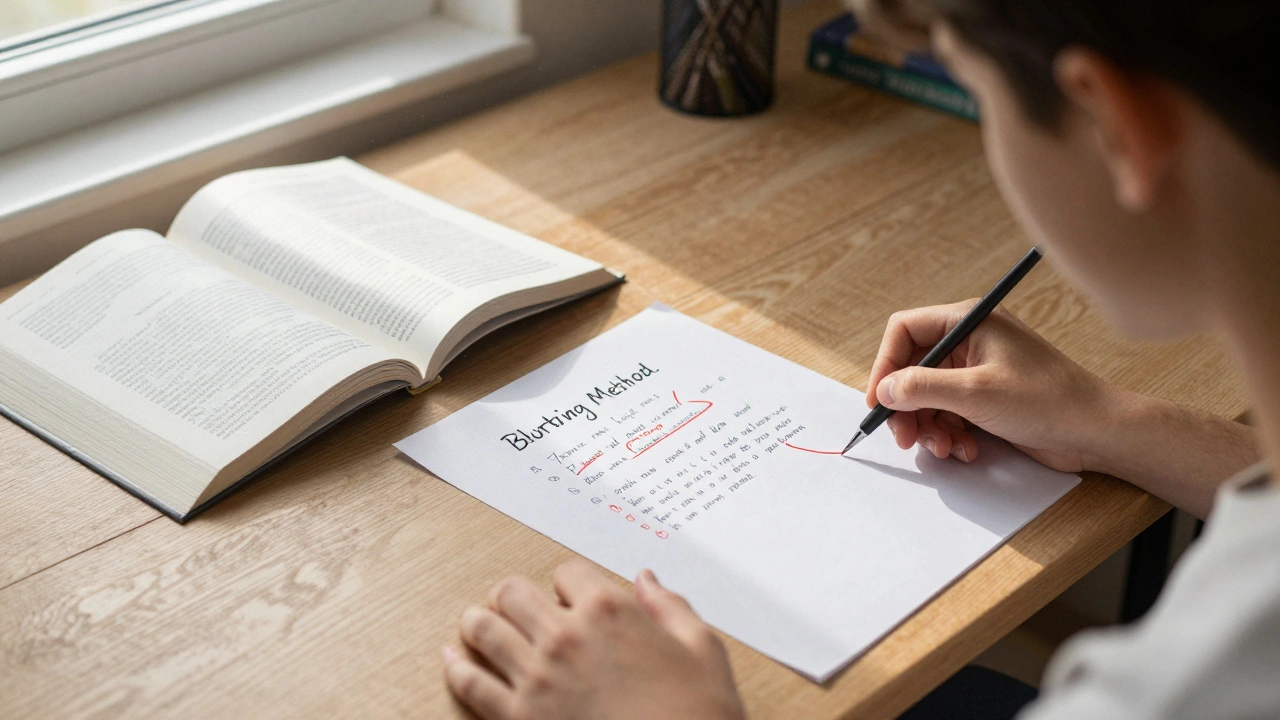
When you struggle to remember, your brain strengthens the neural pathways associated with that data. It's like a workout for your neurons. If you just read the answer, you're not lifting any weight. To implement this, try the "Blurting Method." Read a page of your textbook, close it, and write down everything you can remember on a blank sheet of paper. Only then go back and use a red pen to fill in what you missed. That gap in your knowledge is exactly where you need to focus your energy.
Beating the Forgetting Curve with Spaced Repetition
You might memorize a list of vocabulary words today, but by Tuesday, half of them are gone. This is the "Forgetting Curve," a concept pioneered by Hermann Ebbinghaus, a psychologist who discovered that memories fade rapidly unless they are consciously reviewed at specific intervals.
To fight this, you use Spaced Repetition, a technique where reviews are spaced out over increasing intervals of time to maximize long-term retention. Instead of cramming for 10 hours on Sunday, study for 1 hour on Sunday, 1 hour on Tuesday, and 1 hour on Friday. This forces your brain to almost forget the information before you bring it back, which makes the memory much deeper.
| Method | Action | Brain Effort | Retention Rate |
|---|---|---|---|
| Highlighting | Marking text with colors | Low | Low (Short-term) |
| Re-reading | Reading chapters multiple times | Low | Medium (Illusion of knowledge) |
| Flashcards | Question on front, answer on back | High | High (Long-term) |
| Teaching Others | Explaining a concept to a peer | Very High | Very High (Mastery) |
The Feynman Technique for Complex Concepts
Sometimes you can memorize a definition, but you don't actually understand it. If you can't explain it simply, you don't know it. This is where the Feynman Technique, a four-step process for learning a concept by explaining it in plain language as if to a child, comes in.
Start by writing the name of the concept at the top of a page. Now, write an explanation of it using the simplest language possible. Avoid using technical jargon. If you hit a wall where you start using big words to hide a lack of clarity, that is your "knowledge gap." Go back to the source material, relearn that specific part, and then simplify the explanation again. When you can explain Quantum Entanglement or Photosynthesis to a ten-year-old, you've officially memorized the core logic, not just the words.
Mnemonic Devices and Mental Pegs
For the purely boring stuff-like lists of elements or legal statutes-you need shortcuts. Mnemonics are memory aids that associate complex information with easy-to-remember patterns, images, or phrases.
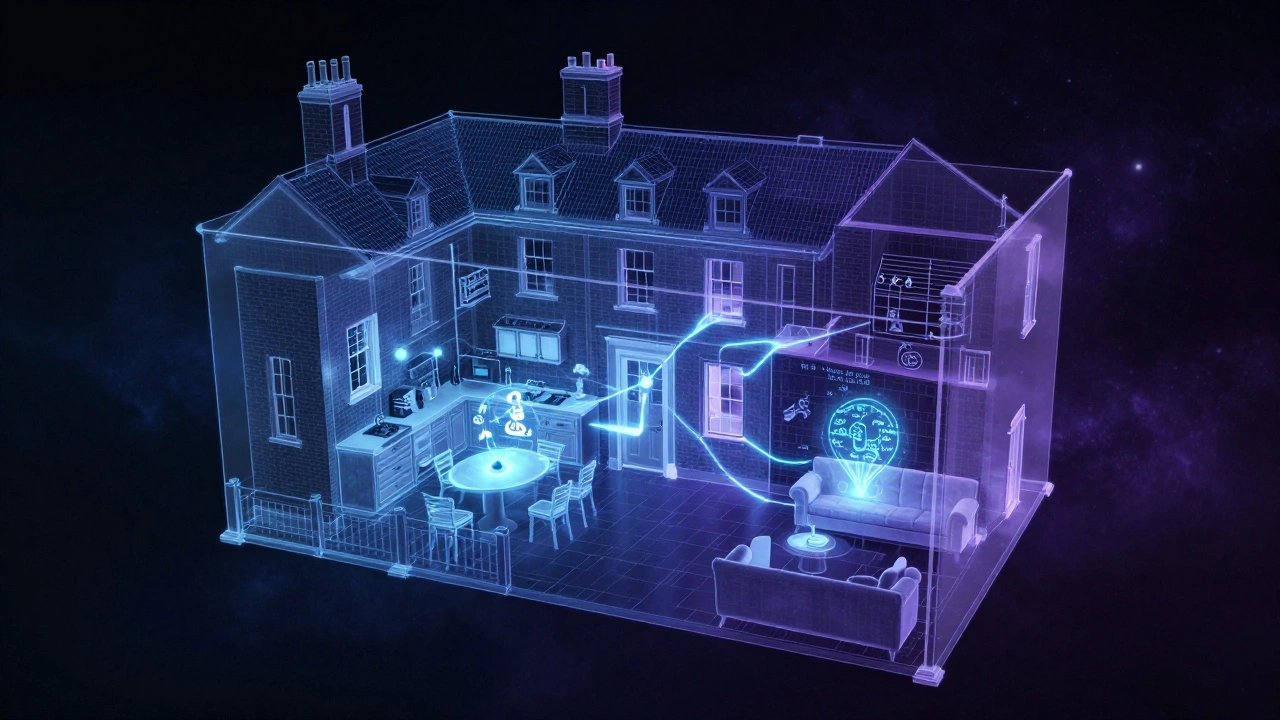
One of the most powerful is the "Memory Palace" (or Method of Loci). Imagine a place you know perfectly, like your childhood home. Now, mentally "place" pieces of information in specific spots. If you need to remember a list of five historical events, imagine the first event is happening on your front door, the second is on the kitchen table, and the third is in the sink. When you're in the exam, you just mentally walk through your house and "pick up" the facts. It works because the human brain is evolved to remember spatial locations far better than abstract text.
Optimizing Your Biology for Memory
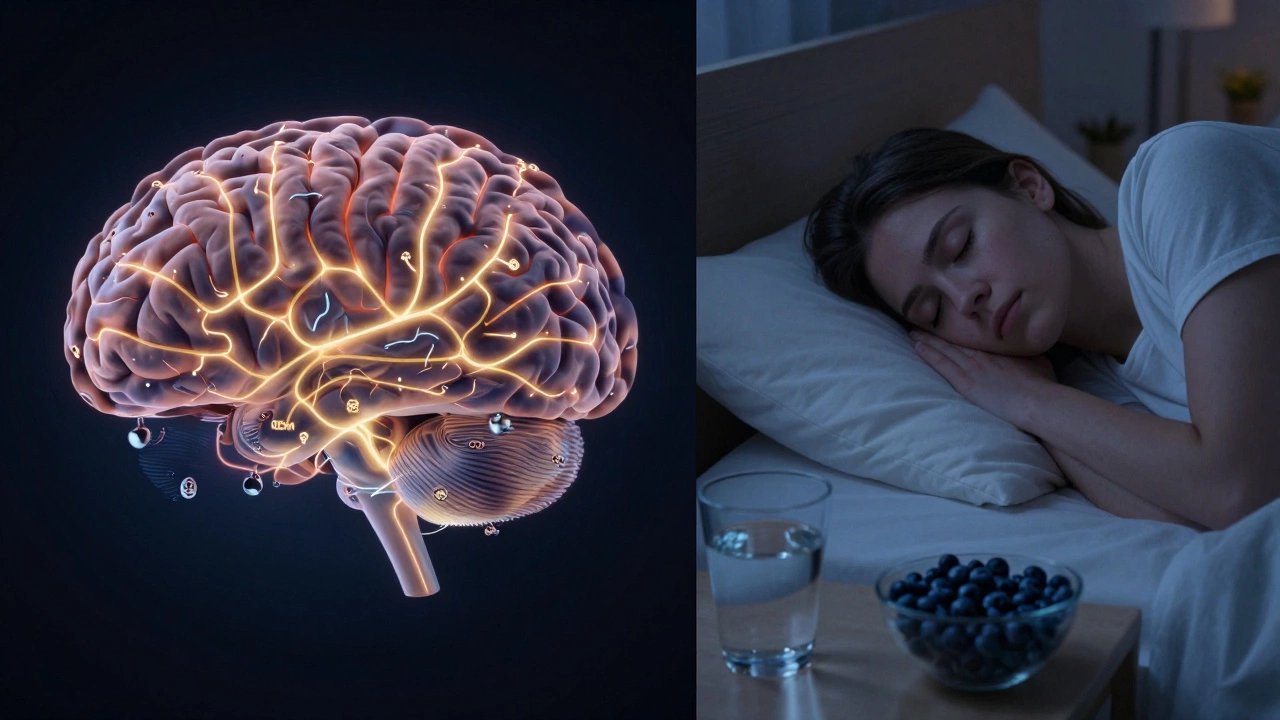
You can use all the techniques in the world, but if your brain is starved of sleep, none of it will stick. Memory consolidation happens during REM Sleep, the stage of sleep where the brain processes information and cements memories from the day. Pulling an all-nighter is the fastest way to ensure you forget everything you just studied. Your brain literally cannot move information from short-term to long-term storage without sleep.
Similarly, keep an eye on your hydration and blood sugar. The brain consumes about 20% of your body's energy. If you're crashing from a sugar spike or dehydrated, your focus drops, and your memorize faster for exams strategy will fail. Opt for slow-release energy like nuts or berries instead of energy drinks, which often cause a crash right when you need to be peak-performing.
How many hours should I study before an exam?
It is less about the total hours and more about the distribution. Studying 2 hours a day for 5 days is vastly superior to studying 10 hours in one day. This is due to the spacing effect, which prevents mental fatigue and allows for better memory consolidation during sleep.
Do flashcards actually work for everyone?
Yes, provided they are used for active recall. The mistake most people make is reading the answer and saying "Yeah, I knew that." To make them work, you must force yourself to say the answer out loud or write it down before flipping the card. Digital tools like Anki use algorithms to automate the spacing of these cards.
What is the best time of day to memorize new information?
For most people, early morning is best for high-concentration tasks because the brain is rested. However, some studies suggest that reviewing information shortly before sleep can enhance retention, as the brain begins processing that data immediately during the first sleep cycles.
How do I stop getting distracted while studying?
Use the Pomodoro Technique: 25 minutes of deep focus followed by a 5-minute break. This keeps your brain fresh and prevents the "burnout" feeling that leads to scrolling through your phone. Put your phone in another room entirely; even having it face down on the desk reduces cognitive capacity.
Can I use these methods for essays, not just multiple choice?
Absolutely. For essays, use Active Recall to memorize your thesis points and key evidence. Use the Feynman Technique to ensure you understand the logical flow of your argument. Instead of memorizing a full essay, memorize a "skeleton" of bullet points and practice expanding them into paragraphs.
Next Steps for Your Study Plan
If you're feeling overwhelmed, don't try to implement all of this at once. Start with a simple shift: spend 30% of your time reading and 70% of your time testing yourself. If you have a massive amount of data to cover, download a spaced-repetition app and start building a deck of flashcards today. Remember, the goal isn't to spend more time studying, but to make the time you do spend more intense and effective. The more you challenge your brain to retrieve information, the more confident you'll feel when you finally open that exam paper.