

When your child is struggling in math or your teenager is drowning in essay deadlines, the first question that pops up is often: private tutoring better? It’s a simple question, but the answer isn’t. You’re not just choosing a person to sit with your kid-you’re deciding how, when, and if learning should change.
Private tutoring isn’t magic. It’s targeted.
Think of a classroom. One teacher. Thirty students. One lesson plan. That’s not personal. That’s logistics. In a typical high school class, a student might only get called on once every two weeks. If they’re quiet, or confused, or just slow to catch on, they vanish into the background. Private tutoring flips that. It’s not about more hours-it’s about focused attention. A tutor sees exactly where the gap is. Maybe it’s not that the student doesn’t understand fractions. Maybe they never fully got decimals, and now algebra feels like a foreign language. A tutor traces it back. They don’t rush. They don’t move on until the student can explain it in their own words.
That’s the difference. A tutor doesn’t teach the curriculum. They teach the student.
What private tutoring actually fixes
Let’s say your kid gets a C on a science test and you assume they need more study time. But when you ask them what they didn’t get, they say, “I just didn’t understand the teacher.” That’s not laziness. That’s misalignment. Teachers follow pacing guides. They have to. Tutors don’t. A tutor can pause. They can draw it out. They can use a different analogy. One student I worked with in Adelaide couldn’t grasp photosynthesis until we compared it to a kitchen-chlorophyll as the chef, sunlight as the stove, CO2 and water as the ingredients. She passed her next test with an A.
Private tutoring fixes:
- Confusion that’s been building for months
- Shyness or anxiety that stops questions in class
- Learning styles that don’t match the school’s method
- Missed foundational skills from earlier grades
- Test anxiety that tanks performance even when the student knows the material
It doesn’t fix poor study habits overnight. It doesn’t replace motivation. But it creates the space for both to grow.
Who benefits most from private tutoring?
Not everyone needs it. And not everyone benefits equally.
Students who gain the most from one-on-one tutoring usually fall into one of these groups:
- Struggling learners-those who’ve fallen behind and feel stuck. A tutor rebuilds confidence by showing them they can understand it, one step at a time.
- High achievers-students who want to go beyond the syllabus. They might be preparing for scholarships, Olympiads, or just want to explore deeper. A tutor can tailor content to their curiosity.
- Students with learning differences-dyslexia, ADHD, processing delays. Classroom pacing often doesn’t accommodate them. A tutor can adjust speed, format, and tools to fit how their brain works.
- Students in transition-moving to a new school, switching systems (like from IB to VCE), or starting senior years. A tutor helps bridge the gap without the pressure of keeping up in class.
For average students who are keeping up? Tutoring often feels like extra work. It’s not useless-but it’s not always the best use of time or money.
How tutoring compares to classroom learning
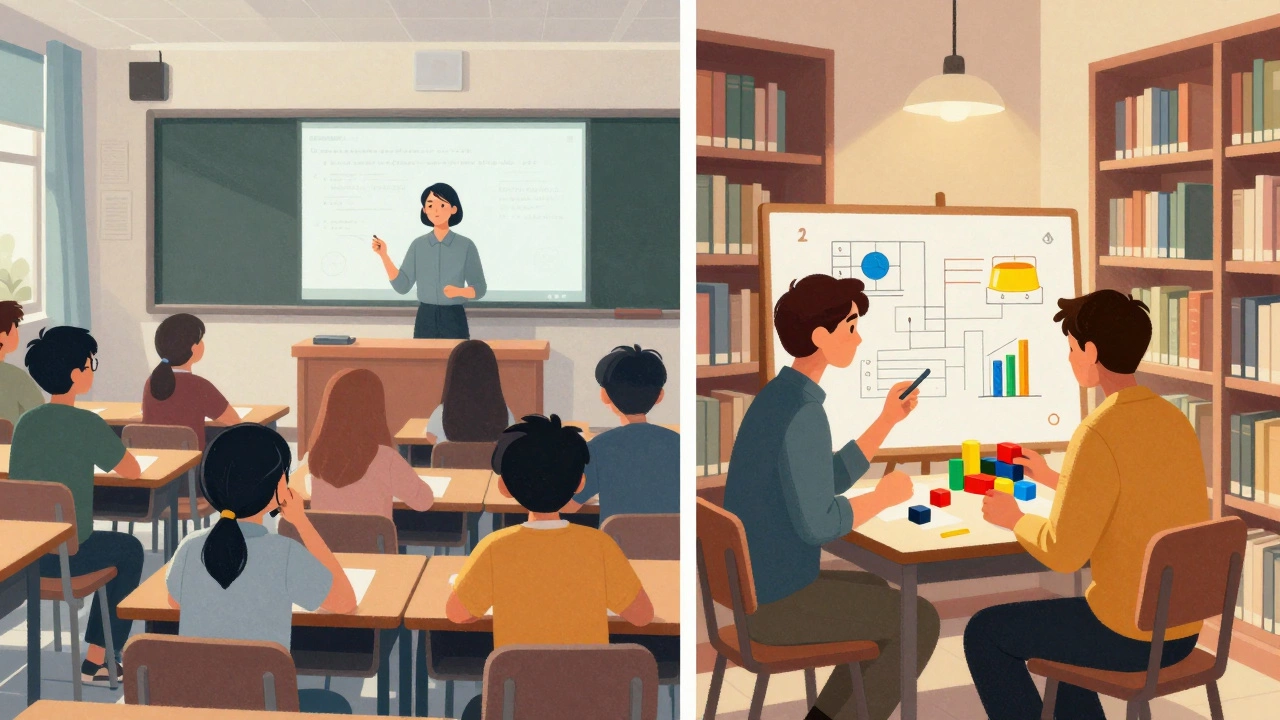
Here’s the truth: classrooms aren’t broken. They’re built for scale. Tutors are built for depth. You can’t compare them directly-you need to ask: what’s the goal?
| Factor | Private Tutoring | Classroom Learning |
|---|---|---|
| Attention | 100% focused on one student | Divided among 25-30 students |
| Pacing | Adjusts to the student’s speed | Fixed by curriculum schedule |
| Feedback | Immediate, specific, and ongoing | Delayed, general, often written |
| Cost | $30-$80/hour (Australia, 2025) | Free (public schools) |
| Peer interaction | Minimal or none | Core part of learning |
| Long-term retention | Strong when paired with practice | Varies-depends on student engagement |
Classrooms teach collaboration, communication, and how to learn in groups. Tutoring teaches mastery. Neither is better. They serve different purposes. The question isn’t “which is better?” It’s “which one does my child need right now?”
What private tutoring doesn’t fix
Some parents think hiring a tutor means their kid will suddenly love school. That’s not how it works.
A tutor can’t:
- Replace a child’s motivation
- Fix poor sleep or nutrition
- Overcome severe anxiety without professional support
- Make up for years of disengagement in one semester
- Act as a therapist or life coach
If your child hates school because they feel invisible, a tutor might help with grades-but not with their sense of belonging. If they’re burned out from too many extracurriculars, more lessons won’t help. Tutoring is a tool, not a cure-all.
How to know if it’s working
Don’t wait for report cards. Look for smaller signs.
After four to six weeks of tutoring, ask yourself:
- Does your child talk about what they learned-not just “I had tutoring”?
- Do they ask questions in class now?
- Are they starting to self-correct mistakes instead of just guessing?
- Do they seem less stressed about tests?
- Have they started doing homework without being reminded?
If the answer is yes to three or more, you’re on the right track. If they’re still dreading sessions, it’s time to reevaluate. Maybe the tutor’s style doesn’t fit. Maybe the timing’s wrong. Maybe they need a break.
There’s no rule that says tutoring must go on for a year. Sometimes, six weeks is enough to unlock a breakthrough. Then it’s time to step back and let them practice on their own.
What to look for in a tutor
Not every qualified teacher is a good tutor. Teaching a class is different from guiding one person.
Look for:
- Experience with your child’s curriculum (VCE, IB, NSW HSC, etc.)
- Ability to explain concepts in multiple ways
- Patience-not just tolerance, but genuine willingness to slow down
- Clear communication with you (not just with the student)
- Willingness to adjust goals and methods
Avoid tutors who:
- Only give worksheets and don’t explain why
- Act like they know everything and won’t admit when they’re unsure
- Don’t ask about your child’s interests or struggles outside school
- Charge too much without showing results
Ask for a trial session. Most tutors offer one. Use it to see how your child reacts-not just to the content, but to the person.
When to stop
It’s okay to quit. Many families keep tutoring because they feel guilty, not because it’s helping.
Stop if:
- There’s no progress after three months
- Your child resists every session
- The tutor isn’t communicating with you
- Your child is now confident and independent
Good tutoring ends when the student doesn’t need it anymore. That’s the win.
Alternatives to consider
Private tutoring isn’t the only option. Before you commit:
- Check if your school offers free after-school help or peer tutoring
- Try online platforms like Khan Academy or Quizlet for targeted practice
- Join a study group-sometimes learning with peers works better than one-on-one
- Use a learning coach instead of a subject tutor-someone who helps with time management and mindset, not just math
Some kids thrive with structure, not instruction. A learning coach might be cheaper and more effective than a subject tutor.
Is private tutoring worth the cost?
It depends. If your child is falling behind and needs personalized attention, yes. If they’re doing fine and just want a little boost, maybe not. For most families, tutoring is worth it only when it solves a specific problem-not as a general upgrade. Look for results, not hours spent.
Can private tutoring help with exam prep?
Absolutely. Many tutors specialize in VCE, IB, or HSC exams. They know the format, the marking criteria, and common traps. A good tutor will not just teach content-they’ll teach how to answer questions the examiners want to see. This is where tutoring shines: turning knowledge into marks.
How often should a student have tutoring sessions?
Once a week is standard for most students. Twice a week helps if they’re preparing for a big test or are significantly behind. More than that can lead to burnout. Quality matters more than frequency. One focused hour is better than three rushed ones.
Do tutors help with homework?
They should help students understand how to do homework-not do it for them. A good tutor will guide, ask questions, and point out mistakes. If a tutor is just checking answers or writing solutions, they’re not teaching. You’re paying for understanding, not completed assignments.
What’s the average cost of a private tutor in Australia in 2025?
In Adelaide and other major cities, expect $35-$75 per hour. Tutors with advanced degrees or exam-specialist experience may charge up to $90. Online tutors can be cheaper, around $25-$50. Always ask what’s included-some charge extra for materials or session recordings.
Final thought: It’s not about being better. It’s about being right.
Private tutoring isn’t the gold standard. It’s not the default. It’s not even always the best option. But when a student needs someone to see them-not their grade, not their behavior, not their label-then tutoring becomes more than a service. It becomes a bridge. A quiet, consistent, one-on-one bridge back to learning. And sometimes, that’s all it takes.