
Mental Health Impact Calculator
How Online School Affects Your Mental Health
This tool assesses potential mental health benefits of online learning based on factors discussed in the article.
Personal Factors
Your Mental Health Benefit Score
Recommendations
When the pandemic forced schools online in 2020, many parents hoped remote learning would be a temporary fix. But for thousands of students, it became a lifeline. Anxiety dropped. Panic attacks disappeared. Sleep improved. For some kids, stepping away from the hallway chaos, the lunchroom pressure, and the constant social monitoring didn’t just help-it saved their mental health.
Why Online School Reduces Anxiety for Many Students
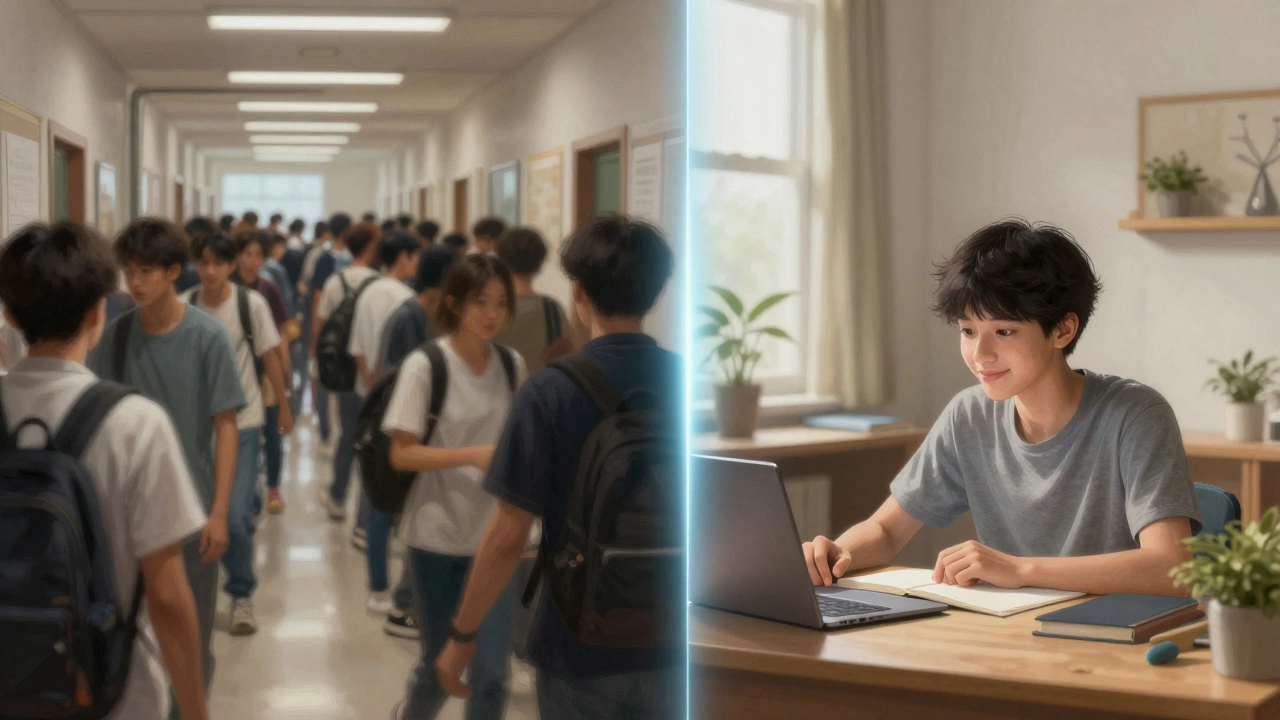
Traditional school environments are designed for neurotypical students who thrive on structure, group interaction, and physical presence. But that’s not the reality for a growing number of teens. A 2024 study from the University of Melbourne tracked 1,200 high school students who switched from in-person to online learning. Of those, 68% reported a significant drop in daily anxiety. Why? The triggers were simple: loud classrooms, crowded hallways, social hierarchies, and the fear of being called on unexpectedly.
Online school removes those stressors. No one is watching you fumble with your pencil. No one is whispering about your outfit. No one is waiting for you to fail. For students with social anxiety, autism, or trauma histories, that silence is healing.
The Hidden Cost of Social Pressure
Think about how often you’ve heard, "Just be yourself." Sounds easy, right? But try being yourself in a high school where your worth is measured by likes, lunch tables, and who you sit with at pep rallies. A 2023 survey by the Australian Institute for Health and Welfare found that 41% of teens in traditional schools reported being bullied weekly-online, in person, or both. For those students, online school isn’t a fallback-it’s an escape.
One 16-year-old from Adelaide, who asked to remain anonymous, told me: "I used to get sick every Monday. I’d throw up before school. When I switched to online, the vomiting stopped. I didn’t realize how much my body was screaming until it finally got quiet."
That’s not rare. Chronic stress in school triggers real biological responses: elevated cortisol, disrupted sleep, digestive issues. Removing the source doesn’t magically fix everything-but it gives the nervous system a chance to reset.
Flexibility Isn’t Just a Convenience-It’s a Lifeline
Online school lets students control their environment. Need to take a walk to calm down? Do it. Need to pause a lesson and breathe for five minutes? No one stops you. Need to sleep in because your anxiety made last night impossible? You can catch up later.
This flexibility matters more than most people admit. A 2025 report from the Centre for Youth Mental Health found that students with depression, PTSD, or chronic illness were 3.2 times more likely to stay enrolled in school when they had online options. In traditional settings, missed days pile up. In online school, they don’t. Progress isn’t measured by attendance-it’s measured by completion.
One mom in Perth shared how her daughter, diagnosed with severe OCD, went from failing three subjects to earning straight A’s after switching to online school. "It wasn’t that she got smarter," the mom said. "It was that she finally had space to breathe."
What About Social Skills? The Myth of Isolation
"Won’t they become lonely?" That’s the question parents ask most. But loneliness isn’t caused by being online-it’s caused by being excluded.
Online schools today aren’t just video lectures and worksheets. They have live group discussions, virtual clubs, peer mentoring, and even online field trips. A student in Adelaide who loves photography joined an online art collective. Another in Brisbane found a community of fellow neurodivergent learners through a Discord server run by their school. These aren’t replacements for in-person interaction-they’re better matches for who these kids actually are.
Research from the University of Sydney shows that students in online programs report higher levels of peer connection when the program is designed with intentional community-building. It’s not about the platform. It’s about the intention.
Who Benefits Most? Not Everyone
Online school isn’t a magic cure. It doesn’t help kids who crave structure, need hands-on learning, or rely on school meals and counseling services. For students with ADHD, the lack of external accountability can backfire. For those without reliable internet or quiet space at home, online learning becomes another burden.
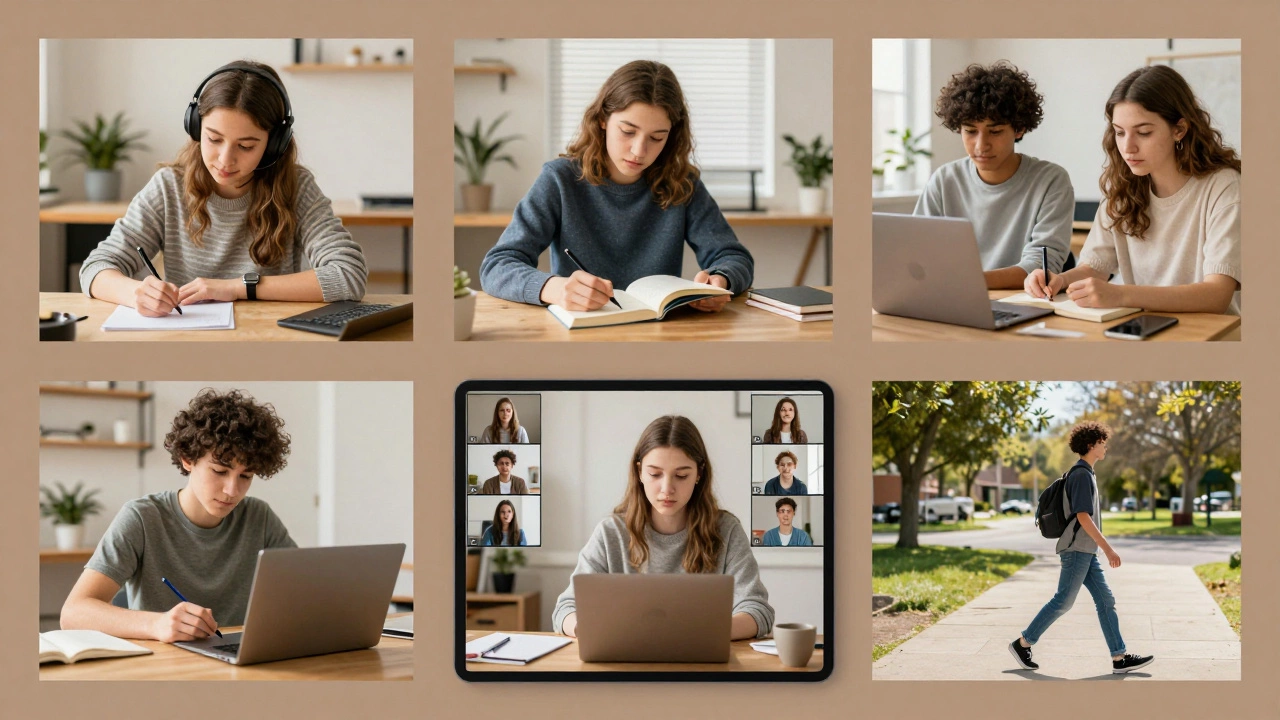
And let’s be clear: the best outcome isn’t always "go fully online." Sometimes, hybrid models work better. A student might attend math and science in person for lab work, then do literature and history online to avoid social overload. The key is choice.
A 2025 study from Monash University found that students who had the option to switch between online and in-person settings had the highest well-being scores. Flexibility was the real gift-not the format itself.
The Bigger Picture: Schools Are Still Falling Behind
Here’s the uncomfortable truth: most schools still treat online learning as a backup plan, not a legitimate option. They offer it as a last resort for "troubled" students, not as a valid path for anyone who needs it.
But mental health isn’t a privilege. It’s a necessity. And when we force kids into environments that make them sick, we’re not helping them adapt-we’re punishing them for being different.
Online school isn’t about avoiding challenges. It’s about removing unnecessary ones. It’s about letting a student learn without the weight of a thousand unspoken rules. It’s about giving them back the energy they spent just surviving the day.
The question isn’t whether online school is better for mental health. The real question is: why do we still act like it’s a second choice?