
Disability Type Finder & Support Guide
What behaviors are you observing?
Recommended Support Strategies
When we talk about disability in education, it’s not about labels-it’s about understanding how students learn, move, communicate, and engage with the world. In classrooms across Australia and beyond, teachers and families are seeing more clearly that disability isn’t a single condition. It’s a range of experiences, each requiring different support. The World Health Organization and Australian Disability Standards recognize at least 14 distinct types of disability that impact learning and daily life. Knowing these helps schools build better systems and families advocate more effectively.
Physical Disabilities
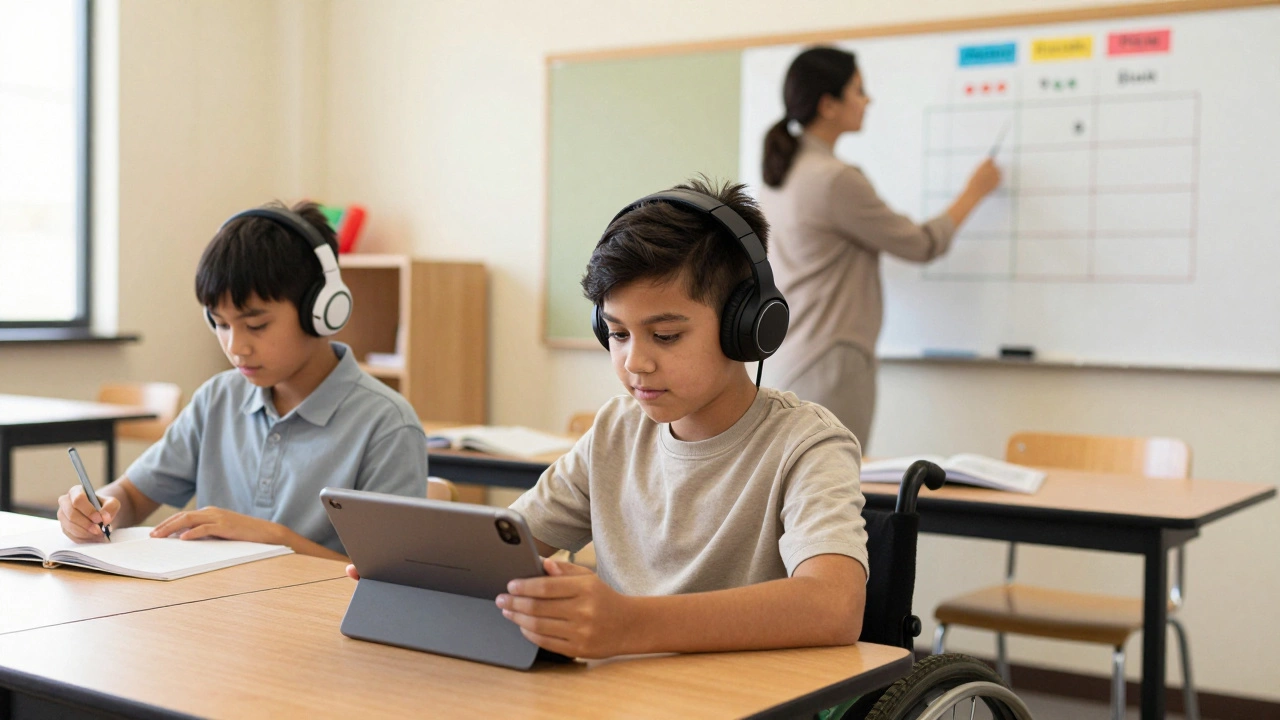
Physical disabilities affect movement, coordination, or body function. This includes conditions like cerebral palsy, spina bifida, muscular dystrophy, and amputations. A student with cerebral palsy might need adaptive seating, extra time to move between classes, or speech-to-text tools. It’s not about the wheelchair-it’s about access. Schools that only focus on ramps miss the bigger picture: a student with limited hand mobility might struggle to hold a pencil, even if they can walk. Assistive devices like grip aids or voice-controlled tablets make a real difference.
Visual Impairments
Visual impairments range from low vision to total blindness. This isn’t just about needing glasses. Students with retinitis pigmentosa, glaucoma, or congenital cataracts may need Braille materials, screen readers, or tactile diagrams. In a science class, a student who can’t see a graph might use a 3D-printed model instead. Teachers often assume all visually impaired students use the same tools-but a student with partial vision might need high-contrast text, not Braille. One-size-fits-all doesn’t work here.
Hearing Impairments
Hearing loss can be present from birth or develop later. It includes mild, moderate, severe, or profound deafness. Some students use hearing aids; others rely on sign language like Auslan (Australian Sign Language). In a noisy classroom, even a student with mild hearing loss can miss 40% of what’s said. Lip reading only works if the teacher faces them and speaks clearly-not shout. Captioned videos and real-time text transcription are now standard in many Australian schools, but not all teachers are trained to use them.
Speech and Language Disorders
This category covers more than stuttering. It includes apraxia, dysarthria, aphasia, and selective mutism. A child with apraxia knows what they want to say but can’t coordinate their mouth muscles to form words. A student with selective mutism can speak at home but not at school. These aren’t behavior problems-they’re neurological differences. Speech-language pathologists work with schools to build communication systems, like picture cards or speech-generating devices. Waiting for a child to “grow out of it” delays learning.
Intellectual Disabilities
Intellectual disabilities mean slower development in thinking, reasoning, and problem-solving. This includes Down syndrome, Fragile X syndrome, and other genetic conditions. IQ scores aren’t the whole story-many students with intellectual disabilities have strong social skills or artistic talents. The key is adjusting expectations. A student might not read at grade level, but they can learn to sort items, follow a visual schedule, or contribute to group projects. Curriculum modifications, not lowered standards, are what matters.
Learning Disabilities
Learning disabilities are neurological. They affect how the brain processes information. Common ones include dyslexia (reading), dyscalculia (math), and dysgraphia (writing). A student with dyslexia isn’t lazy-they’re decoding text slower because their brain processes letters differently. They might need audiobooks, speech-to-text software, or extra time on tests. The myth that they’ll “catch up” later is false. Without early, targeted support, gaps widen. Australia’s National Literacy and Numeracy Framework now includes specific strategies for these students.
Autism Spectrum Disorder (ASD)
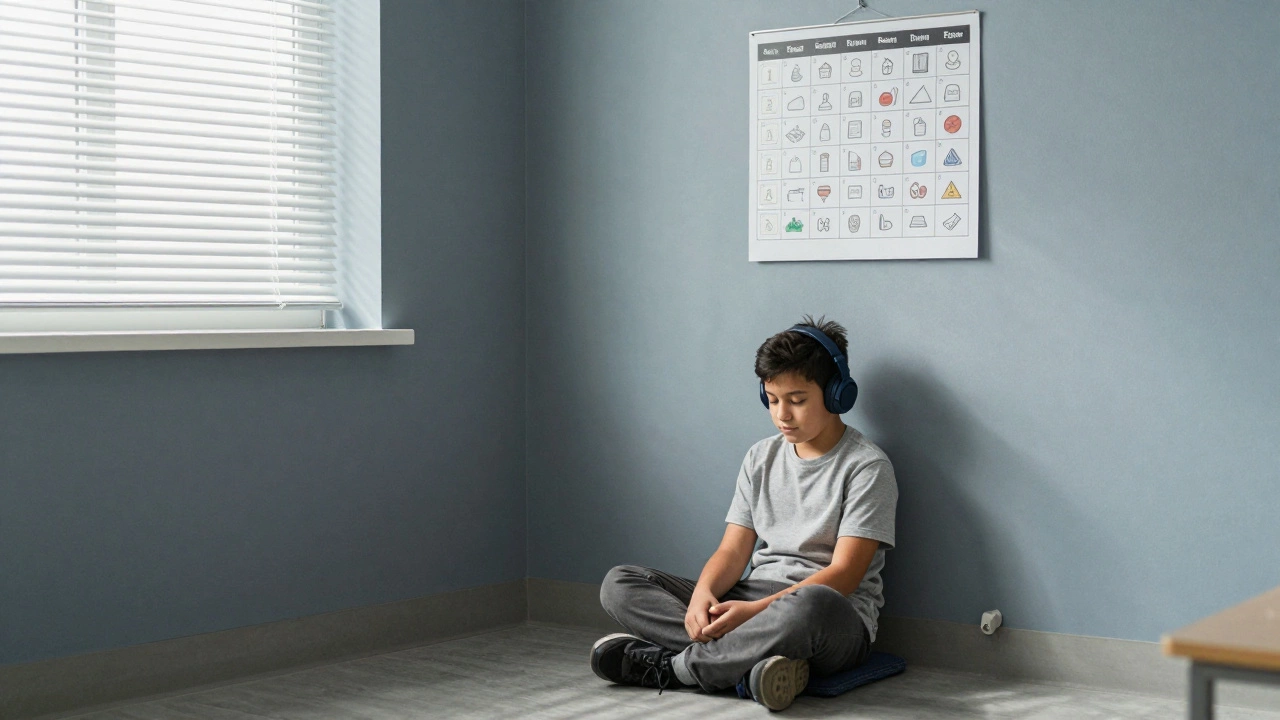
Autism isn’t one thing. It’s a spectrum of differences in social interaction, communication, sensory processing, and behavior. Some students with ASD need silence to focus; others seek routine to feel safe. A sudden change in schedule can trigger shutdowns. Sensory overload from fluorescent lights or loud bells can make learning impossible. Schools that use visual timetables, quiet zones, and predictable routines see better engagement. Not all students with ASD are nonverbal-some talk nonstop but struggle with turn-taking. Understanding the individual matters more than the label.
Attention-Deficit/Hyperactivity Disorder (ADHD)
ADHD isn’t just about being distracted. It’s about executive function-planning, organizing, starting tasks, managing time. A student with ADHD might forget homework, blur their writing, or sit still for 10 seconds. Medication helps some, but structure helps all. Visual checklists, timers, movement breaks, and clear instructions make a bigger difference than detention. Many teachers still think ADHD is a discipline issue. It’s not. It’s a neurodevelopmental difference.
Mental Health Conditions
Anxiety, depression, OCD, PTSD, and bipolar disorder can all affect school performance. A student with severe anxiety might refuse to enter the classroom. Someone with PTSD might react strongly to loud noises. These aren’t “phases.” They’re medical conditions. Schools that train staff in trauma-informed practices see fewer suspensions and more attendance. Simple changes-like letting a student check in with a trusted adult before class-can prevent meltdowns. Mental health support shouldn’t wait until crisis hits.
Developmental Delays
Developmental delays happen when a child doesn’t meet milestones like walking, talking, or social skills at the expected age. This isn’t a diagnosis-it’s a warning sign. Many children with delays later receive diagnoses like autism or intellectual disability. But early intervention is key. If a 3-year-old isn’t speaking in sentences, waiting a year to act means missing critical brain development windows. Australia’s Early Childhood Intervention Services provide home visits and therapy for families. Catching delays early saves years of struggle later.
Chronic Health Conditions
Conditions like epilepsy, diabetes, asthma, or sickle cell anemia can disrupt school daily. A student with epilepsy might need a quiet space after a seizure. A child with diabetes needs regular blood sugar checks and snacks. These aren’t “medical issues”-they’re educational ones. Schools must have plans. A nurse isn’t always available, so teachers need training. Missing class for hospital appointments shouldn’t mean falling behind. Flexible deadlines and digital access to lessons help.
Traumatic Brain Injury (TBI)
TBI from accidents, falls, or sports can change how the brain works. A student might forget how to read, struggle with memory, or become easily frustrated. Symptoms can appear months after the injury. Teachers often don’t connect behavior changes to a past head injury. A student who used to be calm and now snaps over small things might have TBI. Recovery is slow and uneven. They need patience, repetition, and reduced cognitive load-not punishment.
Multiple Disabilities
Some students have two or more types of disability. A child might have cerebral palsy, epilepsy, and a hearing impairment. Support needs overlap and multiply. A single support plan won’t cut it. Coordinated teams-teachers, therapists, parents-must work together. In Australia, the NDIS funds individualized plans that include education support. But coordination is still a challenge. Schools that use shared digital platforms for communication see better outcomes.
Specific Learning Disorders
This overlaps with learning disabilities but includes rarer conditions like nonverbal learning disorder (NVLD). Students with NVLD have strong verbal skills but struggle with spatial reasoning, body language, and math concepts. They might read well but can’t solve word problems. Teachers often mistake them for being “bad at math” when the issue is visual-spatial processing. They need diagrams explained verbally and step-by-step instructions. These students often go unnoticed because they’re quiet and compliant-but falling behind.
Why Knowing These Matters
Every student with a disability deserves to be seen as a learner-not a problem. When schools label students as “special needs” without understanding the type, they default to one-size-fits-all solutions. That doesn’t work. A student with dyslexia needs different help than one with ADHD. A child with autism might need sensory tools; a student with TBI needs memory aids. Knowing the 14 types helps educators match support to need, not guess.
It’s also about rights. Under the United Nations Convention on the Rights of Persons with Disabilities, and Australia’s Disability Discrimination Act, schools must make reasonable adjustments. That means not just ramps and interpreters-but flexible teaching, alternative assessments, and time to learn at their own pace. Ignorance isn’t an excuse anymore.
Families aren’t alone. In South Australia, the Department of Education offers free training modules for parents on identifying disability types and requesting support. Community organizations like Scope and Inclusion Australia provide toolkits. You don’t need to be an expert. You just need to ask: “What does my child need to learn?”
Are all learning disabilities genetic?
No. While some, like dyslexia and dyscalculia, have strong genetic links, others can be caused by trauma, illness, or environmental factors. Traumatic brain injury or severe malnutrition in early childhood can lead to learning difficulties that mimic genetic disorders. The cause doesn’t change the support needed-only the path to diagnosis.
Can a child outgrow a disability?
Some developmental delays improve with early support, but true disabilities like autism, intellectual disability, or cerebral palsy don’t go away. What changes is how well a person adapts. With the right tools and environment, many students learn to work around their challenges. The goal isn’t to “fix” them-it’s to give them the skills and access to thrive.
Do all students with disabilities need an individual education plan (IEP)?
Not all, but most do. In Australia, students with disabilities that significantly impact learning are entitled to an IEP under the Disability Standards for Education. Students with mild or temporary needs might get accommodations without a formal IEP. The key is whether the barrier to learning is substantial enough to require planned, ongoing adjustments.
How do I know if my child has a disability or just learns differently?
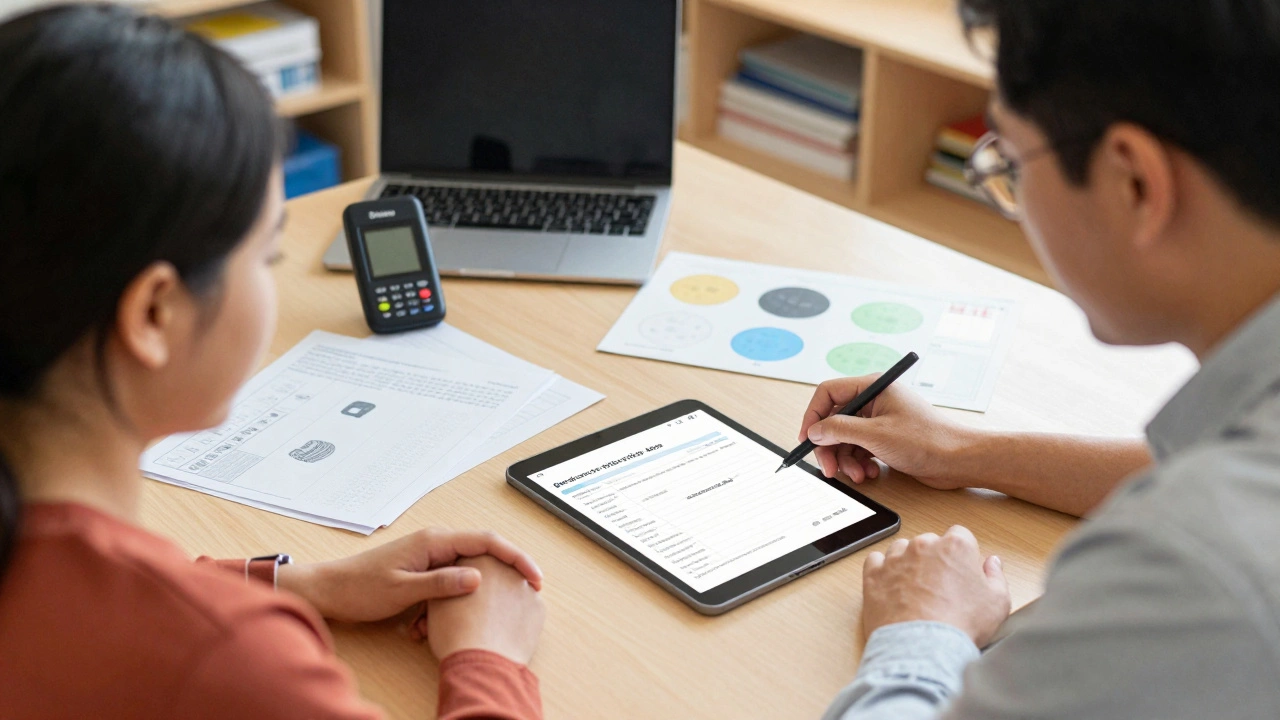
If your child is consistently struggling despite extra help, or if their challenges affect more than one area-like school, home, and social life-it’s worth getting an assessment. Learning differently doesn’t mean disability. But if they’re falling behind, avoiding school, or showing signs of frustration, it’s not just about teaching style. A psychologist or educational therapist can help distinguish between the two.
Is disability always permanent?
No. Some disabilities are temporary, like those from injury or illness. A student recovering from a concussion might need reduced screen time for a few months. Others, like autism or Down syndrome, are lifelong. The important thing is to focus on current needs, not labels. Support should adapt as the person changes.