
GCSE Revision Strategy Optimizer
Based on research from Finland, Japan, and South Korea's education systems, your revision strategy impacts retention more than study time alone. This tool helps you estimate how different techniques could improve your exam performance.
Your Estimated Performance
0% retention rate
Key insights:
There’s no single official title for "the most educated country," but if you’re looking at hard data-literacy rates, graduation numbers, and how well students perform on global tests-Finland, Japan, and South Korea keep showing up at the top. But here’s the thing: it’s not about who has the most degrees. It’s about how well a system prepares people to think, solve problems, and keep learning long after school ends.
How Do We Measure "Educated"?
When people say "educated," they often mean one of three things: high literacy, high graduation rates, or strong performance in international tests. The most trusted source for comparing countries is the OECD’s PISA (Programme for International Student Assessment). It tests 15-year-olds in reading, math, and science every three years. Over 80 countries take part. Finland led the pack in the early 2000s. Today, Singapore, Japan, and Estonia are consistently in the top five.
But PISA doesn’t tell the whole story. A country could have top test scores but high student stress or low teacher pay. That’s why experts also look at adult literacy (UNESCO tracks this), the percentage of 25- to 34-year-olds with tertiary education (OECD), and how many people continue learning after school.
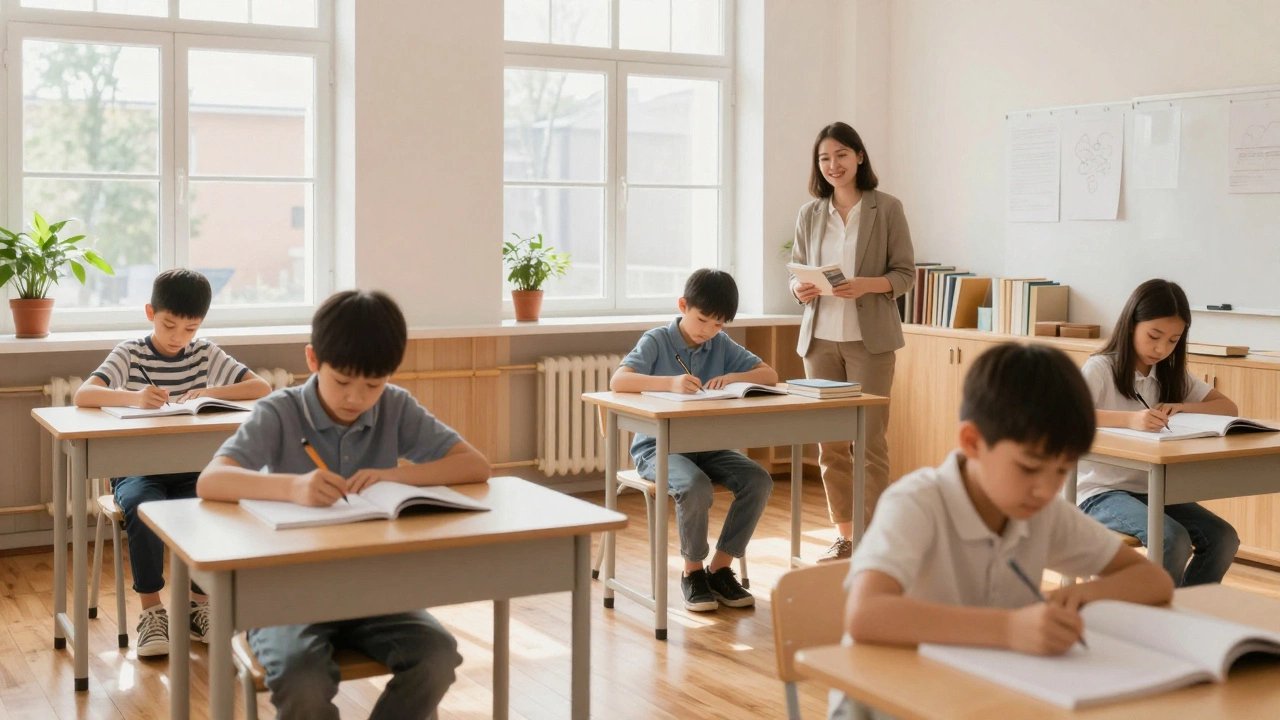
Finland still stands out-not because students score the highest, but because their system works for everyone. There’s almost no standardized testing until age 16. Teachers are all masters-degree holders. Class sizes are small. Students get 30 minutes of recess every day. And yet, Finnish teens rank among the best in the world in problem-solving and reading comprehension.
Japan: Discipline Meets Depth
Japan’s education system is built on structure. Students start school at age six and stay in the classroom until late afternoon. Homework is heavy. But here’s what you don’t hear as often: Japanese students are among the most self-directed learners in the world. A 2023 study from the University of Tokyo found that 78% of Japanese high school students regularly study outside class without being told to. That’s not because they’re scared of failing-it’s because they’re used to taking ownership of their learning.
The country also has one of the highest tertiary education completion rates in the OECD. Nearly 60% of 25- to 34-year-olds have a college degree or higher. That’s up from 30% in 2000. And unlike in some countries, vocational training is respected. Technical schools have the same prestige as universities, and many students choose them because they lead directly to stable, well-paying jobs.
South Korea: The Pressure Cooker That Works
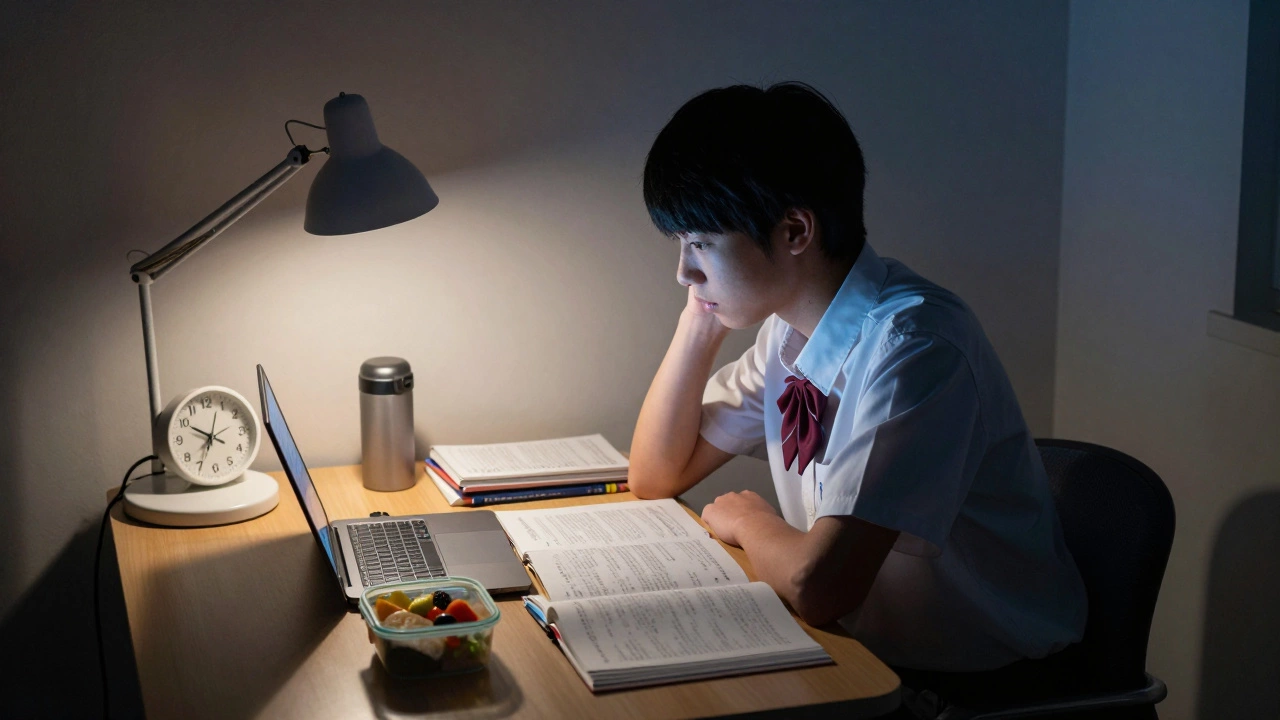
South Korea has the highest percentage of young adults with tertiary education in the world-70%. That’s more than the U.S., Canada, or Germany. But the cost is high. Students spend an average of 14 hours a day on school and private tutoring. Many sleep less than five hours. Suicide rates among teens are among the highest in the OECD.
Still, the results are undeniable. In the 2022 PISA test, South Korean students ranked second in math and fourth in science. Their education system doesn’t just produce high scorers-it produces people who can adapt. Korean companies like Samsung and Hyundai rely on this workforce. The country invests 5.2% of its GDP in education, the highest among developed nations.
Why Finland Still Matters
Finland doesn’t spend more than other countries. It spends smarter. Teachers get more training than doctors. There’s no ranking of schools. No bonuses for test scores. No closing of "failing" schools. Instead, if a student struggles, the school sends in extra support-immediately.
In 2021, a study by the World Economic Forum looked at 30 education systems and ranked Finland #1 for equity. That means a child born in a rural village has nearly the same chance of excelling as a child in Helsinki. That’s rare. In the U.S., the gap between rich and poor students is among the widest in the developed world.
Finland’s secret? Trust. Trust in teachers. Trust in students. Trust that learning doesn’t need to be rushed. They don’t have GCSEs or SATs. They don’t need them. Students take one national exam at 18. The rest? Teachers assess them continuously, with feedback, not grades.
What This Means for GCSE Revision
If you’re preparing for GCSEs, it’s easy to think the goal is to memorize facts and hit target grades. But the top-performing countries aren’t teaching that way. They’re teaching students how to learn. How to ask questions. How to figure things out when no one gives them the answer.
Here’s what you can borrow:
- Focus on understanding, not cramming. If you can explain a concept in your own words, you’ve learned it. If you can only repeat it from a revision guide, you haven’t.
- Teach someone else. One study from UCLA found that students who taught material to a peer retained 90% of it after a week. Those who just reviewed kept 10%.
- Space out your revision. Studying 30 minutes a day for two weeks beats cramming four hours the night before. Japan and Finland both use spaced repetition naturally-they don’t leave everything to the last minute.
- Ask "why?" The best students don’t just memorize the periodic table-they wonder why elements behave the way they do. That curiosity is what separates high scorers from true learners.
Myths About Top Education Systems
There are a few myths you should ignore:
- Myth: More homework = better results. Truth: Finland gives the least homework in Europe. Japan gives a lot, but it’s targeted, not busywork.
- Myth: You need private tutors to succeed. Truth: In Finland, less than 5% of students use them. In South Korea, 90% do-but that’s because the system pushes them to.
- Myth: Top countries have the most resources. Truth: Estonia spends less per student than the OECD average but outperforms countries like the U.S. and France. It’s about how you use what you have.
What’s Missing in the UK System?
The UK spends more per student than Finland or Estonia. But outcomes are uneven. A child in London has better chances than one in Blackpool. GCSEs are high-stakes, but they test narrow skills. They don’t measure creativity, resilience, or how well someone can learn from failure.
Some schools in England are starting to change. A few have dropped tiered exams. Others are replacing end-of-year tests with portfolios. But change is slow. The real lesson from the top countries? Systems that trust teachers, support students, and value learning over ranking tend to produce people who thrive-not just in exams, but in life.
Final Thought: Education Isn’t a Race
There’s no trophy for being the "most educated" country. But there is a benefit to building a system where every child can grow at their own pace, where teachers are respected, and where learning never stops. That’s what the top countries are doing.
If you’re revising for GCSEs, don’t just chase the grade. Chase the understanding. Because the world doesn’t care how well you memorized the causes of World War I. It cares whether you can think clearly, adapt quickly, and keep learning-even when no one’s watching.
Which country has the highest literacy rate in the world?
Several countries have literacy rates near 100%, including Finland, Japan, South Korea, and Norway. According to UNESCO, North Korea claims 100% literacy, but independent verification is difficult. Among verified data, Finland and Japan consistently report 99%+ literacy for adults aged 15 and over.
Is the UK one of the most educated countries?
The UK ranks in the top 15 globally for tertiary education attainment, with about 50% of 25- to 34-year-olds holding a college degree. But it doesn’t rank in the top 10 for student performance on international tests like PISA. It also has one of the largest education gaps between rich and poor students in Europe.
Why do Asian countries score so high in PISA?
Countries like Singapore, Japan, and South Korea invest heavily in teacher training, have high societal expectations for education, and encourage long hours of focused study. Students are taught to persist through difficulty, and failure is seen as part of learning-not something to hide. Cultural respect for education plays a big role.
Does spending more money on education guarantee better results?
No. Estonia spends less per student than the UK or the U.S. but outperforms both on PISA. Finland spends moderately but focuses that money on teacher quality, small class sizes, and early support for struggling students. It’s not how much you spend-it’s how you spend it.
What can I learn from top education systems for my GCSE revision?
Focus on deep understanding over memorization. Teach what you’ve learned to someone else. Space out your study sessions instead of cramming. Ask "why?"-not just "what?" And remember: education isn’t about beating others. It’s about becoming someone who can keep learning, even after the exam is over.