
When you’re an adult going back to school, picking up a new skill, or trying to learn something at work, you might notice that some methods just click better than others. Maybe you remember everything after reading a manual. Or maybe you need to hear it explained out loud. Or perhaps you only truly understand something when you’ve done it yourself. That’s not luck - it’s your learning style at work.
Adults don’t learn the same way kids do. We bring years of experience, responsibilities, and habits to the table. That’s why three major adult learning styles - visual, auditory, and kinesthetic - matter so much. They’re not just theories. They’re practical tools that can turn frustration into progress.
Visual Learners: See It to Believe It
If you’ve ever drawn a diagram to explain something to yourself, or found yourself highlighting every other sentence in a textbook, you’re likely a visual learner. This group makes up about 65% of the adult population, according to research from the University of Minnesota. Visual learners process information best through images, charts, diagrams, and written text.
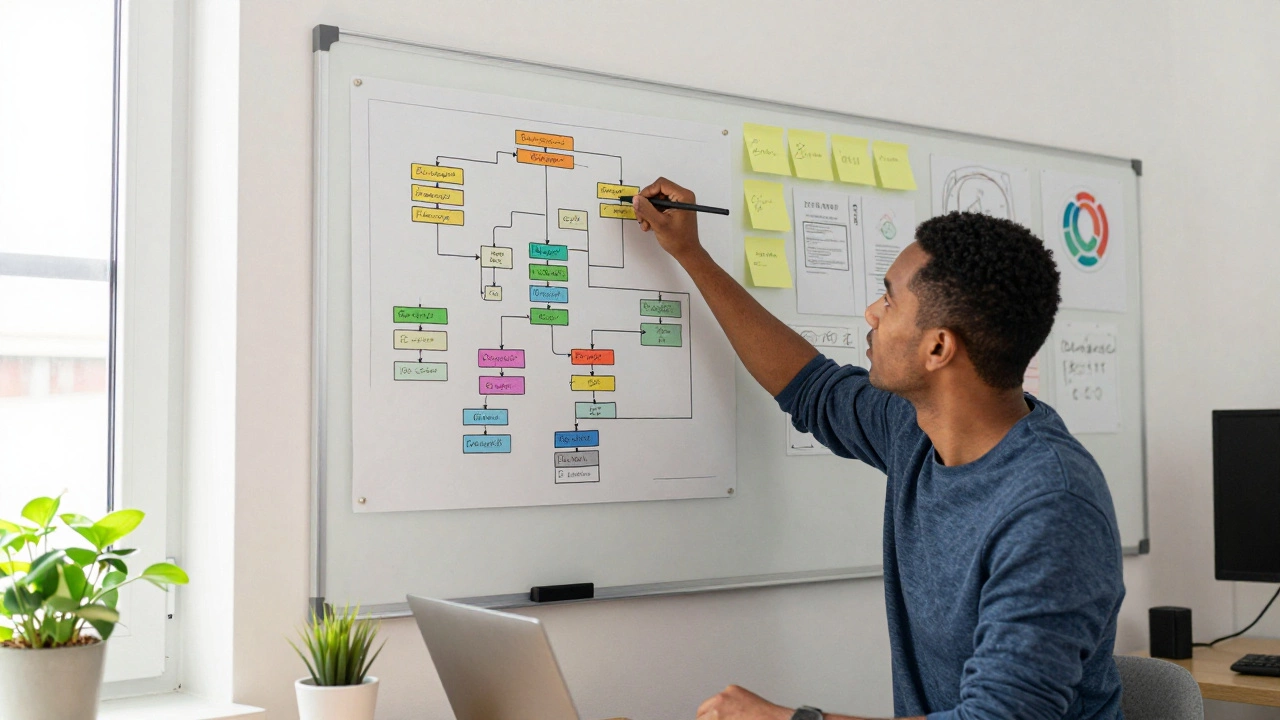
For example, a nurse learning a new medication protocol won’t just listen to a lecture. She’ll sketch out the dosage timeline, color-code the side effects, and print out a flowchart to pin on her fridge. A project manager studying agile methods won’t memorize bullet points - he’ll map out sprint cycles using sticky notes on a whiteboard.
Tools that help visual learners:
- Infographics and mind maps
- Color-coded notes and flashcards
- Video tutorials with on-screen annotations
- Diagrams, flowcharts, and timelines
- Reading manuals or step-by-step guides
One common mistake? Relying too much on lectures or audio-only content. If you’re a visual learner and all you get is a podcast, you’re fighting an uphill battle. The fix is simple: ask for written summaries, take screenshots during videos, or draw your own visuals as you go.
Auditory Learners: Hear It to Own It
Some people remember conversations better than textbooks. If you learn best by talking things out, repeating facts aloud, or listening to explanations, you’re an auditory learner. These learners thrive on sound - voice, rhythm, tone, and even silence.
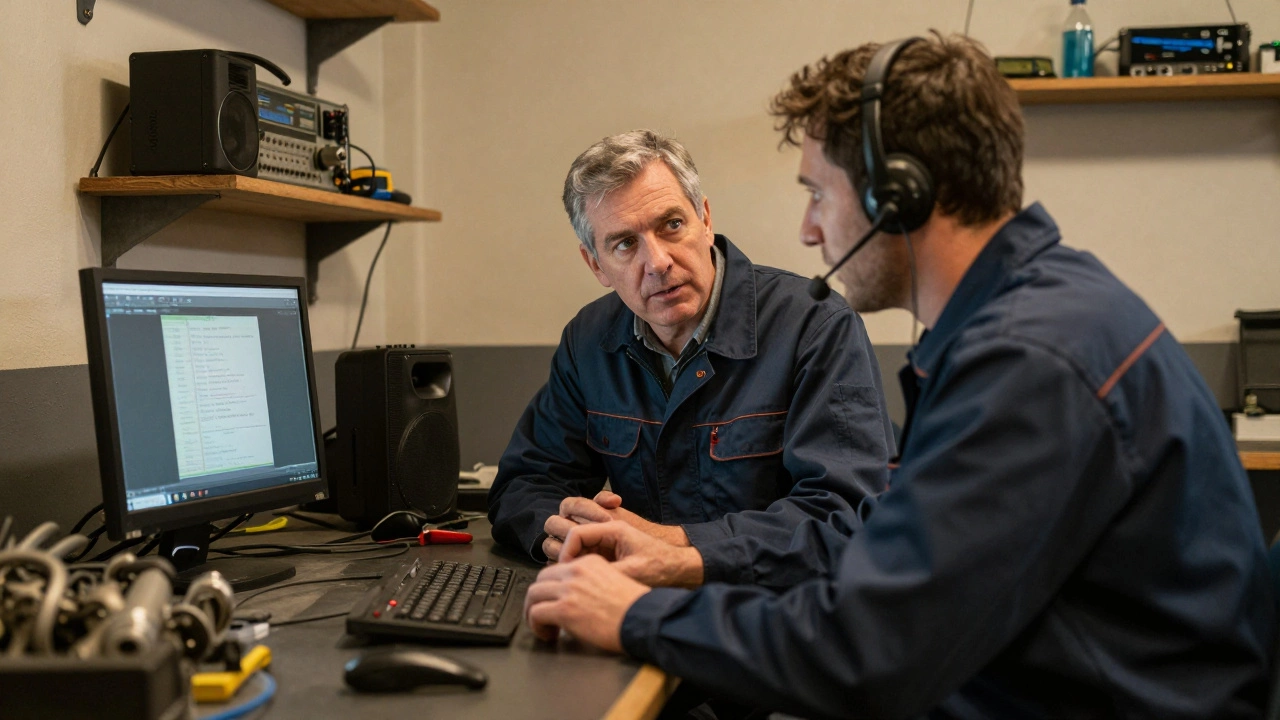
Think about a mechanic learning a new engine diagnostic system. He doesn’t need to read the manual first. He wants to hear a senior technician walk through the error codes. A language learner might memorize verb conjugations by singing them to a tune. A financial advisor studying tax law might record herself explaining deductions and play them back during her commute.
Tools that help auditory learners:
- Podcasts and audiobooks
- Group discussions and study groups
- Verbal repetition and self-explanation
- Recorded lectures or training sessions
- Using rhymes, songs, or mnemonics
One pitfall? Sitting silently through a long video or reading dense text without speaking. Auditory learners often feel like they’re not absorbing anything - but they’re just not engaging their ears. The fix? Talk to yourself as you learn. Explain concepts out loud. Teach someone else - even if it’s your cat. The act of speaking turns passive input into active understanding.
Kinesthetic Learners: Learn by Doing
If you need to move, touch, or do something to understand it, you’re a kinesthetic learner. This style is often misunderstood. People think it’s just for hands-on trades - electricians, chefs, carpenters. But it’s just as powerful for accountants, teachers, or software developers.
Consider a corporate trainer learning a new HR software. She doesn’t just watch a demo. She logs in and tries every button. She creates fake employee profiles. She runs test payrolls. A parent studying child development might not remember theories from a book - but she’ll understand attachment styles by watching her toddler react to being left in a room.
Tools that help kinesthetic learners:
- Simulations and role-playing
- Hands-on practice with real tools
- Walking while reviewing material
- Building models or prototypes
- Using physical objects to represent abstract ideas
The biggest hurdle? Sitting still. Most adult learning platforms assume you’ll sit at a desk and click through slides. That’s torture for kinesthetic learners. The solution? Break your learning into short bursts. Stand up. Walk around. Use a whiteboard. Build a physical model. Even tapping your foot while listening to a lecture can help your brain lock in the info.
Most Adults Use a Mix - But One Style Dominates
It’s rare for someone to rely on just one style. Most adults use a blend. But one usually stands out as the most effective. That’s the one you should lean into.
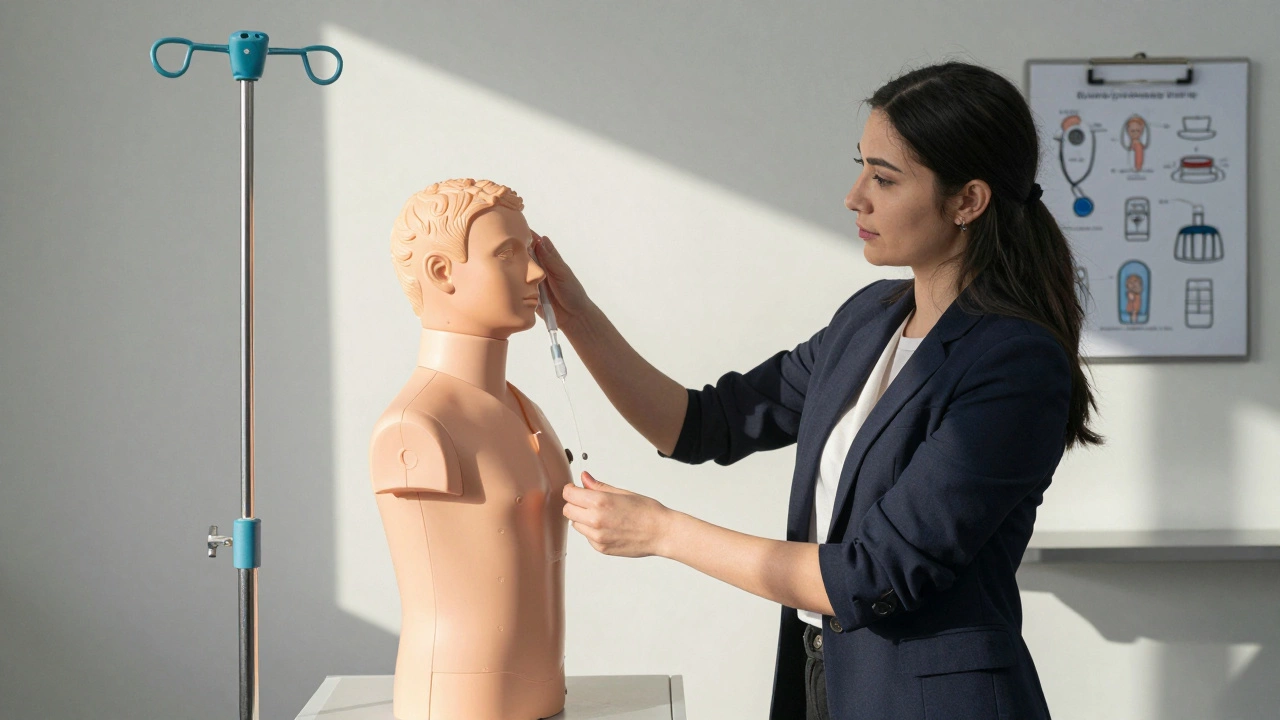
Take Maria, a 42-year-old single mom studying for her nursing license. She tried reading textbooks - but forgot half of it by bedtime. She listened to nursing podcasts - helpful, but not enough. Then she started using flashcards with diagrams (visual), recording herself explaining patient care steps (auditory), and practicing IV insertion on a training arm (kinesthetic). The combination worked - but the kinesthetic part made the biggest difference. She could recall the procedure because she’d felt the resistance of the needle.
Try this: Think about the last time you learned something new. What did you do? Did you draw it? Say it out loud? Act it out? That’s your dominant style. Now build your learning routine around it.
How to Use This Knowledge
Knowing your style isn’t about labeling yourself. It’s about designing your own learning path. Here’s how:
- Identify your main style. Take a free online quiz - like the VARK questionnaire - but don’t trust it blindly. Trust your own memory of what worked.
- Adjust your materials. If you’re a visual learner, ask for PDFs instead of audio. If you’re auditory, request recorded sessions. If you’re kinesthetic, demand practice time.
- Combine styles. Even if one style dominates, mixing in others boosts retention. A visual learner who draws a diagram and then explains it aloud will remember it longer.
- Advocate for yourself. If you’re in a workplace or classroom that only offers one format, speak up. Say: “I learn better when I can do it myself - can we add a hands-on component?”
Adult learning isn’t about being a perfect student. It’s about working with your brain, not against it. The best learners aren’t the ones who study the longest - they’re the ones who learn in a way that fits who they are.
What If You’re Not Sure?
Try this simple test over the next week:
- When you’re learning something new, notice what you do first.
- Do you grab a pen and paper? → Visual
- Do you turn on a podcast or talk to someone? → Auditory
- Do you want to try it right away? → Kinesthetic
That’s your clue. No quiz needed. Just pay attention.