

Adult Learning Efficiency Simulator
The article explains that adult brains are not "broken," but optimized for utility and deep focus, yet hindered by high cognitive load and ego-driven stress. Use this tool to simulate your current learning environment and see where you can improve.
Simulate Your Learning Session
Adjust the sliders to see how your habits impact your brain's ability to encode memories.
You know that feeling. You sign up for a coding bootcamp or try to pick up Spanish on your lunch break, and three weeks later, you’re staring at the screen wondering why your brain feels like it’s wading through molasses. Meanwhile, your niece picks up TikTok dances in an afternoon without breaking a sweat. It’s frustrating, right? But here is the truth: adults don’t struggle to learn because they are "too old" or "set in their ways." They struggle because the biological and psychological landscape of learning has shifted dramatically since childhood.
Understanding adult learning isn't about fighting biology; it's about working with it. The human brain changes its operating system as we age. What worked when you were twenty-rote memorization, cramming, passive listening-often fails at forty. This isn't a defect; it's an adaptation. To succeed, you need to stop trying to be a student again and start being a learner who leverages experience, context, and efficiency.
The Brain Isn't Broken, Just Different
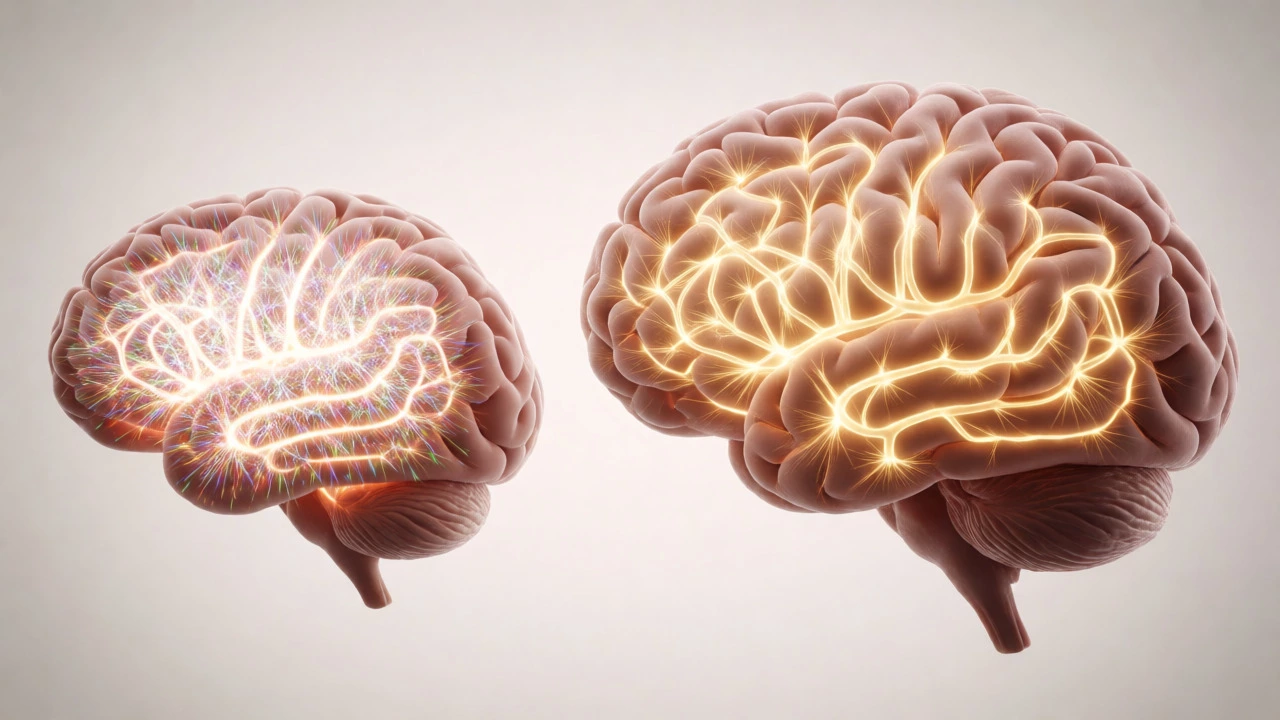
Let’s talk about hardware. For decades, scientists believed the adult brain was static after age 25. We now know this is false thanks to neuroplasticity, the brain's ability to reorganize itself by forming new neural connections. However, the *type* of plasticity changes. Children have high levels of excitatory neurotransmitters that make their brains highly receptive but also noisy. Adults have more inhibitory control. This means your brain is better at filtering out distractions and focusing deeply, but it is less willing to let in new information that doesn't seem immediately useful.
This shift explains why adults often feel "stuck." Your brain has become efficient. It prunes away unused connections to save energy. When you try to learn something abstract, like theoretical physics or a new language grammar rule without context, your brain asks, "Does this help me survive or thrive right now?" If the answer is no, it resists encoding the memory. This is not laziness; it is metabolic conservation.
| Feature | Child Learner | Adult Learner |
|---|---|---|
| Primary Driver | Curiosity & Absorption | Utility & Relevance |
| Memory Type | Episodic (Events) | Semantic (Facts) & Procedural (Skills) |
| Focus Ability | Short bursts, easily distracted | Sustained deep focus, resistant to interruption |
| Error Handling | Fearless experimentation | High sensitivity to failure/shame |
The Cognitive Load Trap
Have you ever tried to study while worrying about a mortgage payment or a work deadline? That mental clutter is called cognitive load. Working memory-the mental scratchpad where you hold new information-is limited. For children, school is their only job. Their working memory is mostly free for learning. For adults, working memory is constantly taxed by responsibilities, decisions, and emotional regulation.
When you add complex new material to an already full mental bucket, it overflows. This is why adults often forget what they read ten minutes ago. It’s not that you can’t retain it; it’s that you didn’t encode it properly because your bandwidth was elsewhere. To fix this, you must reduce extraneous load. Stop multitasking. Stop studying in noisy environments. Treat your attention like a scarce resource, because it is.
Experience Is a Double-Edged Sword
Malcolm Knowles, the father of andragogy (the method and practice of teaching adult learners), argued that adults bring a reservoir of life experience to the classroom. This is usually seen as a superpower, and it is-but it can also be a barrier. Existing knowledge creates strong neural pathways. New information has to compete with these well-worn ruts.
If you are an accountant trying to learn creative writing, your brain keeps trying to apply logical structure to emotional narrative. You might resist the ambiguity required for fiction because your professional identity is built on precision. This is known as interference. Old habits interfere with new skills. To overcome this, you don't just add new info; you have to actively unlearn or suspend your existing frameworks temporarily. You need to create a "beginner's mind," which is incredibly hard for experts in other fields.
The Fear Factor: Ego and Identity
Children learn by failing loudly. They fall off bikes, mispronounce words, and draw outside the lines without caring. Adults carry the weight of identity. If you are a senior manager, trying to learn basic Excel macros makes you feel vulnerable. What if you look stupid? What if your team sees you struggling?
This fear triggers a stress response. Cortisol floods the system, which actually blocks the hippocampus-the part of the brain responsible for forming new memories. So, the more anxious you are about looking incompetent, the harder it becomes to learn. It’s a vicious cycle. Adults often avoid challenging tasks not because they can’t do them, but because the social cost of potential failure feels too high.

How to Hack Your Adult Brain
If biology and psychology are working against you, how do you win? You change the strategy. Here is what actually works for adult learners, based on current research in educational psychology:
- Anchor to Context: Never learn a fact in isolation. Connect it to a problem you are currently solving. If you are learning Python, don't just write "Hello World." Write a script that automates a boring spreadsheet task you hate. Relevance signals importance to the brain.
- Micro-Learning: Since working memory is taxed, keep sessions short. 15-20 minutes of focused study is more effective than two hours of distracted cramming. Use techniques like the Pomodoro method to manage energy, not just time.
- Active Recall: Passive reading is useless for adults. Close the book and try to explain the concept to an imaginary five-year-old. If you can't simplify it, you don't understand it. This forces retrieval, which strengthens neural pathways.
- Sleep Hygiene: Memory consolidation happens during sleep. If you cut sleep to study, you undo your efforts. Prioritize rest as part of the learning process, not as a reward for finishing it.
Building a Sustainable Learning Habit
Motivation is fleeting; systems are reliable. Most adults fail because they rely on willpower. Instead, design your environment. Put your guitar in the living room, not the closet. Keep your language app icon on the home screen, not buried in a folder. Reduce friction for good habits and increase friction for bad ones.
Also, redefine success. In school, success was an A grade. In adult learning, success is utility. Did you use the skill? Did it solve a problem? Did it give you joy? Shift your metric from performance to application. This lowers the stakes, reduces anxiety, and allows your brain to relax enough to absorb new information.
You aren't broken. You are just optimized for different things. Leverage your experience, respect your cognitive limits, and make learning relevant to your actual life. The brain remains plastic until the day you die. It just requires a different key to unlock it.
Is it true that adults cannot learn languages as fast as children?
Not exactly. Children acquire languages faster due to implicit learning mechanisms and lack of inhibition. However, adults often progress faster in the initial stages because they understand grammar concepts and have larger vocabularies in their native tongue. Adults excel at structured learning and pattern recognition, while children excel at pronunciation and intuitive usage.
Does aging significantly reduce memory capacity?
Fluid intelligence (processing speed and working memory) tends to decline slightly after age 30, but crystallized intelligence (knowledge base and vocabulary) continues to grow into late adulthood. Adults may take longer to process new raw data, but they are often better at integrating it with existing knowledge to make complex decisions.
Why do I forget things I studied yesterday?
This is likely due to poor encoding caused by high cognitive load or lack of sleep. If your brain was stressed or multitasking during the study session, the information never moved from short-term to long-term memory. Reviewing material within 24 hours and ensuring adequate sleep helps consolidate these memories.
Can technology help adults learn better?
Yes, but only if used correctly. Tools like spaced repetition software (e.g., Anki) align with how adult brains store information. However, passive consumption via videos or podcasts is less effective than active engagement. Technology should facilitate active recall and practice, not just replace textbooks.
How does stress affect adult learning?
Chronic stress releases cortisol, which can shrink the hippocampus and impair memory formation. Acute stress can sometimes sharpen focus, but sustained pressure from work or family duties often hinders the ability to absorb new information. Managing stress through mindfulness or exercise is crucial for effective learning.