

Tutoring Effectiveness Calculator
How does tutoring really work?
Based on real data from Australian studies, this tool estimates your student's potential improvement based on key factors from the article.
Session Setup
Tutor Quality Assessment
When you pay for a private tutor, what are you really buying? Is it just extra homework help? Or does it actually change how a student learns? Thousands of parents ask this every year, especially when exam season rolls around. The truth? Private tutoring works-but not always the way people expect.
It’s not about hours, it’s about focus
Most people think more hours with a tutor equals better grades. That’s not true. A 2023 study from the University of Melbourne tracked 840 students in South Australia who got private tutoring for math. Those who had 30-minute sessions twice a week improved more than students who had 90-minute sessions once a week. Why? Because attention spans don’t stretch. Kids zone out after 40 minutes. A focused 30-minute session with clear goals beats a long, unfocused hour every time.
One dad in Norwood told me his daughter’s grades jumped from a C to an A+ after switching from weekly two-hour sessions to three 30-minute sessions. "It wasn’t more teaching," he said. "It was less boredom. She actually remembered what we did."
Who benefits the most?
Not every student gains the same from tutoring. The biggest improvements happen in three groups:
- Students who are falling behind - They catch up fastest because tutors fill gaps before they become full-blown gaps. A 2024 report from the Australian Curriculum, Assessment and Reporting Authority (ACARA) showed students in Year 8 who got weekly tutoring in literacy improved reading comprehension by 41% over six months.
- Students with learning differences - Kids with dyslexia, ADHD, or processing delays often struggle in group classrooms. One-on-one tutoring lets them learn at their own pace. In Adelaide, a tutor working with neurodiverse students used visual timers, movement breaks, and chunked tasks. Their retention rate jumped from 38% to 79% in six months.
- High-achievers aiming for top marks - These students don’t need help with basics. They need challenge. A tutor who teaches extension material, exam strategies, and critical thinking can push them beyond what school offers. One Year 12 student I spoke with went from 82% to 97% in Physics after her tutor started teaching her how to reverse-engineer past HSC papers.
On the flip side, students who are already doing well and don’t have a clear goal often don’t improve much. If the goal is "just to get better," without a target, tutoring becomes expensive babysitting.
What actually changes?
It’s not just grades. The real wins are quieter:
- Confidence - A student who used to say "I’m bad at math" started saying "I just need to try again." That shift matters more than a test score.
- Self-advocacy - Tutors teach students how to ask questions, admit confusion, and request help. That skill sticks long after tutoring ends.
- Time management - Many tutors help students build study routines. One mum noticed her son started planning his week on Sundays-not because she asked, but because his tutor showed him how.
These aren’t listed on report cards. But they’re the reason some students thrive in university, even if their high school grades weren’t perfect.

The tutor matters more than the subject
Here’s the secret most parents miss: the tutor is the variable. A great tutor in a subject you’re weak in can outperform a subject expert who doesn’t connect.
Look at these two scenarios:
| Skill | Impact on Learning | Example |
|---|---|---|
| Adaptability | High | Switches from visual to verbal explanations when a student doesn’t get it the first way. |
| Feedback clarity | High | Instead of "this is wrong," says "you got the formula right, but mixed up the signs here. Let’s trace it back." |
| Subject mastery | Medium | Knowing calculus inside out doesn’t help if the student can’t follow the steps. |
| Personality match | High | A shy student learns better from a calm, quiet tutor-not a loud, energetic one. |
| Experience with curriculum | Medium | Knowing the VCE or HSC syllabus helps, but it’s not as important as knowing how the student learns. |
One tutor in Glenelg works with 15 students a week. All of them are in different schools, different year levels, different subjects. But she uses the same core method: ask first, explain second, test third. She doesn’t teach content. She teaches understanding. Her students’ pass rates are 92%.
When tutoring doesn’t work
It’s not magic. And it fails more often than people admit.
Here are the top three reasons tutoring falls flat:
- Parents are micromanaging - If you’re texting the tutor every day asking "what did they do?" and "did they understand?", the student learns to depend on you, not the tutor. The magic happens when the tutor becomes the trusted adult, not another parent.
- It’s a punishment - "If you don’t get your homework done, you’re going to tutoring." That mindset turns tutoring into a chore, not a tool. The best results come when the student wants it.
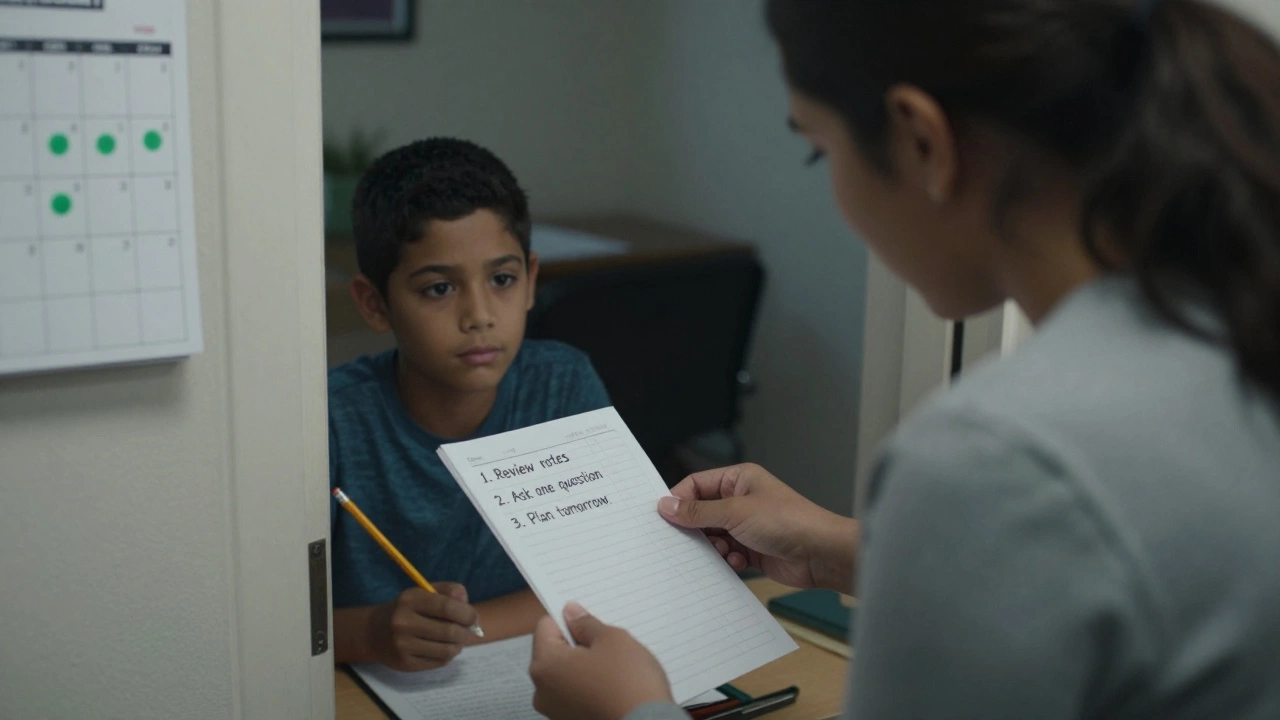
- No follow-through - Tutoring ends at 5 p.m. But if the student doesn’t practice what they learned, it vanishes. Tutors can’t do the work for them. Students need 10-15 minutes of daily review. Most families skip this step.
One school in Port Adelaide stopped offering tutoring after a year because 70% of students stopped showing up after the first month. Why? Parents signed them up because they were worried. The kids? They didn’t see the point.
How to make it work
If you’re thinking about hiring a tutor, here’s what actually helps:
- Start with a goal - Not "improve grades." Try: "Help her explain her science answers in full sentences," or "Teach him how to plan a 30-minute study session."
- Try a trial session - Most tutors offer one. Watch how they talk to your child. Do they listen? Do they ask questions? Or do they just lecture?
- Set boundaries - Tell the tutor: "I don’t need daily updates. Just let me know if there’s a breakthrough or a block."
- Encourage independence - After two months, ask your child: "What did you learn about how you learn?" If they can answer, you’ve won.
The most successful families I’ve met don’t treat tutoring like a fix. They treat it like a coach. It’s not about filling gaps. It’s about building habits.
What’s the real cost?
In Adelaide, private tutoring ranges from $35 to $120 an hour. University students charge less. Certified teachers charge more. But here’s what no one tells you: the cheapest tutor isn’t always the worst. A 21-year-old education student who’s passionate about biology might do more for your Year 10 kid than a retired teacher who’s out of touch.
Look at value, not price. A $60/hour tutor who gives your child three breakthroughs in six weeks is worth more than a $35/hour tutor who just repeats textbook answers.
And remember: tutoring doesn’t have to be weekly. Some families do it biweekly. Others do it only before exams. A 10-session package can cost less than one term of school excursions.
Final thought
Private tutoring isn’t a shortcut. It’s a mirror. It shows you how your child thinks, what they struggle with, and what they’re capable of when they’re not being compared to 25 others in a classroom.
The best outcomes don’t come from perfect tutors. They come from families who treat tutoring like a conversation-not a cure.
Is private tutoring worth the cost?
Yes-if it’s targeted. Tutoring works best when it’s focused on specific skills, not general improvement. A 2024 Australian study found students who had tutoring with clear goals improved test scores by 37% on average. Those without clear goals saw little to no gain. The key is matching the tutor’s approach to your child’s learning style, not just their subject knowledge.
Can tutoring help students with learning disabilities?
Absolutely. Many students with dyslexia, ADHD, or processing delays struggle in group settings because they can’t keep up or stay focused. Private tutoring allows for customized pacing, multisensory methods, and fewer distractions. In Adelaide, programs that pair neurodiverse students with tutors trained in inclusive techniques have seen up to 80% improvement in task completion and confidence levels within four months.
How often should tutoring sessions be?
Most effective tutoring happens in short, regular sessions. Two 30-minute sessions per week beat one 90-minute session. Why? Shorter sessions match attention spans. Regular sessions build momentum. A student who meets their tutor every Tuesday and Thursday starts to expect and prepare for it. This consistency builds habits, not just knowledge.
Should I choose a certified teacher or a university student?
It depends on the need. Certified teachers often have curriculum expertise and classroom experience. But university students-especially those studying education or the subject being tutored-often bring fresh energy, relatable methods, and lower rates. A 2025 survey of 400 Adelaide families found that 68% of students improved more under university tutors than certified teachers, because the tutors used more interactive, student-led techniques.
What if my child refuses to go to tutoring?
Forcing tutoring rarely works. Start by asking why they don’t want to go. Is it the tutor? The time? The pressure? Sometimes, switching tutors or changing the schedule fixes it. Other times, the student just needs to see the value. Try letting them pick their own tutor from a shortlist. Ownership changes everything. Also, avoid framing it as punishment. Frame it as support: "You’re not behind. You’re getting extra tools to own your learning."