
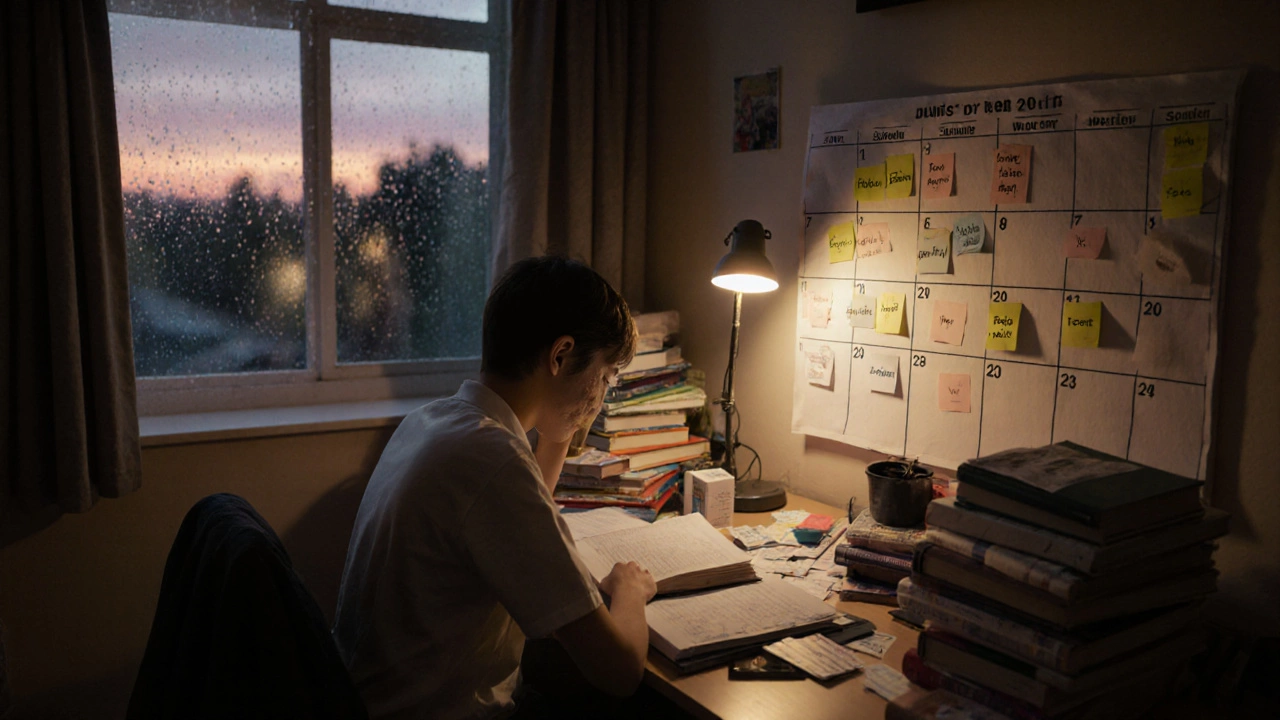
Students in the UK and beyond often wonder: is GCSE harder than the SAT? The answer isn’t simple. Both exams shape academic futures, but they test very different things. GCSEs are spread across 8-10 subjects, taken over two years, and require steady, consistent effort. The SAT is a single, high-stakes test focused on math and evidence-based reading and writing, designed to predict college readiness in the U.S. system. One isn’t universally harder-it depends on what kind of learner you are.
What GCSEs Actually Require
GCSEs aren’t just exams-they’re a two-year course of study in subjects like English, Maths, Science, History, and a foreign language. Most students take 9-10 subjects. Each one ends with final exams, but coursework and controlled assessments also count for some subjects, like Art, Design & Technology, and Sciences. That means you’re not just cramming for one day-you’re managing ongoing projects, lab reports, and essays over months.
Grading is strict. The 9-1 scale (with 9 being the highest) has very little room for error. In Maths, a grade 7 (equivalent to an old A) often requires 70% or more. In English Literature, you’re expected to analyze complex texts, use precise terminology, and structure arguments that match exam board mark schemes. There’s no guessing your way to a top grade.
Revision isn’t optional. Students typically spend 100-150 hours preparing across all subjects. That’s like studying 5 hours a week for 20 weeks. Many start early, using past papers, revision guides, and online platforms like BBC Bitesize or Seneca Learning. It’s not about memorizing facts-it’s about applying knowledge under timed pressure.
What the SAT Actually Tests
The SAT is a two-and-a-half-hour test with three main sections: Math, Reading, and Writing & Language. No essays. No coursework. No science section (that was removed in 2016). It’s designed to measure critical thinking and problem-solving skills, not subject mastery. You won’t be asked to recall the date of the Battle of Hastings or the chemical formula for water.
Math covers algebra, data analysis, and some geometry-but nothing beyond Algebra II. The questions are tricky, not because they’re advanced, but because they’re worded to trip you up. For example, a problem might give you a real-world scenario involving a rental car and ask you to calculate cost per mile based on a formula you have to derive from the text. It’s logic, not memorization.
The Reading section gives you passages from history, science, and literature, then asks you to find evidence supporting a claim. It’s not about knowing the content-it’s about how well you can extract meaning and identify the author’s intent. The Writing & Language section tests grammar, punctuation, and clarity in context. You fix sentences, not memorize rules.
Most U.S. students prep for 40-60 hours total. Many use Khan Academy (officially partnered with the College Board), which offers free, personalized practice. Some take prep courses, but it’s common to score well with self-study. The test is offered 7 times a year, so if you bomb one, you can retake it.
Structure: Spread Out vs. One Big Day
GCSEs force you to juggle multiple subjects at once. You’re revising Biology while also writing a Shakespeare essay and practicing quadratic equations. The workload is constant. If you slack off in January, you’re behind by March. There’s no second chance until next year.
The SAT is a single event. You show up, sit for 2.5 hours, and it’s over. No ongoing projects. No essays due in April. That makes it feel easier-until you realize the entire college application hinges on this one score. One bad day can hurt your chances. But you can retake it. And most students do.
For someone who thrives on routine, GCSEs feel manageable. For someone who freezes under pressure, the SAT can feel like a trap. Neither is objectively harder-they just demand different strengths.
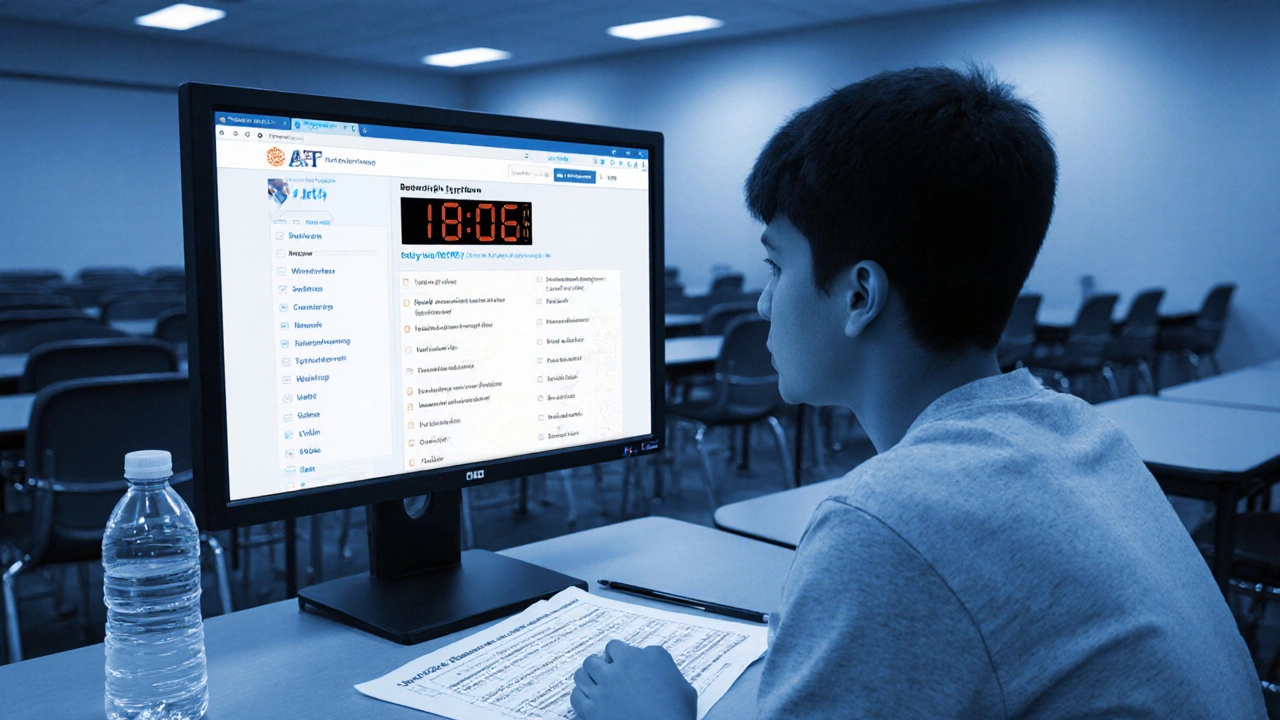
Grading: Percentages vs. Curves
GCSEs are criterion-referenced. You’re graded against a fixed standard. If you hit the mark for a grade 8, you get it-no matter how others did. That’s fair, but it’s also unforgiving. A small mistake can drop you from a 7 to a 6.
The SAT is norm-referenced. Your score is based on how you compare to other test-takers. The College Board uses a scale from 400 to 1600. A 1200 might be average. A 1400 puts you in the top 10%. That means you don’t need to get every question right. You can miss 10-15 questions and still score in the 90th percentile.
This changes how you approach prep. For GCSEs, you aim for perfection. For the SAT, you aim for strategy. Learn which questions to skip, when to guess, how to manage time. It’s a game of efficiency.
Global Recognition and Purpose
GCSEs are the standard exit exam for UK secondary schools. They determine which A-Levels you can take, which sixth form you get into, and sometimes even apprenticeship opportunities. They’re not designed for international use.
The SAT is built for U.S. college admissions. Over 2 million students take it every year. Most U.S. universities require it (though many are now test-optional). It’s also accepted by universities in Canada, Australia, and parts of Europe as proof of academic readiness.
If you’re applying to a U.S. university, your GCSEs alone won’t cut it. You’ll need SAT or ACT scores. If you’re staying in the UK, your GCSEs are the foundation. The SAT doesn’t replace them-it complements them.
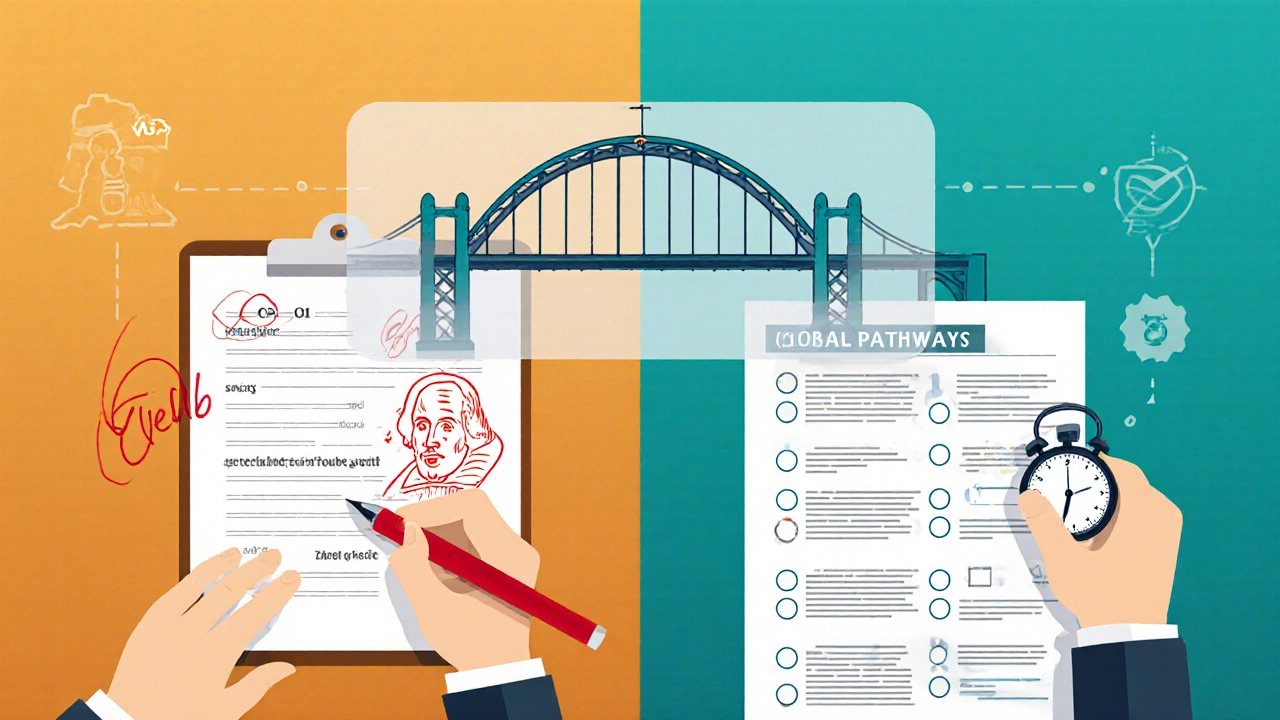
Who Finds Each Test Harder?
If you’re a deep thinker who likes writing essays, analyzing texts, and working steadily over time, you’ll probably find GCSEs more natural. You’ll struggle with the SAT’s timed, multiple-choice pressure.
If you’re a quick problem-solver who excels under pressure, you’ll likely find the SAT easier. You might hate the volume of GCSE revision and find the constant workload draining.
Here’s a quick guide:
- You’ll find GCSEs harder if: You struggle with long-term planning, dislike writing essays, or get overwhelmed by multiple deadlines.
- You’ll find the SAT harder if: You panic in timed tests, hate multiple-choice formats, or get lost in tricky wording.
There’s no shame in either. The system doesn’t expect you to be good at both. It just expects you to show up and do your best.
Preparation Tips That Actually Work
For GCSEs:
- Start past papers early-use them to find your weak spots, not just to practice.
- Use active recall: Quiz yourself with flashcards instead of rereading notes.
- Study in 45-minute blocks with 15-minute breaks. Your brain retains more this way.
- Get feedback on essays from teachers. Mark schemes are your secret weapon.
For the SAT:
- Use Khan Academy’s free SAT prep. It’s aligned with the real test.
- Focus on time management. Practice skipping hard questions and coming back.
- Learn common SAT traps: wrong answers that sound right, or right answers that seem too obvious.
- Take at least 3 full practice tests under timed conditions.
Both tests reward consistency over cramming. One hour a day, every day, beats 10 hours the night before.
Final Thoughts: It’s Not About Difficulty-It’s About Fit
GCSEs and the SAT aren’t rivals. They’re different tools for different systems. GCSEs measure breadth and depth of knowledge over time. The SAT measures how well you think under pressure in a narrow set of skills.
One isn’t harder than the other. But one might be harder for you. And that’s okay. The goal isn’t to beat the exam-it’s to understand how it works so you can work with it.
If you’re preparing for both-like a UK student applying to U.S. colleges-don’t try to treat them the same. Give GCSEs your daily grind. Give the SAT your strategy. Master each on its own terms.
Is GCSE harder than the SAT for international students?
It depends. International students often find GCSEs harder because they’re not used to the depth of subject coverage or the grading system. The SAT can feel more familiar if they’ve taken standardized tests before. But without exposure to British-style essay writing or coursework, GCSEs can be overwhelming. Many international students prep for the SAT first, then tackle GCSEs if applying to UK schools.
Can you do well on the SAT without tutoring?
Absolutely. Over 60% of students who score above 1400 on the SAT did so with self-study using free resources like Khan Academy. Tutoring helps if you need structure or struggle with test anxiety, but it’s not required. The key is consistent practice with real test materials.
Do universities prefer GCSEs or SAT scores?
UK universities look at GCSEs and A-Levels. U.S. universities look at SAT/ACT scores and high school transcripts. Neither replaces the other internationally. A UK student applying to Harvard needs both strong GCSEs (to show academic consistency) and a high SAT score (to meet U.S. admissions standards). They’re complementary, not competitive.
Is it possible to take both GCSEs and the SAT?
Yes, and many students do. UK students applying to U.S. colleges often take the SAT in Year 11 or 12 while still studying for GCSEs. It’s demanding, but doable. Time management is key. Most students take the SAT after their GCSE exams, so they can focus fully on one at a time.
Which test is more important for university admissions?
It depends on where you’re applying. In the UK, GCSEs and A-Levels are the main factors. In the U.S., SAT/ACT scores, GPA, and extracurriculars matter most. If you’re applying to both, you need both. Neither is universally more important-they serve different systems.