
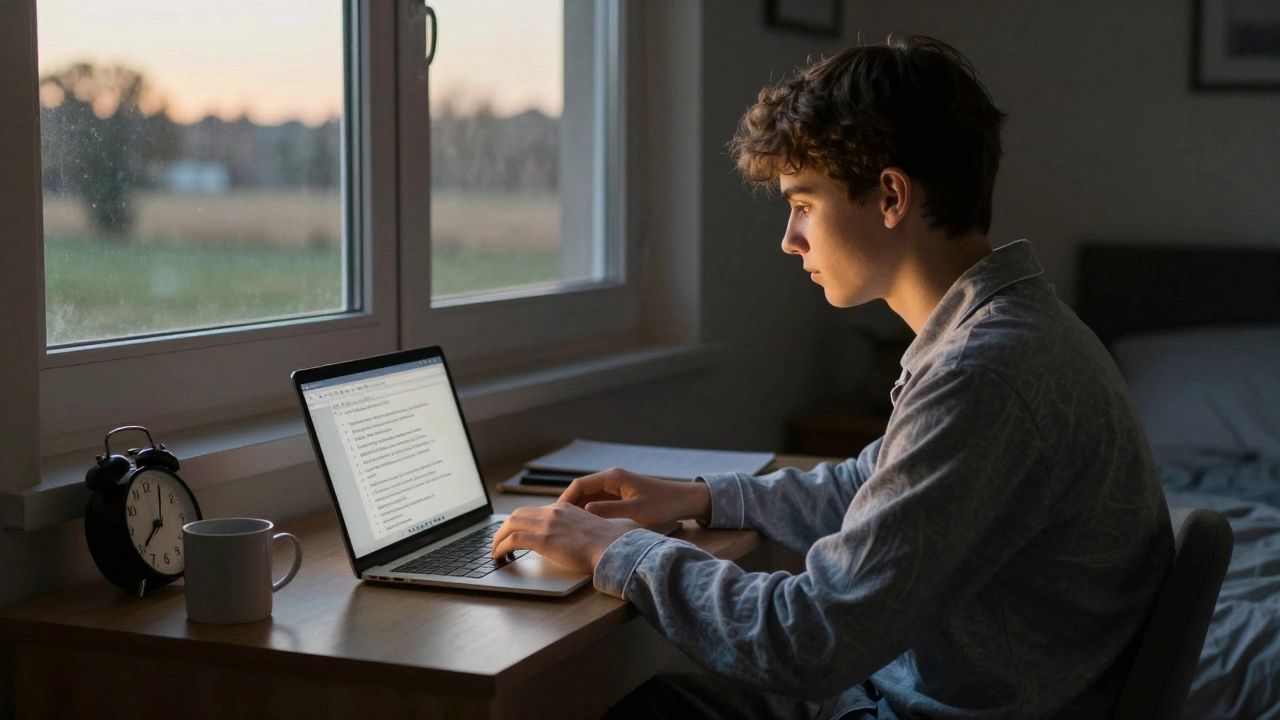
When you hear "online school," do you picture kids in pajamas typing away while their parents work from home? Or do you think it’s just like sitting in a classroom, but with a screen instead of a whiteboard? The truth is, online school and normal school aren’t just different in location-they’re different in how learning happens, how students connect, and even how success is measured.
Structure: When the bell rings, who decides?
In a traditional school, the day is carved into blocks: 8:00 a.m. math, 9:30 a.m. science, 11:00 a.m. lunch, 1:00 p.m. history. The schedule is set by the district, the teachers, and the building’s physical limits. You show up. You sit. You move when the bell rings. Online school? No bells. No hall passes. Students often get a list of assignments, deadlines, and live session times-but how they fit those into their day is up to them. A 13-year-old in rural Ohio might log in at 7 a.m. before helping with chores. A 16-year-old in Texas might study after night shift at a gas station. The structure is flexible, but that flexibility demands self-discipline most teens haven’t fully developed yet. A 2024 study from the National Center for Education Statistics found that students in fully online programs spent 40% less time in direct instruction than peers in brick-and-mortar schools. That doesn’t mean they learned less-it means they learned differently. They read. They watched videos. They worked alone. And they often had to ask for help without raising a hand.Teacher presence: From visible guide to digital coach
In normal school, teachers are everywhere. They walk the aisles. They notice when a student slumps in their chair. They hand out a sticky note with a quick "I’m here if you need me." In online school, teachers are mostly on screen. They post videos. They reply to messages. They host Zoom check-ins. But they can’t see if a student is struggling silently. A 2023 survey of 12,000 U.S. public school teachers found that 68% felt less confident identifying learning gaps in remote students. Why? Because body language, eye contact, and spontaneous questions-the quiet signals of confusion-are gone. Some online schools tried to fix this with daily 10-minute video check-ins. Others added AI tools that flagged when a student hadn’t opened an assignment in 48 hours. But none of it replaces a teacher who notices a student hasn’t turned in homework… and walks over to ask why.Social life: No lockers, no lunchroom
Remember the first day of school? The awkwardness. The laughter. The group project where someone did all the work but still got the same grade? Those moments aren’t just noise-they’re part of learning how to be human. Online school strips that away. Students rarely see each other outside of class. Clubs? Usually optional and held via Zoom. Sports? Often unavailable unless the district partners with local leagues. Friendships form in chat boxes, not hallways. A 2025 report from the University of Michigan found that students in full-time online programs were 3x more likely to report feeling isolated than those in traditional schools. That doesn’t mean online students are lonely. Some thrive. They’re introverted. They’re bullied in person. They have anxiety. For them, online school is a relief. But for others? It’s a slow erosion of connection. And connection isn’t a bonus in education-it’s part of the curriculum.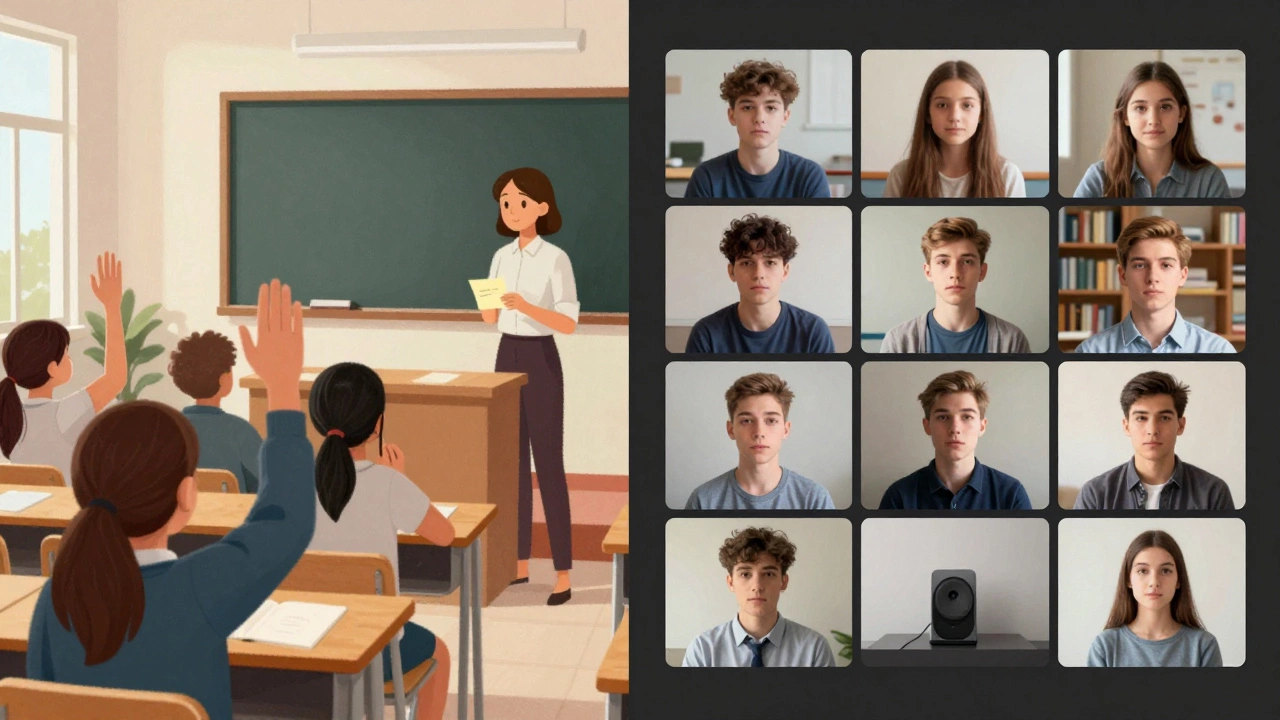
Assessment: Tests on a screen, or in a room with a proctor?
In normal school, tests happen under supervision. You sit in rows. Your phone is in a basket. The teacher walks around. Cheating? Possible-but hard. Online assessments? They’re often open-book. Or timed with no monitoring. Or recorded with a camera that doesn’t even work. Some schools use AI proctoring tools that watch your face and mouse movements. But those tools are flawed. They flag blinking. They mistake a yawn for cheating. A 2024 study in the Journal of Educational Technology found that 27% of students in online courses were wrongly flagged for academic dishonesty-mostly because of poor lighting or a nervous tic. Meanwhile, traditional schools still rely on handwritten essays, oral presentations, and group projects. Those things are harder to fake. And harder to grade. But they’re better at showing real understanding.Access: Who gets left behind?
Here’s the quiet truth: online school doesn’t fix inequality-it exposes it. In normal school, a kid without a laptop might borrow one. A student without Wi-Fi? The school gives them a hotspot. A child who needs special education services? The school has an IEP team, a speech therapist, a counselor-all in the same building. Online? That’s not guaranteed. A 2025 federal audit found that 1 in 4 low-income families in rural areas still lack reliable internet. In some states, districts don’t provide devices. In others, therapists are only available during school hours-and the student’s parent works two shifts. Online school sounds fair. It sounds equal. But it only works if every student has the same starting point. And they don’t.So is it the same?
No. Online school and normal school don’t just differ in how they deliver lessons. They differ in what they value. Normal school values routine, presence, and human interaction. It’s messy. It’s loud. It’s full of distractions. But it’s also full of real-life learning. Online school values flexibility, independence, and self-pacing. It’s quiet. It’s efficient. It’s scalable. But it’s also lonely-and it demands maturity many kids just don’t have yet. The best online programs don’t try to copy the classroom. They build something new: project-based learning, mentorship via video, community hubs where students meet in person once a week. Those programs work. But if you’re asking if online school is just school with a screen? That’s the wrong question. The right question is: What kind of learning do we want to support? And who gets to decide?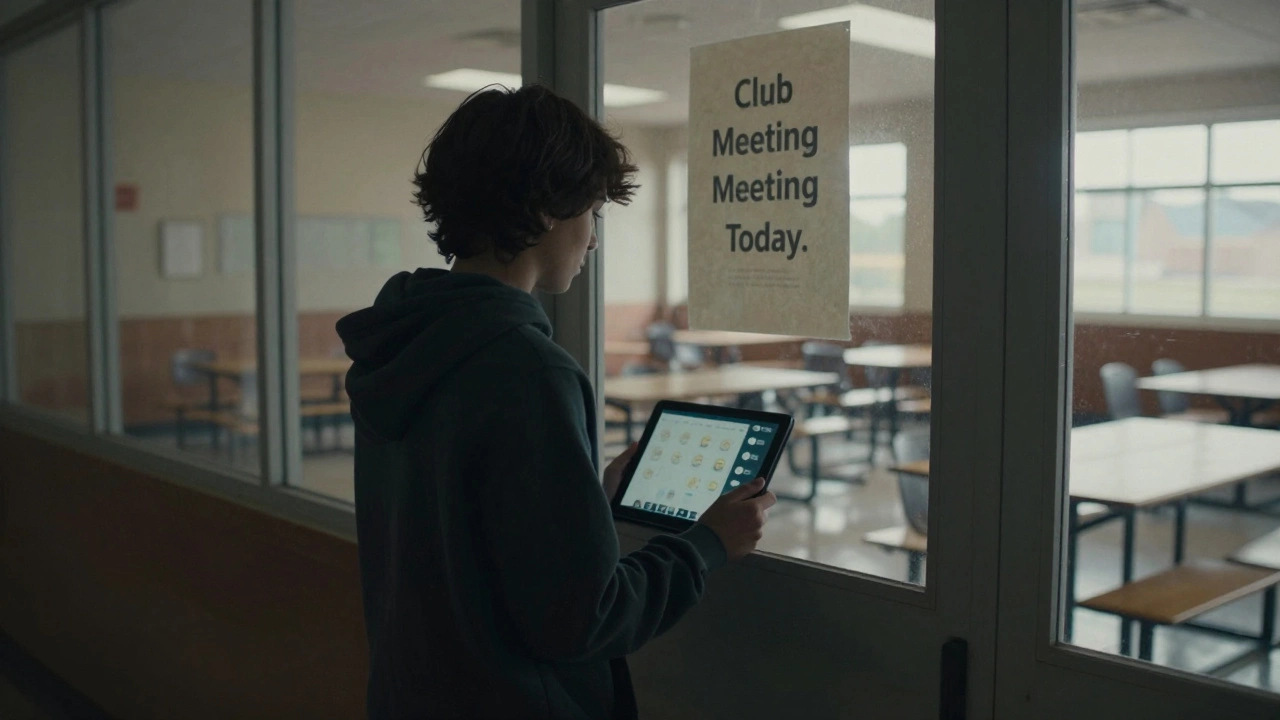
What’s missing from online school?
- Spontaneous peer interaction
- Immediate teacher feedback
- Access to physical resources (labs, libraries, gyms)
- Structured daily routines
- Consistent social-emotional support
When does online school work best?
- For students with anxiety or social phobias
- For athletes or performers with irregular schedules
- For families living in areas with no quality public schools
- For students who learn better at their own pace
- When paired with in-person check-ins (even once a week)
When does online school struggle?
- For younger children (under age 12)
- For students without reliable internet or devices
- For learners who need hands-on instruction (science labs, shop class)
- For students with unmet special education needs
- When parents can’t monitor or support daily learning
Can online school replace normal school completely?
For most students, no. Online school works well as a supplement or alternative for specific needs-but it can’t fully replace the social, emotional, and structural benefits of in-person learning. The best outcomes happen when online learning is blended with some face-to-face time, even if it’s just once a week.
Are online schools accredited like regular schools?
Yes, many are. Accredited online schools follow the same state standards as traditional schools. They offer diplomas that colleges accept. But not all online programs are equal. Some are run by for-profit companies with low academic standards. Always check if the school is accredited by a recognized agency like Cognia or a state education department.
Do colleges look down on online school diplomas?
No, not if the school is accredited. Colleges care more about course rigor, grades, and extracurriculars than where the classes happened. A student who took advanced math and science online and scored well on AP exams is viewed the same as one who took them in a classroom. What matters is what they learned-not the building they sat in.
Is online school easier than normal school?
It’s not easier-it’s different. Online school often requires more self-motivation. You’re not reminded by a bell. You don’t have classmates to push you. You have to manage your own time. Many students find it harder, not easier. It’s not about less work-it’s about more responsibility.
Can my child switch between online and normal school?
Yes, most public school districts allow students to switch between online and in-person learning at the start of each semester. Some even offer hybrid options. Talk to your district’s enrollment office. They’ll have the policy-and often, a counselor who can help you decide what’s best for your child’s learning style.