
US High School Qualifications: What You Need to Know About Diplomas, AP, and IB
When we talk about US high school qualifications, the set of credentials American students earn before applying to college, including their diploma and advanced coursework. Also known as American secondary education credentials, they’re not just a piece of paper—they’re a snapshot of what a student has learned, challenged themselves with, and how they’ve grown academically. Unlike the UK’s GCSEs and A Levels, where exams are the main focus, the US system blends coursework, standardized tests, and advanced classes into one overall profile. A high school diploma is the baseline, but it’s the AP courses, college-level classes offered in high school that let students earn credit before entering university and IB diploma, a rigorous international program with exams, essays, and community projects that really make a difference in college applications.
Most US students finish high school with a standard diploma, but top colleges don’t just look at that. They want to see if you pushed yourself. Did you take AP Biology and get a 5? Did you complete the full IB diploma with a 40+ score? These aren’t just extra classes—they’re proof you can handle college-level work. Schools like Yale, Harvard, and Stanford don’t prefer one over the other; they care about how you used the opportunities your school gave you. If your school doesn’t offer IB, they won’t penalize you for not taking it. But if you had AP options and didn’t use them, that’s a red flag. The system is built around context: your school’s resources, your choices within them, and how you performed.
Parents and students often compare US qualifications to UK ones. Is a US diploma like GCSEs? Not really. GCSEs are subject-specific exams taken at 16. The US diploma is earned over four years with ongoing assessments. A Levels are closer to AP or IB—focused, in-depth, and exam-heavy—but even then, the US system adds layers: extracurriculars, essays, teacher recommendations. That’s why a student with a 3.5 GPA and three APs might look stronger than a student with a 4.0 and no advanced courses. It’s not about perfection—it’s about challenge.
What you’ll find in the posts below are real comparisons, insider insights, and data-driven answers. You’ll see how US high school qualifications stack up against A Levels, why some students choose AP over IB, and how colleges interpret these credentials. Whether you’re a UK student applying to US schools, a parent trying to understand the system, or a teacher advising students, this collection gives you the facts—not the fluff.
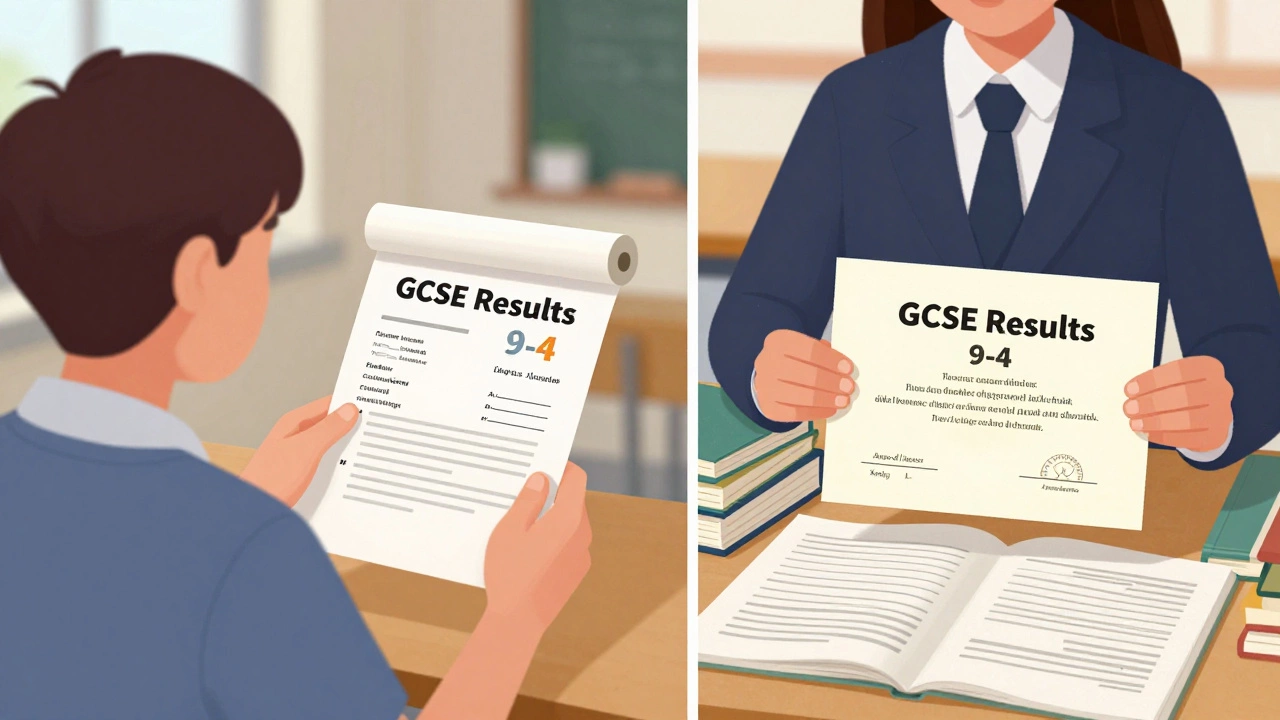
What Is the American Equivalent to GCSEs?
- by Eliza Fairweather
- on 4 Dec 2025
GCSEs are UK exams taken at age 16. The closest U.S. equivalent is the high school diploma, earned after four years of coursework. Learn how GCSE grades compare to U.S. grades and why SATs and GEDs aren't the same.