

Adult Learning Relevance Calculator
Assess Your Lesson's Real-World Relevance
Relevance Assessment
Key Insight
Adults learn best when lessons solve immediate problems. Your lesson needs to answer: "What will I use this for tomorrow?"
Teaching adults isn’t just teaching kids with more experience. Adults learn differently, and if you’re trying to help them pick up new skills, read better, or pass a certification, one-size-fits-all teaching won’t work. Whether you’re running a community literacy class, training workers on new software, or helping someone earn their GED, the methods you use make all the difference.
Understand Why Adults Learn
Adults don’t sit in class because they have to-they choose to. That changes everything. They want to solve real problems: get a better job, help their kids with homework, understand medical forms, or finally speak English confidently. If your lesson doesn’t connect to their life, they’ll tune out.
Research from the National Center for Education Statistics shows that 36% of U.S. adults lack basic digital literacy. That means half the people in your class might not know how to send an email or fill out an online form. Your job isn’t to teach them theory-it’s to give them tools they can use tomorrow.
Andragogy: The Adult Learning Model
Andragogy, developed by Malcolm Knowles in the 1970s, is the foundation of teaching adults. It’s not a fancy word-it’s just how adults naturally learn. Here’s what it looks like in practice:
- Self-directed: Adults want control. Don’t hand out rigid lesson plans. Let them help shape the topic. Ask: "What do you need to learn right now?"
- Experience-based: They’ve lived. Use their stories. If you’re teaching budgeting, ask someone to share how they paid off debt. That’s more powerful than any textbook.
- Problem-centered: Skip lectures on grammar rules. Start with: "How do you write a job application that gets noticed?" Then teach grammar as a tool to solve that problem.
- Immediate relevance: Adults forget what they don’t use. If you’re teaching math, tie it to calculating tips, comparing phone plans, or measuring paint for a room.
One teacher in Ohio runs a class for immigrants learning English. Instead of memorizing vocabulary lists, students practice ordering food at a diner, reading bus schedules, and filling out doctor’s forms. Results? 82% of students passed their citizenship test within six months.
Hands-On Learning Works Best
Adults learn by doing. Sitting and listening for an hour? That’s how kids learn. Adults need to touch, try, fail, and fix.
Take computer skills. Don’t show a PowerPoint on how to use Excel. Give them a real spreadsheet-maybe their own grocery list or a monthly bill tracker-and ask them to add up costs, find averages, or create a chart. Let them click around. Let them break it. Then show them how to fix it.
Same goes for writing. Don’t assign essays. Ask them to write a personal letter to a family member, a job application, or a complaint to a landlord. Then workshop it together. Feedback matters more than perfection.
Use Real-World Materials
Textbooks designed for teenagers? Avoid them. Adults don’t care about fictional stories about high school drama. Use real stuff:
- News articles from local papers
- Job postings and resume templates
- Utility bills, bank statements, or government forms
- Instruction manuals for appliances or phones
- YouTube videos they actually watch
A program in Chicago teaches financial literacy using actual pay stubs. Students learn to calculate take-home pay, understand taxes, and spot scams by analyzing real documents. One student, a single mom, told the teacher: "I finally know why my paycheck is less than I expected. I’m not being cheated-I just didn’t understand it."
Build Trust, Not Authority
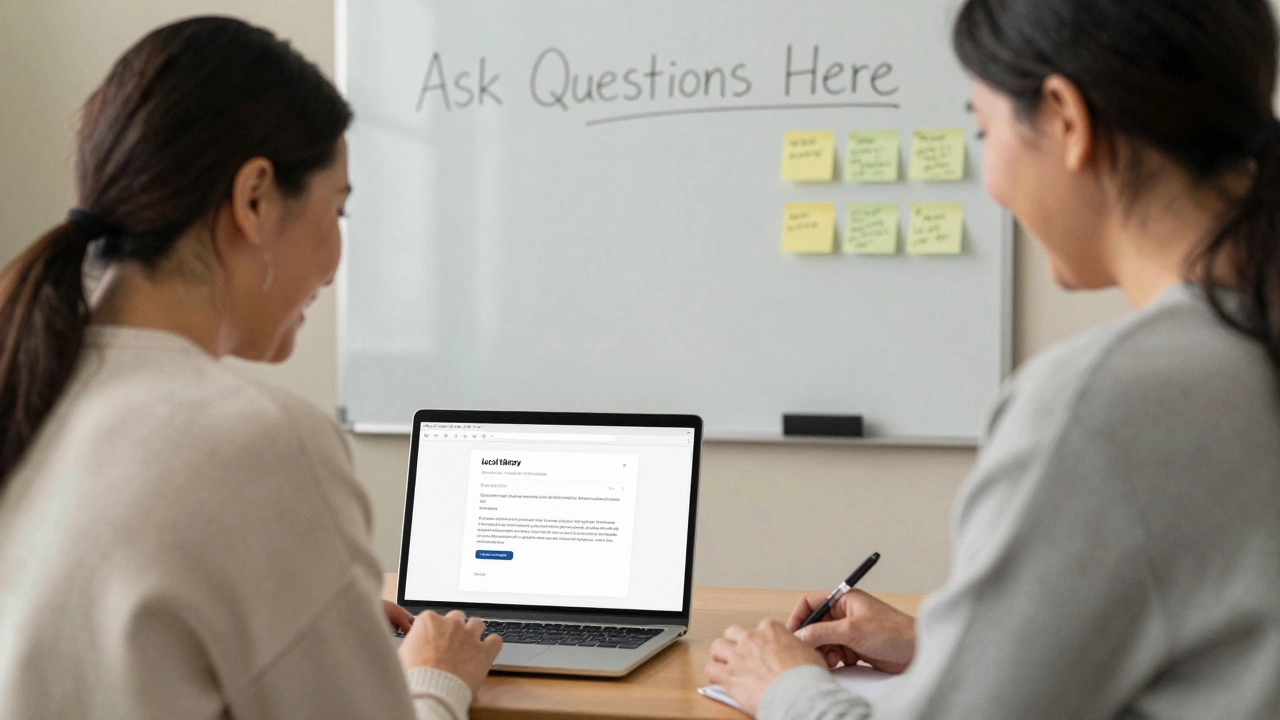
Adults don’t respond to teachers who act like they know everything. They respond to people who listen.
Instead of saying, "This is how you do it," try: "I’ve seen people do it this way-what’s worked for you?" That small shift turns a lecture into a conversation.
Many adult learners have been failed by schools before. They’ve been told they’re "not smart enough." Your classroom needs to be a place where they feel safe to ask "stupid" questions. That means no mocking, no rushing, no shame.
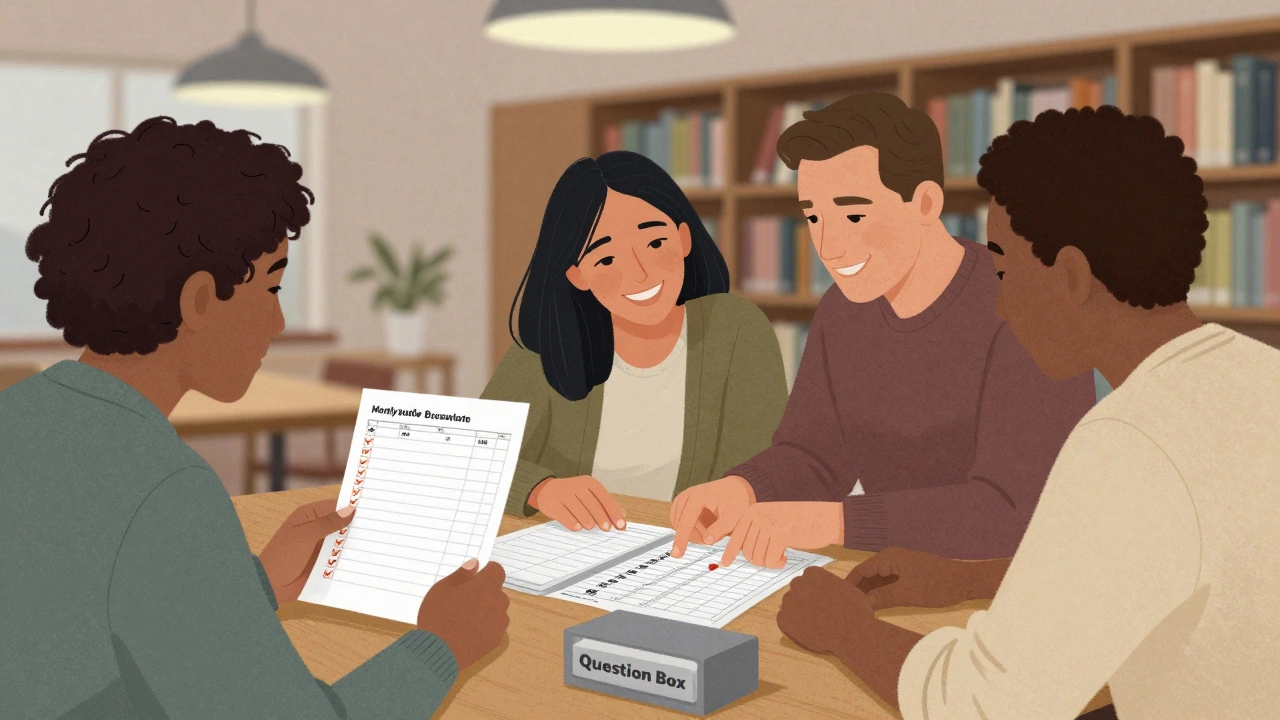
One teacher in Texas keeps a "Question Box"-students write down anything they don’t understand and drop it in anonymously. Every week, she answers five questions out loud. No names. No judgment. Just clarity.
Technology Isn’t the Answer-But It Helps
Not every adult is comfortable with apps or Zoom. But many are. The key is offering choices.
Use tech as a tool, not a requirement:
- Offer printed handouts alongside digital worksheets
- Record short video demos (under 5 minutes) for review
- Use free apps like Duolingo for language or Khan Academy for math
- Teach how to use Google Search effectively-many adults don’t know how to filter results or spot fake news
A library in Seattle runs weekly tech help sessions. Adults come in one-on-one with their phones or tablets. A volunteer walks them through setting up email, using Zoom for doctor visits, or finding free tax help online. No tech jargon. Just patience.
Group Work Builds Confidence
Adults learn from each other. Pair them up. Put them in small teams. Let them teach each other.
For example, in a GED prep class, one student might be great at math but struggles with reading. Another is the opposite. Have them tutor each other on their strengths. You’re not just teaching content-you’re building community.
Studies show that adult learners in peer-led groups are 40% more likely to complete their program than those in traditional lecture settings. Why? Because they feel less alone.
Assess Progress Without Tests
Forget quizzes and exams. Most adults hate them. They trigger old fears of failure.
Instead, use:
- Portfolios: Collect writing samples, completed forms, or project work over time
- Checklists: "Can you now fill out a job application without help?"
- Self-reflection: "What’s one thing you can do now that you couldn’t three months ago?"
- Real-world tasks: "Go to the DMV and ask for a form. Come back and tell us what happened."
One literacy program in Minnesota tracks progress through audio recordings. Students record themselves reading a passage at the start of class and again at the end. They hear their own improvement. No grade. Just proof.
Be Patient. Progress Isn’t Linear.
Adults learn in fits and starts. They miss class because their kid got sick. They get discouraged after a bad day at work. They quit because they think they’re "too old."
Success isn’t about speed. It’s about showing up. Celebrate small wins:
- They asked a question today.
- They read a whole article without giving up.
- They used a new word in conversation.
One student, a 62-year-old man who never finished high school, told his teacher: "I didn’t think I could learn this at my age. But now I help my granddaughter with her homework. That’s worth more than a diploma."
What Doesn’t Work
Don’t:
- Use baby talk or speak slowly as if they’re children
- Force memorization without context
- Ignore their life experiences
- Use outdated materials from 20 years ago
- Expect them to learn like teenagers
These approaches don’t just fail-they make people feel worse.
Final Thought: It’s Not About Teaching. It’s About Empowering.
Adult education isn’t about filling heads with facts. It’s about giving people back their confidence, their voice, and their power to change their lives. The best teachers don’t have the fanciest degrees. They have the patience to listen, the honesty to adapt, and the belief that it’s never too late to learn.
What’s the most effective way to teach adults who struggle with reading?
Start with real-life materials they care about-like job applications, medication labels, or bus schedules. Use multi-sensory methods: say the word, write it, and use pictures. Build confidence through small wins, like reading one paragraph aloud without help. Avoid flashcards and drills. Focus on meaning, not memorization.
Can adults learn new skills like coding or math later in life?
Yes, absolutely. The brain doesn’t stop learning at 30. Adults learn best when the skill connects to a real goal-like building a website for their small business or understanding their retirement account. Use project-based learning: start with a simple task, like creating a budget spreadsheet, then layer in math or coding concepts as needed.
How do you keep adult learners motivated?
Connect every lesson to their personal goals. If someone wants a better job, show them how today’s lesson gets them closer. Celebrate progress, not perfection. Let them track their own growth with simple checklists or journals. And always remind them: you’re not behind-you’re exactly where you need to be to start.
Is online learning good for adult education?
It can be, but only if it’s designed for adults. Many online courses assume prior knowledge or move too fast. The best online programs offer flexible pacing, downloadable materials, live Q&A sessions, and tech support. Always pair online learning with human connection-whether it’s a weekly Zoom call or a local study group.
What if an adult learner is shy or afraid to speak up?
Create low-pressure ways to participate. Use written responses, anonymous question boxes, or pair-and-share activities. Never force anyone to speak. Let them observe first. Many adults need weeks to feel safe. Trust builds slowly, but when it does, their progress can be dramatic.
Teaching adults isn’t about having all the answers. It’s about asking the right questions-and being there when they find their own.