

Adult education isn’t just going back to school. It’s about changing careers, fixing gaps in your knowledge, or simply learning something new because you want to. Unlike kids in classrooms, adults don’t have bells, schedules, or parents reminding them to do homework. So how does it actually work? The process of adult education is different-and it’s designed to fit real life, not the other way around.
Adults Learn Differently
Adults aren’t just older students. They come with baggage-jobs, kids, bills, past failures, and years of experience. That’s not a problem. It’s an advantage. Research from the Journal of Adult Education shows that adults learn best when they can connect new information to what they already know. If you’re learning Excel because your boss asked you to, you’re not just memorizing formulas. You’re solving a real problem: getting promoted, saving time, or avoiding stress.
That’s why adult education skips the fluff. No one’s asking you to recite the history of algebra. They’re asking: Can you balance a budget? Can you read a contract? Can you fix your computer? The learning is tied to outcomes, not tests.
Step 1: Recognize the Need
It starts with a reason. Not a vague idea like “I should learn more.” But something specific: “I can’t apply for the supervisor role because I don’t have my high school equivalency.” Or, “My kid’s teacher said they’re falling behind in math, and I don’t know how to help.”
That moment-when you realize you’re stuck because of a skill gap-is the trigger. It’s not always dramatic. Sometimes it’s quiet: scrolling through job ads and seeing the same requirements over and over. Or realizing you’re paying too much for a service because you don’t understand the contract.
There’s no checklist for this step. But if you’ve ever thought, “I wish I knew how to do that,” you’re already in the process.
Step 2: Find the Right Program
Not every program fits every adult. You don’t need a four-year degree to get a certification in basic accounting. You don’t need to sit in a lecture hall at 7 a.m. if you work nights.
Here’s what’s out there:
- Community colleges: Offer GED prep, vocational certificates, and evening classes. Most charge under $100 per course in Australia.
- Online platforms: Sites like Coursera, FutureLearn, and TAFE Digital let you learn at your own pace. Many are free or low-cost.
- Workplace training: Employers often fund upskilling. Ask your HR department. You might be eligible for government-subsidized training.
- Public libraries: Many run free digital literacy, resume writing, and basic math workshops.
- Non-profits: Organizations like Adult Literacy Australia and Migrant Resource Centres offer tailored support.
The key? Look for programs that offer flexible hours, no long-term commitment, and clear outcomes. If a course says “you’ll earn a certificate,” make sure it’s recognized by employers or government bodies.
Step 3: Set Realistic Goals
Adult learners often fail not because they’re not smart, but because they set goals that don’t match their lives.
“I’ll study two hours every night” sounds good-until you’re working overtime, your kid’s sick, and you’re exhausted. Instead, try: “I’ll do 20 minutes on Tuesdays and Thursdays after dinner.” Or: “I’ll finish one module before my next pay day.”
Small wins build momentum. Finish one lesson? Celebrate it. That’s how you stay in the game.
Step 4: Learn in Context
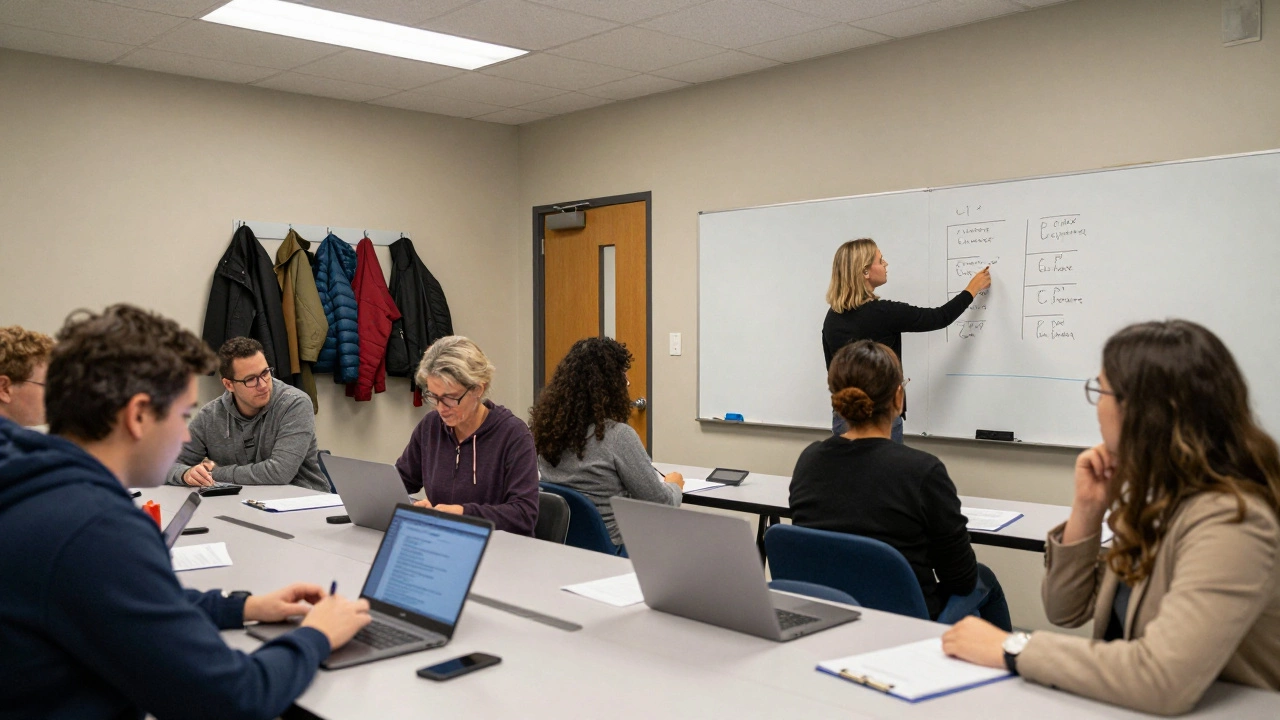
Adults don’t learn well in isolation. You need to use what you’re learning right away.
Learning French? Try ordering food at a French café. Learning budgeting? Track your spending for a week. Learning how to write a cover letter? Apply for a job you’re interested in-even if you’re not sure you’ll get it.
Studies from the Adult Education Quarterly show that adults retain 70% more when they apply learning immediately. Theory without practice is just noise.
Step 5: Build a Support System
Going it alone is the biggest reason adults quit. You’re not lazy. You’re just human.
Find one person who’s also learning. Join a study group. Talk to your partner about your goals. Tell your boss you’re taking a course-many will give you time off for training.
Some programs even offer mentors. In South Australia, TAFE’s Adult Learning Support Program pairs learners with volunteers who help with tech issues, scheduling, or just encouragement. You don’t need a PhD to help someone stay on track.
Step 6: Overcome Common Barriers
Here’s what stops most adults:
- Time: Block out 30 minutes a week. Use your commute, lunch breaks, or Sunday mornings.
- Cost: Many programs are free or subsidized. Check Australian Government’s Skills and Training for funding options.
- Self-doubt: You’re not too old. The average age of adult learners in Australia is 38. Some are 60.
- Technology: If you’re scared of computers, ask for help. Libraries and community centres offer free tech help sessions.
Barriers aren’t excuses. They’re problems with solutions.

Step 7: Track Progress and Adjust
Adult learning isn’t linear. Some weeks you’ll fly. Others, you’ll stall. That’s normal.
Keep a simple log: What did you learn? How did you use it? What got in the way? After a month, look back. Did you improve? Did you feel more confident? That’s the real measure of success.
Don’t wait for a test score. If you can now explain your tax return to your partner, or help your teenager with their homework, you’ve won.
What Happens After You Finish?
Finishing a course isn’t the end. It’s the start of the next phase: applying your new skills.
Maybe you get a promotion. Maybe you start a side hustle. Maybe you just feel less stressed when you open a bank statement. That’s the point.
Adult education doesn’t always lead to a diploma. Sometimes it leads to peace of mind.
Real Example: Maria’s Story
Maria, 49, worked as a cleaner in Adelaide. She could read, but struggled with forms, emails, and online banking. Her daughter was in Year 7 and needed help with math. Maria felt helpless.
She signed up for a free six-week digital literacy course at her local library. She learned how to use Gmail, fill out online forms, and use a calculator app. After three weeks, she started helping her daughter with homework. Two months later, she applied for a clerk role at a community centre-and got it.
She didn’t get a degree. But she got confidence. And a better job.
Final Thought: It’s Never Too Late
There’s no magic age for learning. No cutoff. No exam you have to pass to be allowed to grow.
The process of adult education is messy. It’s interrupted. It’s slow. But it’s powerful. Every adult who learns something new isn’t just gaining a skill. They’re rewriting their story.
Is adult education only for people who didn’t finish school?
No. Many adults with university degrees take courses to learn new skills, switch careers, or stay current in their field. Adult education includes everything from basic literacy to coding bootcamps and leadership training.
Can I get financial help for adult education in Australia?
Yes. The Australian government offers subsidies through Skills and Training programs. Many states, including South Australia, provide fee-free or low-cost courses for eligible adults, especially in high-demand areas like healthcare, IT, and trades. Check your state’s education website or visit a TAFE campus for details.
How long does it take to complete an adult education course?
It varies. Basic literacy or digital skills courses can take 4-12 weeks. Vocational certificates (like Certificate III in Business) usually take 6-12 months. Some online courses are self-paced and can be done in a few weeks. The length depends on your goal and how much time you can commit.
Do I need to be good at school to succeed in adult education?
No. Adult education is designed for people who didn’t thrive in traditional schools. Teachers focus on practical skills, real-life examples, and patience. Many programs have no entry requirements. You just need the willingness to try.
What if I’m scared of failing?
Fear of failure is common, but adult learning environments are built to be safe. Most programs don’t grade you like school. You’ll get feedback, not marks. If you don’t get it right away, you can try again. The goal isn’t perfection-it’s progress.