
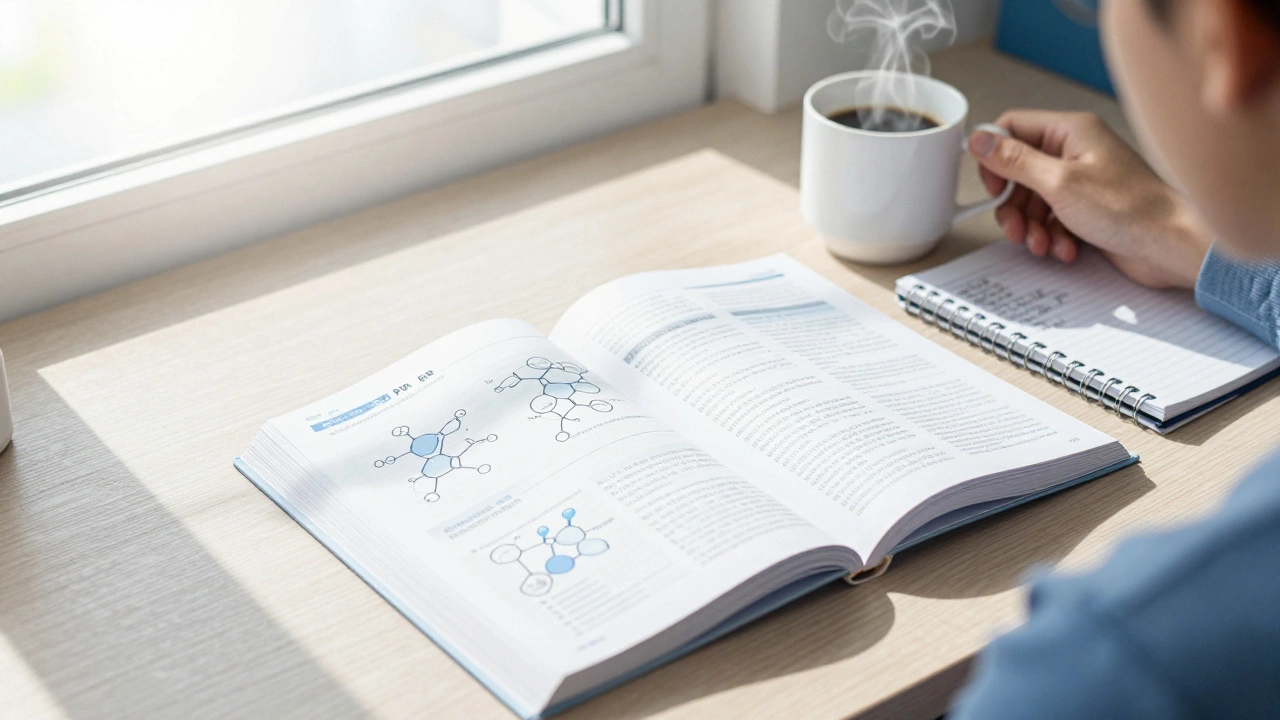
Study Schedule Optimizer
Select the current time or your planned study block to see the best cognitive match for your brain.
Click a time window above to discover the optimal tasks for your brain's current state.
Quick Tips for Peak Learning
- Morning (8 AM - 12 PM): Best for complex problem solving and new, difficult concepts.
- Afternoon (2 PM - 5 PM): Great for reviewing known material and creative tasks.
- Evening (6 PM - 10 PM): Ideal for light reading and organizing your schedule.
- Sleep: Essential for moving short-term memories into long-term storage.
To get the most out of your exam preparation, you need to understand the Circadian Rhythm is the natural internal process that regulates the sleep-wake cycle and repeats roughly every 24 hours. It doesn't just tell you when to sleep; it controls your body temperature, hormone release, and most importantly, your cognitive alertness. When you try to study a dense subject during a 'circadian dip,' your brain's ability to focus drops significantly, making an hour of study feel like four.
The Morning Peak: Tackling the Hard Stuff
For the vast majority of people, the brain is most alert a few hours after waking up. This is when your Cortisol levels-a hormone that helps you wake up and stay alert-are typically at their peak. If you're facing a subject that makes your head spin, like organic chemistry or advanced linguistics, do it now.
During this window, your prefrontal cortex is most efficient. This part of the brain handles executive functions: logical reasoning, planning, and impulse control. If you try to learn a brand-new concept at 9 PM, you're essentially asking a tired brain to build a skyscraper from scratch. In the morning, that same task is like assembling a Lego set-the pieces fit together much more easily.
The Afternoon Slump: Managing the Dip
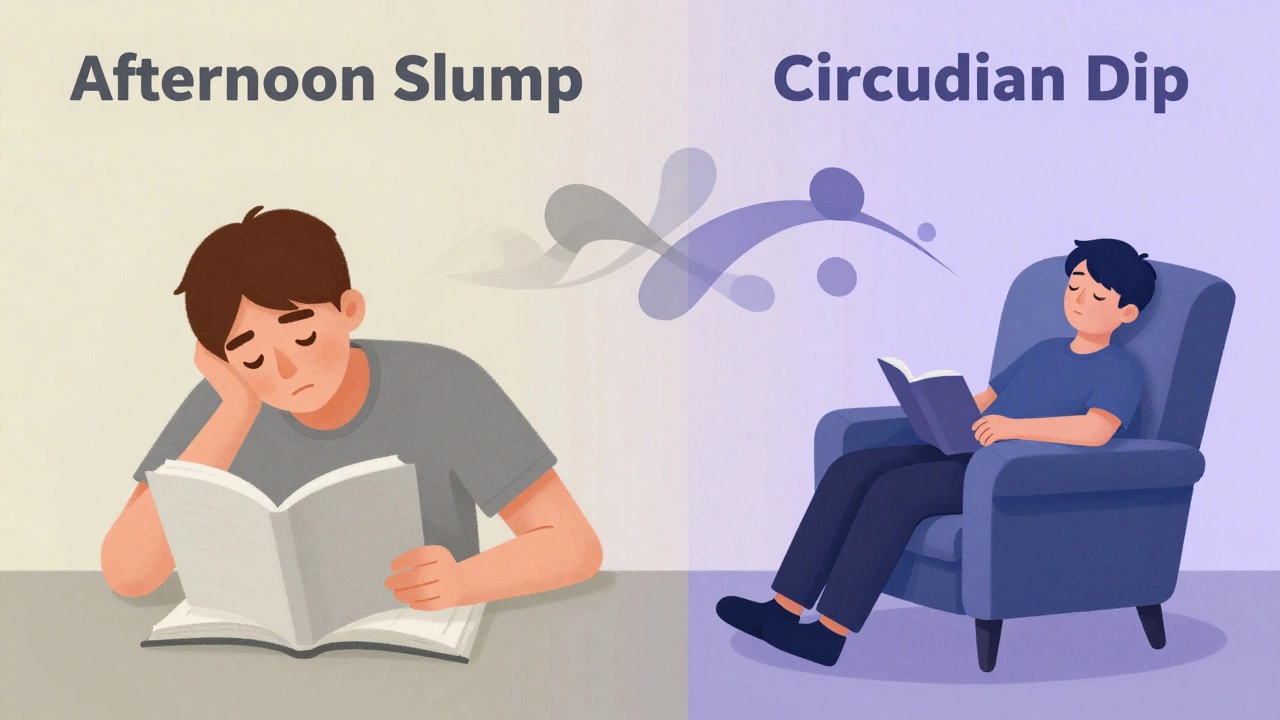
Around 2 PM to 4 PM, most of us hit a wall. You might feel an irresistible urge to nap or find yourself reading the same paragraph five times. This is a natural dip in your core body temperature and a shift in your internal clock. Trying to force a high-intensity study session during this time is a waste of energy.
Instead of fighting the slump, pivot your strategy. Use this time for 'low-friction' work. This includes tasks like organizing your notes, updating your calendar, or doing simple repetitive exercises that don't require deep critical thinking. Some people find that a 20-minute power nap-specifically one that doesn't exceed 30 minutes-can reset the brain and clear out Adenosine, the chemical that builds up in your brain throughout the day to make you feel sleepy.
The Evening Window: Review and Creative Flow
As the sun goes down, your brain enters a different state. While you might not have the raw analytical power you had at 10 AM, many people find a 'second wind' in the evening. This is often a great time for creative synthesis-connecting the dots between different topics you studied during the day.
However, there is a danger here: the blue light from laptops and smartphones. Melatonin is the hormone responsible for signaling to your body that it is time to sleep. Exposure to artificial light suppresses this hormone, tricking your brain into thinking it's still daytime. If you study until midnight under bright LED lights, you'll struggle to reach the deep sleep stages required for memory consolidation.
| Time Block | Cognitive State | Recommended Task | Avoid |
|---|---|---|---|
| 8 AM - 12 PM | High Alertness | Learning new, complex topics | Mindless browsing |
| 1 PM - 4 PM | Low Energy (Dip) | Organization, flashcards, light review | Learning new difficult concepts |
| 5 PM - 9 PM | Moderate Alertness | Writing, synthesis, creative work | High-stress cramming |
| 10 PM onwards | Winding Down | Planning the next day | Heavy technical reading |
The Secret Weapon: Sleep and Memory Consolidation
You can study at the perfect time every day, but if you cut your sleep to four hours to 'get more done,' you're essentially erasing your work. Your brain doesn't store information the moment you read it; it stores it while you sleep. This process is called Memory Consolidation, where the Hippocampus transfers temporary data to the long-term storage of the neocortex.
During REM (Rapid Eye Movement) sleep, your brain processes the information you learned, discards the useless bits, and strengthens the important connections. If you cram all night and skip sleep, you are preventing this physical process from happening. You might remember the information for a few hours, but you won't have truly 'learned' it. This is why students who sleep 7-8 hours consistently outperform those who pull all-nighters, even if the all-nighters spent more hours with the book.

Are You a Lark or an Owl?
While the general patterns above apply to most, you have to account for your Chronotype, which is the genetically determined tendency of an individual to prefer waking up at a certain time. If you are a 'Night Owl,' your peak cognitive window might shift three or four hours later than a 'Morning Lark.'
To find your personal peak, track your focus for one week. Note when you feel most focused and when you start drifting. If you find you're most sharp at 8 PM, don't force yourself to wake up at 5 AM to study just because a productivity blog told you to. Working with your biology is always more effective than fighting it.
Common Pitfalls to Avoid
One of the biggest mistakes is the 'marathon session.' The human brain can only maintain intense focus for about 90 to 120 minutes before it needs a break. This is tied to Ultradian Rhythms, which are shorter cycles of energy and fatigue that happen within a 24-hour period.
Instead of a 6-hour block, try the Pomodoro technique or a similar variation: 50 minutes of deep work followed by a 10-minute break where you completely step away from screens. Walk around, stretch, or grab a glass of water. This prevents the mental fatigue that makes study sessions feel endless and unproductive.
Is it actually possible to learn effectively at night?
Yes, but it depends on your chronotype. Night owls have a delayed sleep phase, meaning their peak alertness occurs later in the evening. However, for the average person, analytical ability drops at night, making it better for review than for learning complex new material.
Does caffeine change the best time to study?
Caffeine blocks adenosine receptors, which temporarily masks tiredness. While it can help you push through an afternoon slump, it doesn't change your underlying circadian rhythm. Overusing it in the evening can ruin your sleep quality, which in turn destroys your memory consolidation.
What happens if I study during my 'dip' period?
You'll likely experience 'cognitive friction.' This means you'll spend more effort for less result. You might read a page and realize you have no idea what it said, leading to frustration and burnout. It's better to take a nap or do light admin work.
How long should I sleep for maximum memory retention?
Most adults need between 7 and 9 hours of sleep. The final hours of sleep are typically richest in REM sleep, which is critical for integrating complex information. Cutting your sleep from 8 hours to 6 hours doesn't just lose you 2 hours of rest; it might lose you a huge chunk of your memory processing.
Can I 'train' my brain to be a morning person?
To an extent, yes. By exposing yourself to bright light immediately upon waking and keeping a consistent wake-up time, you can shift your circadian rhythm. However, your genetic chronotype provides a baseline that is hard to completely override.
Next Steps for Your Study Plan
Start by auditing your energy levels for three days. Write down a scale of 1-10 of how you feel every two hours. Once you identify your peak, schedule your hardest subject for that window. If you're struggling with afternoon fatigue, try a high-protein lunch instead of a heavy carb-load, which can worsen the mid-day crash. Finally, set a 'digital sunset'-turn off screens an hour before bed to let your melatonin naturally rise, ensuring that all the hard work you did during the day actually sticks.