
Exam Brain Food Planner
Calculate your ideal pre-exam nutrition plan based on evidence-based recommendations for maximum focus and memory retention.
Input Exam Timing
3-4 Hours Before Exam
Recommended Time:
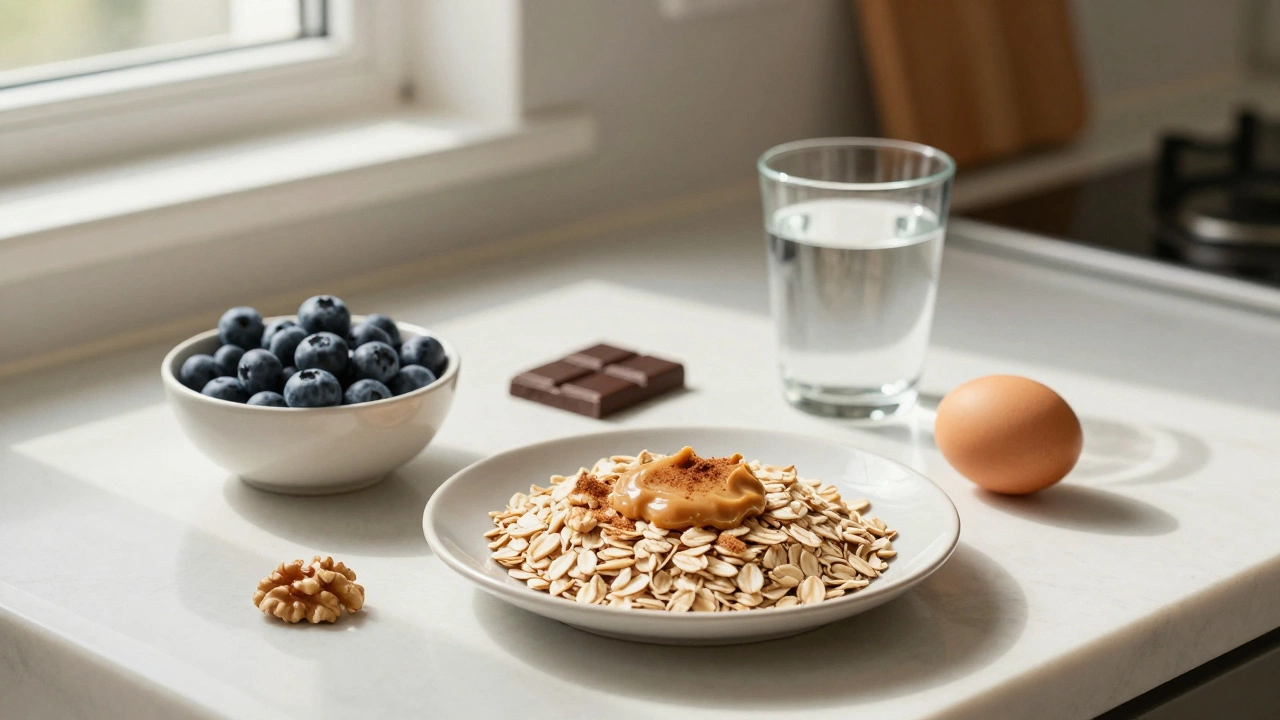
✅ Recommended: Oats with blueberries and walnuts
Provides slow-release energy and antioxidants
❌ Avoid: Sugary cereals or pastries
Causes blood sugar crash during exam
1-2 Hours Before Exam
Recommended Time:
✅ Recommended: Hard-boiled egg with walnuts
Choline for memory + omega-3s for focus
❌ Avoid: Energy drinks or fried foods
Causes jitters and slow digestion
30 Minutes Before Exam
Recommended Time:
✅ Recommended: Dark chocolate (70%+ cocoa)
Increases blood flow to brain
❌ Avoid: Coffee overload
Causes anxiety and dehydration
Hydration Reminder
Staring at your notes at 11 p.m. the night before a big exam, you wonder: what should I eat to actually remember this stuff? It’s not just about how much you studied-it’s about what you put in your body in the hours leading up to that test. Food affects your focus, memory, and even how calm you feel under pressure. And no, coffee and energy bars aren’t the answer.
What your brain really needs during an exam
Your brain uses about 20% of your body’s energy, even though it’s only 2% of your weight. That means when you’re trying to recall formulas, analyze essay prompts, or solve complex problems, it’s burning through glucose like crazy. But not all glucose is created equal. Sugary snacks give you a quick spike, then a crash-leaving you foggy and irritable halfway through the test. What you want is steady fuel: slow-releasing carbs, healthy fats, and a little protein to keep your brain running smoothly for hours.
Studies from the University of Oxford and the American Journal of Clinical Nutrition show that students who ate balanced meals before exams scored up to 15% higher on memory tasks than those who skipped breakfast or ate sugary cereals. The key isn’t eating more-it’s eating smarter.
Top 5 brain foods to eat before an exam
- Blueberries - Packed with antioxidants called flavonoids, blueberries improve communication between brain cells. One small study found that students who ate a cup of blueberries 2 hours before a memory test recalled 12% more words than those who didn’t. They’re easy to toss in a bag, eat cold, and won’t make you feel sluggish.
- Oats - Rolled oats or steel-cut oats (not the sugary instant kind) release glucose slowly. That means your brain gets a steady stream of energy for 4-6 hours. Add a spoon of almond butter and a sprinkle of cinnamon for extra brain support. Cinnamon helps regulate blood sugar, which keeps your focus sharp.
- Walnuts - They look like little brains for a reason. Walnuts are rich in omega-3 fatty acids, especially ALA, which supports neuron function. A 2024 study from the University of California showed that students who ate 4 walnuts daily for 6 weeks before exams had faster reaction times and better problem-solving accuracy. Eat them raw, not roasted in salt or sugar.
- Eggs - The yolks contain choline, a nutrient your brain uses to make acetylcholine-the neurotransmitter behind memory and learning. One boiled egg gives you about 150 mg of choline, close to the daily recommended amount. Pair it with whole-grain toast for slow-release carbs and you’ve got a perfect pre-exam meal.
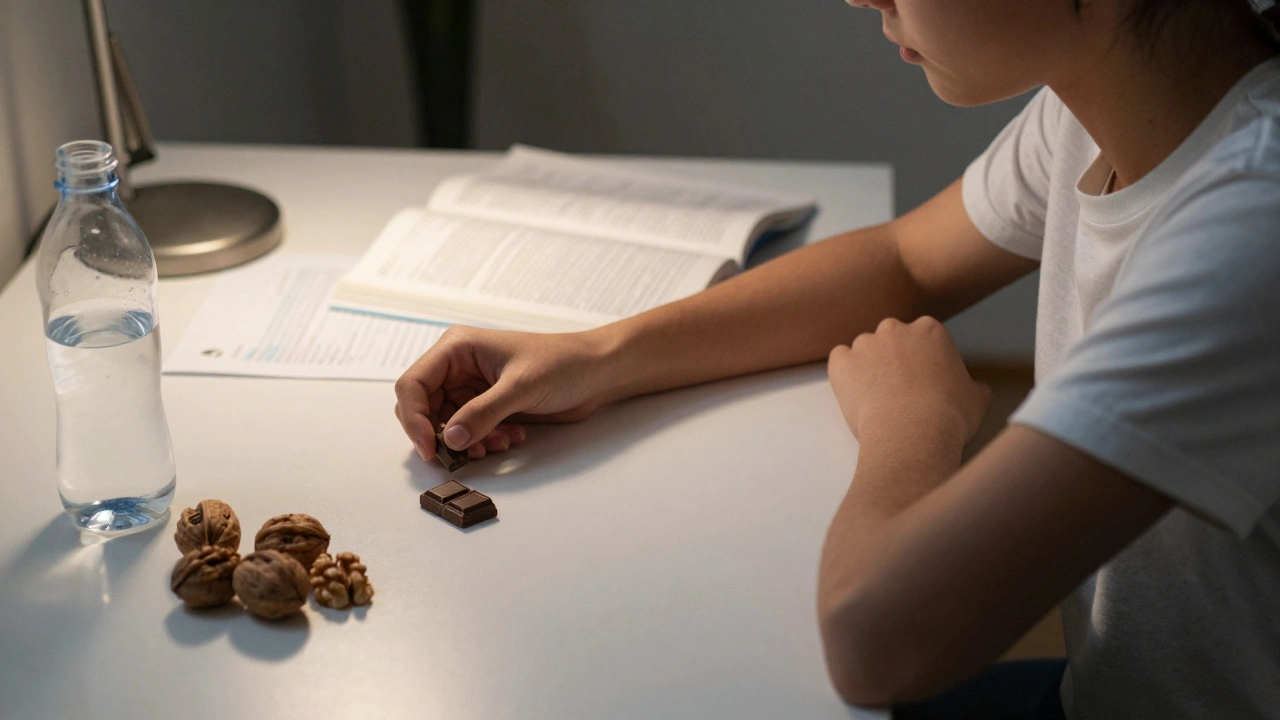
- Dark chocolate (70% cocoa or higher) - Not a joke. The flavonoids in dark chocolate increase blood flow to the brain, improving alertness and focus. A small square (15-20 grams) 30 minutes before your exam can sharpen your attention without the sugar crash. Avoid milk chocolate-it’s mostly sugar and fat.
What to avoid like the plague
Some foods sabotage your brain even if they seem harmless. Here’s what to skip:
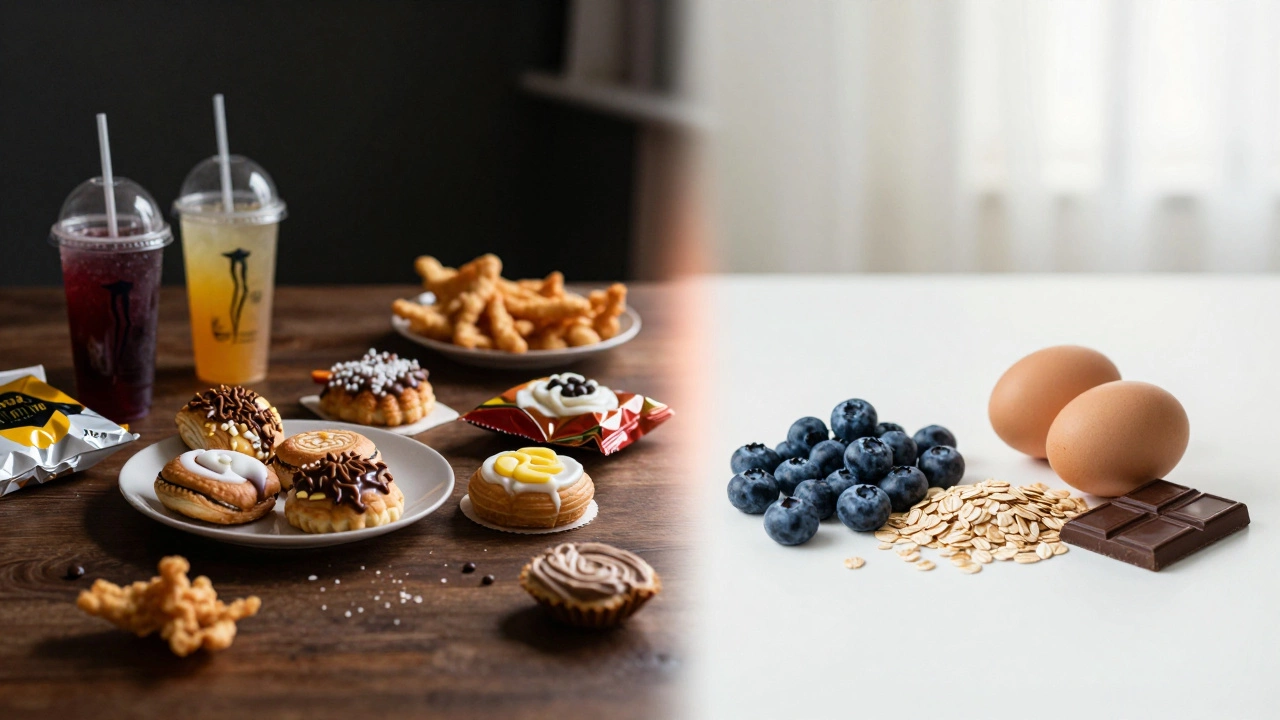
- White bread, pastries, and sugary cereals - These spike your blood sugar fast, then crash it. You’ll feel fine at first, then suddenly zoned out during the second half of the exam.
- Energy drinks - They’re loaded with sugar and caffeine, but also artificial additives that can trigger anxiety or jitters. Your heart races, your hands shake, and your brain gets noisy instead of clear.
- Heavy fried foods - Pizza, fries, fried chicken-they take forever to digest. Your body redirects blood to your stomach instead of your brain. You’ll feel tired, bloated, and mentally slow.
- Excess caffeine - One cup of coffee is fine. Three? You’re asking for tremors, racing thoughts, and a mind that can’t settle. Caffeine also dehydrates you, and even mild dehydration cuts cognitive performance by up to 10%.
Timing matters: when to eat what
Eating the right food at the wrong time is almost as bad as eating the wrong food.
- 3-4 hours before - Eat your main meal. Think: grilled salmon, quinoa, steamed broccoli, and a side of berries. This gives your body time to digest and stabilize blood sugar.
- 1-2 hours before - Light snack. A banana with a tablespoon of peanut butter, or a hard-boiled egg and a few walnuts. Avoid anything too fatty or fibrous-you don’t want stomach cramps mid-exam.
- 30 minutes before - A small piece of dark chocolate or a few blueberries. Just enough to trigger a gentle brain boost without overloading.
- During the exam - Stick to water. Bring a small bottle. Dehydration is the silent killer of focus. If the exam is longer than 2 hours and you’re allowed, a few almonds or a single date can help maintain energy.
Hydration: the overlooked brain booster
Most students forget this: your brain is 75% water. Even a 2% drop in hydration levels reduces concentration, short-term memory, and reaction speed. A 2023 study in the journal Nutritional Neuroscience found that students who drank 500 ml of water 30 minutes before an exam performed significantly better on attention tasks than those who didn’t.
Drink water steadily throughout the day. Don’t chug it right before the exam-that’ll just make you need the bathroom mid-test. Aim for pale yellow urine. If it’s clear, you’re overdoing it. If it’s dark, you’re already dehydrated.
Real-world example: what worked for a student in Adelaide
Last year, a Year 12 student at Norwood International High School struggled with memory lapses during practice exams. She switched from energy drinks and muffins to a pre-exam routine: oatmeal with blueberries and walnuts for breakfast, a banana and a square of dark chocolate 90 minutes before the test, and water all morning. On her final biology exam, she remembered every diagram she’d studied-and scored 92%. She said, “I didn’t feel panicky. My mind felt clear, like everything clicked into place.”
Quick checklist for exam day
- ✅ Eat a balanced meal 3-4 hours before
- ✅ Have a light, brain-boosting snack 1-2 hours before
- ✅ Avoid sugar, fried food, and energy drinks
- ✅ Drink water steadily-don’t wait until you’re thirsty
- ✅ Bring a small piece of dark chocolate or a few blueberries for 30 minutes before
- ✅ Skip the coffee overload-stick to one cup max
There’s no magic pill. But there *is* a magic plate. What you eat before an exam doesn’t replace studying-it makes your studying count. Your brain isn’t a machine you can power with caffeine and sugar. It’s a delicate system that thrives on clean, steady fuel. Give it what it needs, and it’ll give you back the clarity you’re looking for.
Can I just drink coffee before my exam?
One cup of black coffee is fine-it can help with alertness. But more than that, especially on an empty stomach, can make you jittery, anxious, or dehydrated. Coffee also wears off fast, leaving you crash-hard mid-exam. Pair it with a balanced snack like an egg or a handful of nuts to slow the caffeine spike.
Are protein shakes good before an exam?
Only if they’re low-sugar and paired with carbs. Pure protein shakes digest slowly and don’t give your brain the glucose it needs for quick thinking. If you’re using one, add a banana or a slice of whole-grain toast to balance it out. Otherwise, go for whole foods like eggs or yogurt instead.
What if I’m not hungry before the exam?
Even if you’re nervous and don’t feel hungry, your brain still needs fuel. Eat something light-like a piece of fruit, a few almonds, or a small yogurt. Skipping food entirely can lead to low blood sugar, which causes brain fog, irritability, and poor recall. You don’t need a full meal, but you do need something.
Do supplements like omega-3 or ginkgo biloba help?
There’s no strong evidence that taking supplements right before an exam helps. Omega-3s and ginkgo biloba may support brain health over weeks or months, but they won’t give you a last-minute boost. Stick to real food-it’s faster, safer, and more effective. Save supplements for long-term habits, not exam day.
Is it okay to eat chocolate during the exam?
Yes-if it’s dark chocolate (70% cocoa or higher) and you’re allowed to snack. A small square can help maintain focus during long exams. Avoid milk chocolate or candy bars-they’re sugar bombs that’ll make your energy dip. Keep it simple: one small piece, no more.