
Sleep vs. Cramming: Exam Performance Estimator
Enter your study details to see how sleep and technique affect your potential score. Remember: sleep consolidates memory.
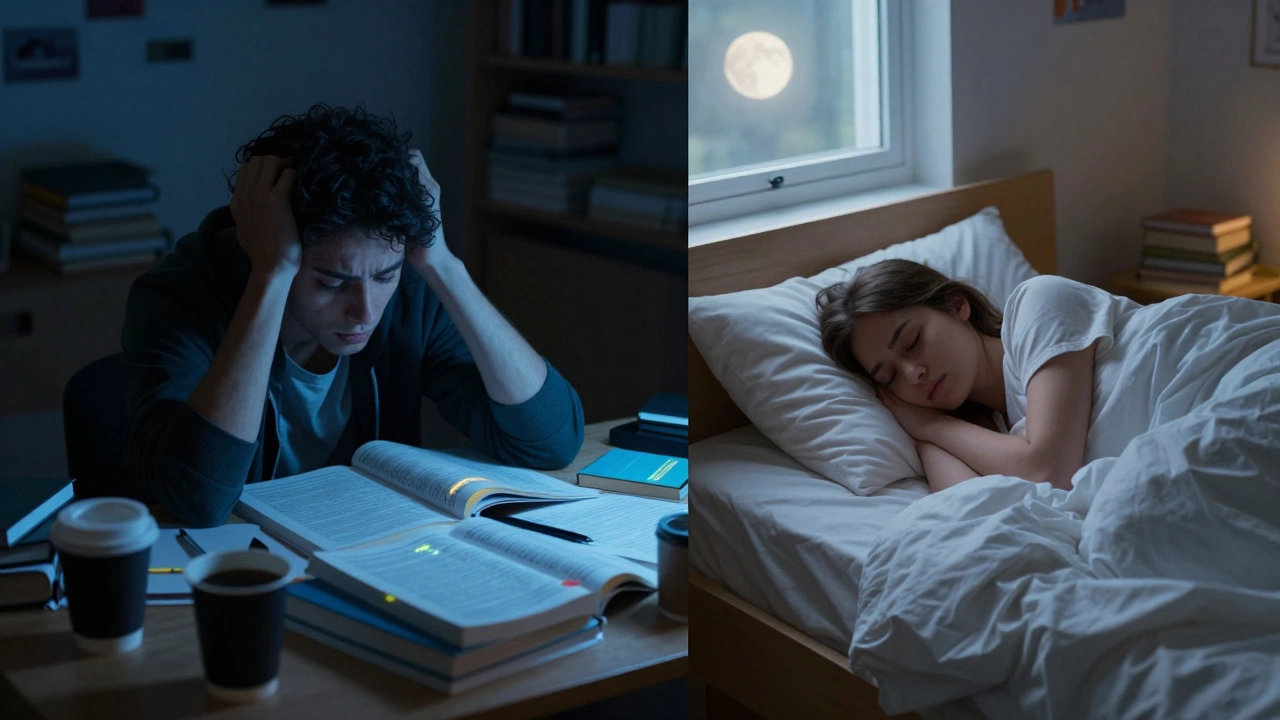
You have a major exam tomorrow morning at 9 AM. It is currently 10 PM tonight. You have half the textbook left to read. Do you pull an all-nighter, chugging coffee and highlighting pages until sunrise? Or do you put the books away, go to bed, and trust that your brain will do the work while you dream? This is one of the most common dilemmas students face, from high schoolers in Adelaide to university graduates worldwide. The short answer might shock you: sleeping is almost always better than cramming, even if it feels like you are wasting valuable study time.
For decades, the "cramming" culture has been glorified. We see it in movies where the protagonist stays up all night studying, looks exhausted, but somehow aces the test. In reality, this strategy is biologically counterproductive. When you choose to stay awake, you are fighting against your body’s natural circadian rhythms. Your brain does not just shut off when you close your eyes; it goes into overdrive processing what you learned during the day. By skipping sleep, you hit the brakes on this critical process.
The Biology of Memory Consolidation
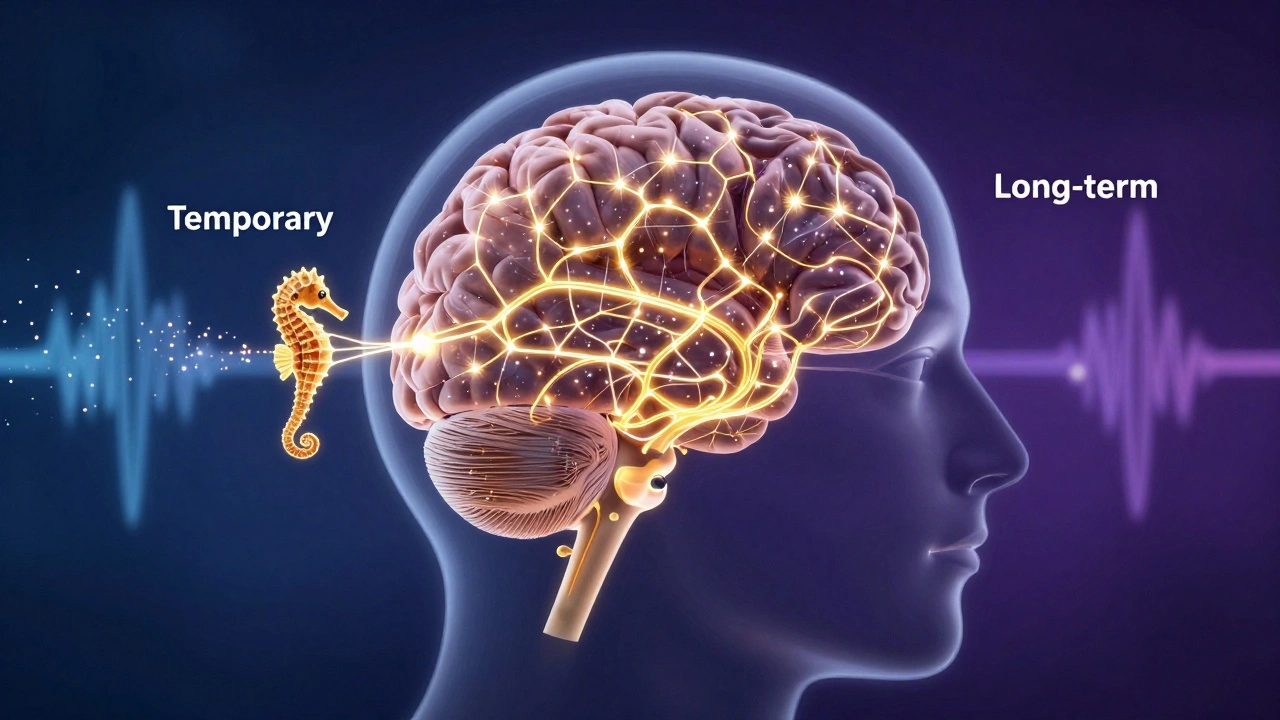
To understand why sleep wins, we need to look at how memory actually works. Learning is not a single event; it is a two-step process. First, there is encoding, which happens when you actively study. You read the chapter, solve the problem, or memorize the date. This information is stored temporarily in your hippocampus, a region of the brain shaped like a seahorse. Think of the hippocampus as your brain's temporary scratchpad. It has limited space and is very fragile.
If you stop here-if you cram right up until the moment you walk into the exam hall-that information remains on the scratchpad. It is volatile. Stress, anxiety, or simply the distraction of walking through the classroom can wipe it clean. This is why cramming often leads to blanking out under pressure. The information was never truly saved.
Sleep is the mechanism that moves information from that temporary scratchpad (hippocampus) to long-term storage in the neocortex, the outer layer of the brain responsible for complex thought and sensory perception. During deep sleep, specifically slow-wave sleep, your brain replays the neural patterns formed during the day. It strengthens the connections between neurons, effectively cementing the knowledge. Without this consolidation phase, the effort you put into studying is largely wasted.
Memory Consolidation is the process by which the brain stabilizes a memory trace after initial acquisition, moving information from short-term to long-term storage during sleep cycles.The Hidden Cost of Sleep Deprivation
Let’s say you decide to risk it. You stay up until 5 AM to finish those last few chapters. You feel tired, but you tell yourself, "I got more hours in." Here is the problem: sleep deprivation does not just make you sleepy; it fundamentally alters your cognitive function. Research published in journals like *Nature* and *Science* consistently shows that even one night of poor sleep significantly impairs attention, working memory, and logical reasoning.
When you are sleep-deprived, your prefrontal cortex-the part of the brain responsible for decision-making and focus-struggles to communicate with other parts of the brain. You might recognize a concept from your cram session, but you won’t be able to apply it to a new problem. Exams rarely ask for rote repetition; they ask for application. If you cannot think clearly, you cannot apply what you know.
Furthermore, stress hormones like cortisol spike when you are tired and anxious. High cortisol levels interfere with the retrieval of memories. So, not only did you fail to consolidate the new information properly, but you also created a chemical environment in your brain that makes it harder to access the old information you already knew. It is a double whammy.
When Does Cramming Actually Work?
I am not saying cramming is useless. There is a specific, narrow window where it has value. Cramming works best for immediate, short-term recall of simple facts. If your exam consists entirely of multiple-choice questions where you just need to recognize a definition or a date, and the test is in four hours, cramming might give you a slight edge. You are essentially loading data into your RAM (random access memory) for immediate use.
However, this advantage evaporates quickly. Studies show that material learned through cramming is forgotten at a much faster rate than material learned with spaced repetition and adequate sleep. If you have a second exam three days later, or if you need this knowledge for your career next year, cramming failed you. It provides a fleeting boost with no lasting benefit.
Also, consider the type of subject. For mathematics, physics, or essay-based subjects that require synthesis and logic, cramming is nearly ineffective. You cannot "memorize" how to solve a complex calculus problem; you need to understand the underlying principles, which requires a rested brain capable of abstract thinking.
| Factor | All-Nighter Cramming | Sleep-Consolidated Study |
|---|---|---|
| Memory Retention | Poor (rapid decay) | High (long-term storage) |
| Cognitive Function | Impaired focus and logic | Optimal reasoning and clarity |
| Stress Levels | High cortisol (anxiety) | Lower cortisol (calm) |
| Best For | Rote fact recognition (short-term) | Application, analysis, and essays |
| Risk Factor | Blanking out under pressure | Feeling unprepared due to less study time |
The Power of the 90-Minute Cycle
You don’t need eight perfect hours to get the benefits of sleep, though that is ideal. What matters most is completing full sleep cycles. A typical sleep cycle lasts about 90 minutes and includes light sleep, deep sleep, and REM (Rapid Eye Movement) sleep. Deep sleep is crucial for factual memory, while REM sleep is vital for procedural memory and creative problem-solving.
If you are running out of time, aim for multiples of 90 minutes. Going to bed for 7.5 hours (five cycles) or 6 hours (four cycles) is often better than going to bed for 7 hours, which might cut you off in the middle of a deep sleep stage. Waking up during deep sleep leaves you feeling groggy-a phenomenon known as sleep inertia-which can linger for up to an hour. This grogginess can ruin your start in the exam.
If you absolutely must stay up late, try a strategic nap. A 20-minute power nap before studying can boost alertness. Even better, a 90-minute nap after studying can trigger consolidation. However, avoid napping too close to bedtime, as it can disrupt your main sleep cycle.
A Practical Strategy for the Night Before
So, how do you balance the fear of not knowing enough with the biological need for sleep? Here is a realistic approach for the night before a big exam:
- Set a Hard Stop Time: Decide exactly when you will put the books away. If the exam is at 9 AM, and you wake up at 7 AM, aim to be asleep by 11 PM. That gives you eight hours. If you are behind, accept that you will not learn everything. Prioritize the highest-yield topics.
- Active Recall Over Passive Reading: Instead of re-reading notes (which is passive and low-efficiency), test yourself. Use flashcards, write out key concepts from memory, or explain the topic aloud. Active engagement creates stronger neural pathways that are easier to consolidate.
- Review, Don’t Learn: The night before should be for reviewing what you already know, not learning new, complex material. Your brain needs time to digest new information. Trying to ingest heavy new content right before sleep is like stuffing a suitcase at the last minute-it gets crushed and disorganized.
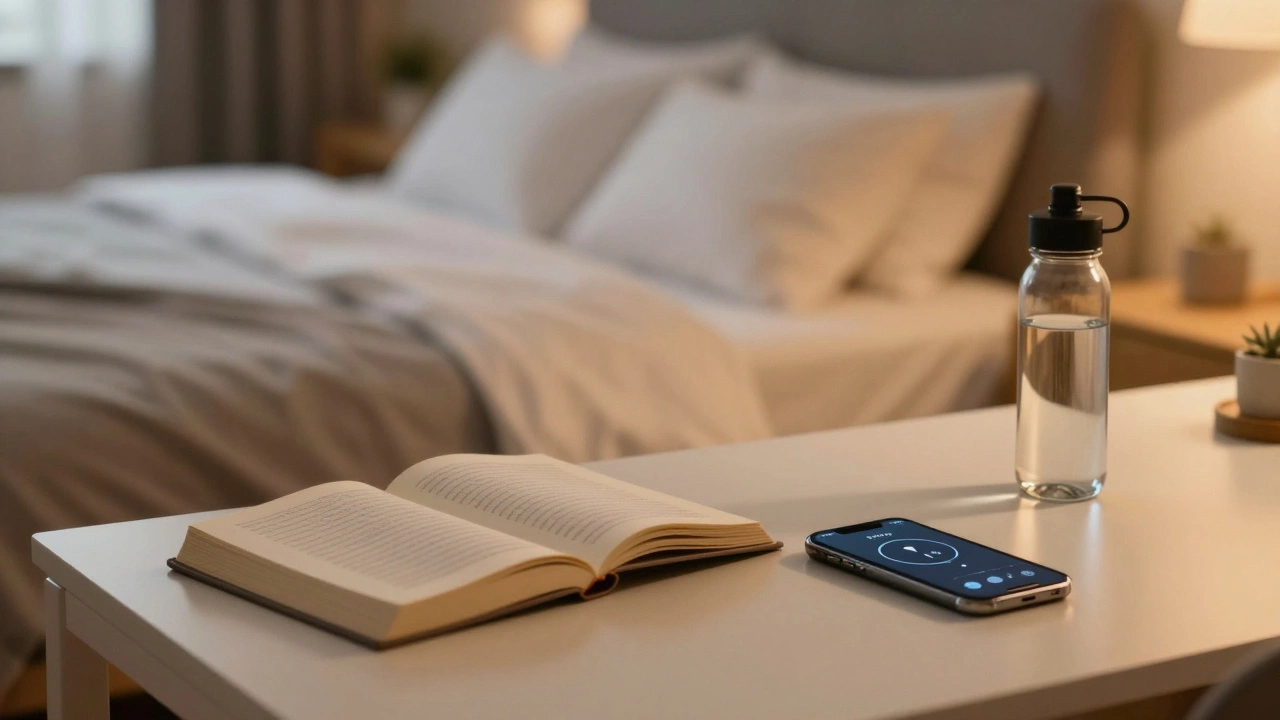
- Create a Wind-Down Routine: Avoid screens for at least 30 minutes before bed. Blue light suppresses melatonin, the hormone that signals sleep. Read a non-academic book, listen to calm music, or meditate. Signal to your body that it is safe to rest.
- Prepare Your Environment: Make sure your room is cool, dark, and quiet. Consider using earplugs or white noise if you live in a noisy apartment. Every barrier to sleep increases the likelihood of fragmented rest.
What If You Already Pulled an All-Nighter?
Life happens. Maybe you underestimated the workload, or maybe you stayed up watching a movie instead of studying. If you find yourself waking up after an all-nighter, do not panic. Panic raises cortisol, which hurts performance. Accept the situation and optimize for what you have left.
First, get sunlight immediately. Exposure to bright light helps reset your circadian rhythm and boosts alertness. Second, stay hydrated. Dehydration worsens fatigue. Third, use caffeine strategically. Have a small amount of coffee or tea, but avoid large doses that cause jitters. Jitters mimic anxiety and can make it harder to focus on the exam questions.
During the exam, tackle the questions you know first. Build confidence and secure easy marks. If you hit a wall, take a deep breath. Your brain may still retrieve the information if you reduce the stress response. Remember, even a tired brain is smarter than a panicked brain.
Long-Term Habits Beat Last-Minute Hacks
The real solution to the cramming vs. sleep debate is to eliminate the need to choose. This means adopting spaced repetition and consistent study habits throughout the semester. Spaced repetition involves reviewing material at increasing intervals over time. This technique leverages the "forgetting curve," reinforcing memory just as you are about to forget it. It is far more efficient than massed practice (cramming).
By studying a little bit every day, you allow your brain to consolidate information gradually. You build a robust network of knowledge rather than a fragile pile of facts. On the night before the exam, you are not scrambling; you are polishing. This reduces anxiety, improves sleep quality, and maximizes performance.
In the end, your brain is a biological organ, not a computer hard drive. It requires maintenance, downtime, and proper processing time. Respecting your need for sleep is not laziness; it is a strategic component of intelligent exam preparation. Put the book down, set the alarm, and let your brain do the heavy lifting.
Is it better to study before bed or in the morning?
Studying before bed can be highly effective because the subsequent sleep aids memory consolidation. Information reviewed right before sleep is less likely to be interfered with by new information. However, ensure you finish studying at least 30-60 minutes before actually falling asleep to allow your mind to wind down. Morning study is better for active learning and solving difficult problems when your brain is fresh, but evening review is superior for retention.
How many hours of sleep do I need before an exam?
Ideally, you should aim for 7 to 9 hours of sleep. This allows for multiple complete sleep cycles, ensuring both deep sleep (for factual memory) and REM sleep (for creative problem-solving) occur. If you are short on time, prioritize getting at least one full 90-minute cycle rather than a fragmented 4 hours. Consistency is key; try to maintain your regular sleep schedule even on exam days.
Does pulling an all-nighter ever help?
Pulling an all-nighter rarely helps and usually harms performance. While you may gain a few extra hours of study time, the cognitive impairment from sleep deprivation outweighs the benefits. Your ability to focus, reason, and retrieve information drops significantly. The only exception is if you have already mastered the material and just need a quick review, but even then, a well-rested brain performs better than a tired one.
What is the best way to study if I only have one night left?
If you only have one night, prioritize high-yield topics and use active recall techniques. Focus on understanding core concepts rather than memorizing every detail. Create summary sheets or mind maps to organize information visually. Set a strict deadline to stop studying and go to sleep, aiming for at least 6-7 hours of rest. Accept that you cannot learn everything, so maximize what you can retain by sleeping.
How does stress affect memory during exams?
Stress releases cortisol, which can interfere with the hippocampus, the brain region responsible for memory retrieval. High levels of anxiety can cause "blanking out," where you know the answer but cannot access it. Adequate sleep helps regulate stress hormones, keeping cortisol levels in check. Techniques like deep breathing and positive self-talk can also mitigate stress during the exam.
Can naps replace a full night's sleep before an exam?
No, naps cannot fully replace a full night's sleep. While a 20-minute power nap can boost alertness and a 90-minute nap can aid some consolidation, they do not provide the full spectrum of restorative benefits of a full sleep cycle. Chronic reliance on naps leads to sleep debt, which accumulates and impairs cognitive function. Use naps as a supplement, not a substitute, for nighttime sleep.
Why do I feel more tired after studying for a long time?
Mental fatigue is real. Intense cognitive activity consumes glucose and produces metabolic waste products in the brain, such as adenosine, which builds up pressure to sleep. This is your body's signal that it needs rest to clear these toxins and restore energy. Pushing through this fatigue leads to diminishing returns, as your focus and comprehension decline sharply after prolonged periods without breaks.
What foods should I eat the night before an exam?
Eat a balanced meal rich in complex carbohydrates, lean proteins, and healthy fats. Avoid heavy, greasy, or sugary foods that can cause energy crashes or digestive discomfort. Foods like oatmeal, fish, nuts, and vegetables provide sustained energy. Stay hydrated with water, but limit fluids right before bed to prevent waking up to use the bathroom. Limit caffeine intake in the afternoon to ensure it doesn't disrupt your sleep onset.