

When you pay for private tutoring, you’re not just buying an hour of someone’s time-you’re betting on your child’s future. But does it actually work? Or is it just another expensive habit parents fall into hoping for a miracle?
The short answer? Yes, it works-but not always the way you think.
It’s not about the hours, it’s about the match
A 2023 study from the University of Melbourne tracked 1,200 Australian students who received private tutoring in math and English over a full school year. The results? Students who improved the most weren’t the ones who had the most hours. They were the ones whose tutor understood their learning style.
One girl, 14, struggled with algebra because she needed visual explanations. Her first tutor used textbook drills. Her grades stayed flat. The second tutor drew diagrams, used real-life examples like budgeting for a shopping trip, and let her teach the concepts back. In six weeks, her test scores jumped 27%.
That’s the pattern. Tutoring doesn’t magically fix gaps. It fixes them when the tutor speaks the student’s language-literally. If your kid is a hands-on learner, and your tutor only talks, it won’t stick. If your child needs space to think, and the tutor rushes them, they’ll shut down.
Who benefits the most?
It’s easy to assume tutoring helps everyone equally. It doesn’t.
Students who are already trying-showing up to class, doing homework, asking questions-gain the most. Tutoring acts like a turbocharger, not a jump starter. A 2024 survey of 800 Australian parents found that 72% of students who improved academically had been putting in effort at school. The other 28%? Their grades didn’t budge, even with 10 hours a week of tutoring.
Why? Because tutoring can’t replace foundational habits. If a student skips class, doesn’t review notes, or avoids asking for help, no tutor can build a bridge from nowhere. The best tutors I’ve talked to say: "I’m not here to fix laziness. I’m here to help someone who’s already walking, but stuck on a hill."
There’s another group that sees huge gains: students with learning differences. A student with mild dyslexia, for example, might get lost in a class of 30. A tutor can slow things down, use multisensory tools, and give them confidence. One Adelaide mum told me her son, who refused to read aloud in class, started choosing books to read to his tutor. Within eight months, he was reading at grade level-and volunteering to read in class.
What tutoring doesn’t fix
Let’s be clear: tutoring won’t fix a broken classroom environment, a toxic home life, or untreated anxiety.
I spoke with a tutor in Norwood who worked with a bright 15-year-old who kept failing science. After months of one-on-one sessions, the student’s scores improved. But when the tutor asked why they were so anxious before tests, the student broke down. Their parent was pressuring them to get into a top university. The student was terrified of failure. The tutor couldn’t fix that. They referred the family to a school counselor.
Tutoring is a tool, not a cure-all. It won’t replace mental health support, parental involvement, or a school’s curriculum. If your child is stressed, disengaged, or overwhelmed, tutoring might make things worse if it adds pressure.
Cost vs. value: What’s actually worth it?
In Australia, private tutoring averages $40-$80 per hour. That’s a lot. But here’s the twist: the most effective tutoring isn’t always the most expensive.
A 2025 report from the Australian Education Union found that tutors with teaching qualifications didn’t outperform experienced tutors without formal credentials-not by any measurable standard. What mattered was:
- How well they connected with the student
- Whether they adapted their teaching style
- If they gave feedback the student actually used
One tutor in Adelaide charges $35/hour. She’s not certified. But she’s been teaching for 12 years, mostly to teens from low-income families. Her students’ average improvement? 2.5 grade levels in 10 months. Another tutor with a PhD charges $75/hour. Their students improved by 1.1 levels.
It’s not about the title. It’s about the fit.
How to know if tutoring is working
Don’t wait for report cards. Look for smaller signs.
Here’s what real progress looks like:
- Your child starts asking questions about the subject outside of tutoring
- They talk about their tutor like a person, not just a teacher
- They’re willing to try harder in class
- They stop saying "I’m bad at this"
- They do homework without being reminded
These are the real indicators. If your child’s grades haven’t changed after three months, but they’re more confident, you’re winning. If their grades went up but they hate the tutor and cry before every session? You’ve got a problem.
The hidden cost: Time and emotional energy
Private tutoring isn’t just money. It’s scheduling. It’s stress. It’s the parent driving across town, the sibling left at home, the family dinner that gets skipped.
One dad in Glenelg told me he cut tutoring after six months. "My daughter’s grades didn’t improve, but she started crying every night. I realized we were turning her into a project, not a kid."
That’s the quiet danger. When tutoring becomes a chore, it steals joy from learning. Some families spend thousands and end up with a child who hates school. That’s not progress. That’s burnout.

When to quit
There’s no shame in stopping. Here are three clear signs it’s time:
- Your child resists every session-no exceptions
- You’ve tried three different tutors and nothing clicked
- The cost is hurting your family’s stability
Don’t feel guilty. Tutoring isn’t a moral obligation. It’s a tool. If it’s not working, put it down.
Alternatives that work just as well
You don’t need a private tutor to help your child learn.
Group study sessions with peers? Free. Peer-led tutoring at school? Free. Online platforms like Khan Academy or Khan Academy Kids? Free. A patient parent who sits down for 20 minutes a day? Priceless.
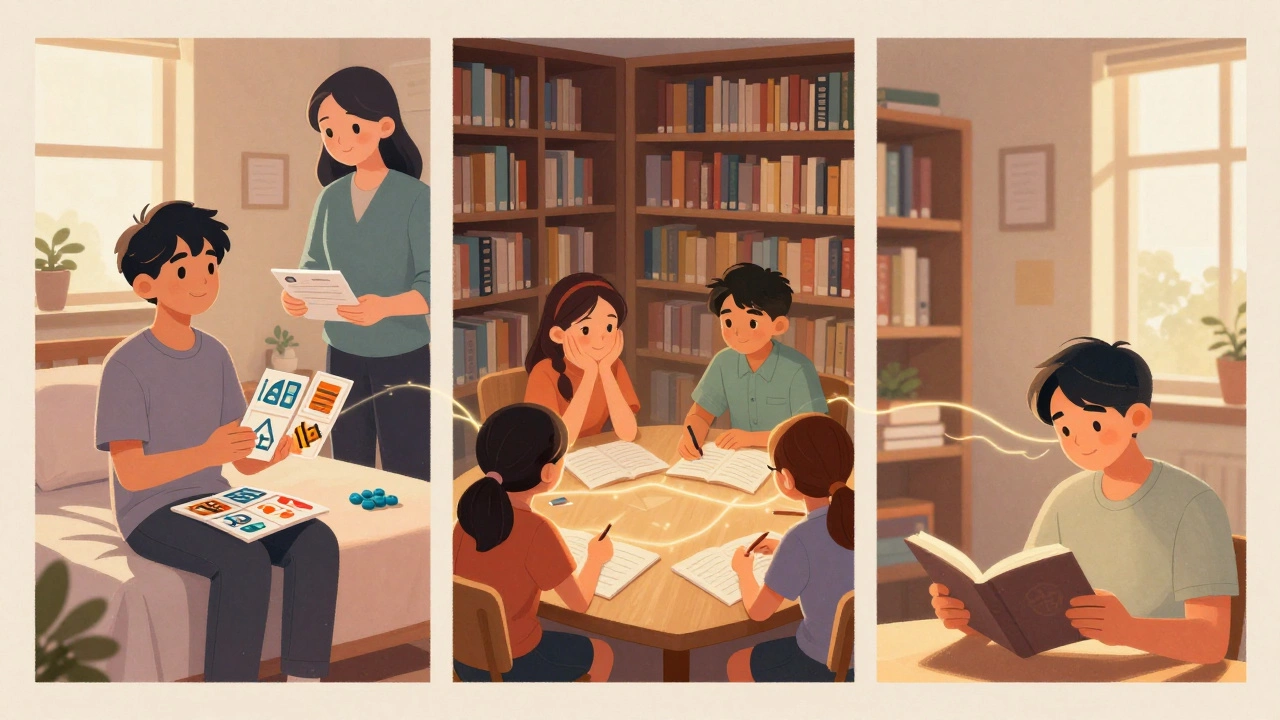
One mum in Port Adelaide started a weekly math circle with three other families. They took turns leading. No one got paid. Within six months, every kid improved. One even started helping others.
Community works. Connection works. Consistency works.
Final thought: It’s not about the tutor. It’s about the trust.
The most effective tutoring I’ve seen happens when a child feels safe. Not pressured. Not judged. Not like they’re failing.
It’s not about how many problems are solved. It’s about whether the child still believes they can learn.
That’s the real measure of effectiveness.