
ADHD Online School Suitability Calculator
This calculator helps parents determine if online school might be a better fit for their child with ADHD. Based on research from the University of Melbourne and ADHD Foundation, we'll analyze key factors that impact success.
Your Child's Suitability Score
For parents of kids with ADHD, the decision between traditional school and online learning isn’t just about convenience-it’s about survival. The bell schedules, the crowded hallways, the constant pressure to sit still and pay attention-all of it can feel like a daily battle. Online school doesn’t fix everything, but for many families, it changes the game. The question isn’t whether it’s perfect. It’s whether it’s better.
Control Over Environment = Less Overload
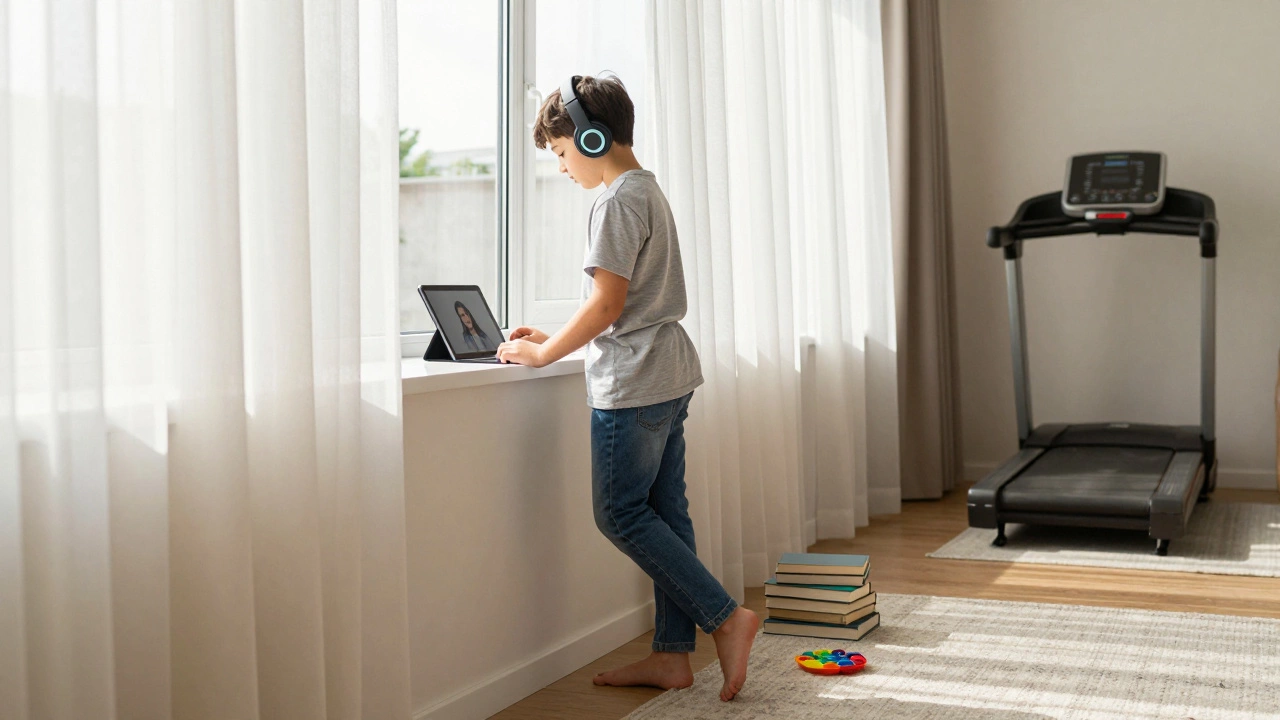
Kids with ADHD often struggle with sensory overload. Fluorescent lights, chatter from 30 other students, the smell of cafeteria food, the sudden sound of a locker slamming-it all piles up. Their brains don’t filter it out. They just absorb it, and then they melt down, zone out, or act out. Online school strips that away. Your child learns in a quiet room. They can wear noise-canceling headphones if they need to. They can stand up, stretch, pace, or even lie on the floor during a lesson. No one tells them to sit down. No one rolls their eyes. The environment is theirs to shape. A 2024 study from the University of Melbourne tracked 120 students with ADHD across 18 months of online learning. Those who stayed in virtual classrooms showed a 37% reduction in daily stress markers compared to peers in traditional schools. Their cortisol levels dropped. Their meltdowns became less frequent. The reason? Control.Flexible Schedules Match Natural Rhythms
ADHD doesn’t follow a 8:30 AM to 3:00 PM schedule. Many kids with ADHD are night owls. Their brains don’t wake up until mid-morning. Their focus peaks after lunch. Traditional school forces them to fight their biology. Online school lets them start at 10 AM. Take a 45-minute break after math to ride a bike or play video games. Resume at 1 PM. Finish by 3 PM. That’s not laziness-it’s neuroscience. One parent in Adelaide told me her son, 13, used to cry every morning before school. After switching to online learning, he started finishing his entire day’s work by noon. He began reading novels. He joined an online robotics club. He slept better. Why? Because he wasn’t exhausted from fighting his own brain all day.Less Social Pressure, More Confidence
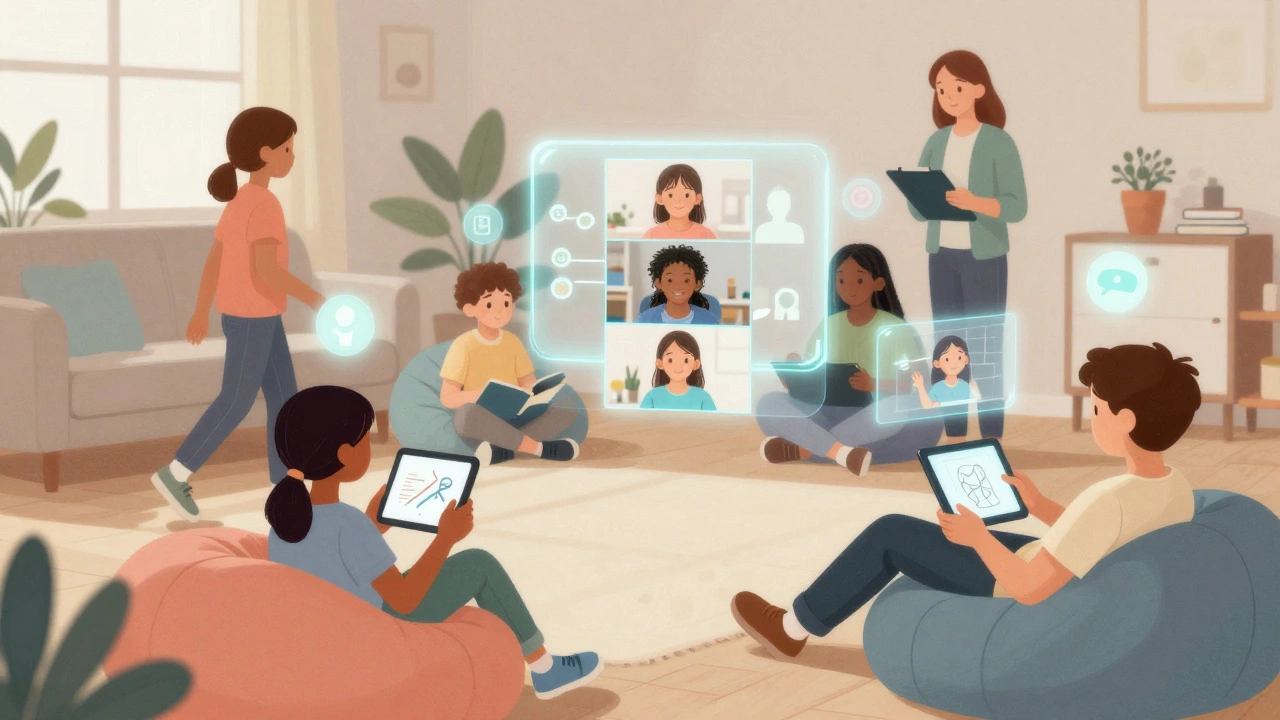
Social anxiety isn’t just a side effect of ADHD-it’s a core part of the experience. Kids with ADHD often blurt out answers, interrupt, forget names, fidget too much. They get labeled as "disruptive" or "not trying." They’re excluded. They internalize it. Online school removes that daily humiliation. They don’t have to sit at a lunch table where no one invites them. They don’t have to walk into a gym full of kids who laugh when they trip. They can participate in class without being the center of attention. That doesn’t mean they’re isolated. Many online schools offer small-group breakout sessions, interest-based clubs, and virtual social hours. The difference? These interactions are structured, low-pressure, and optional. For a kid with ADHD, that’s a gift.Pacing and Repetition Are Built In
In a traditional classroom, if you miss one explanation, you’re lost. Teachers move on. There’s no rewind button. Online learning changes that. Lessons are recorded. You can pause, replay, slow down, or speed up. A student can watch a math lesson three times before they get it. They can take notes in their own time. They can rewatch the part about fractions while eating breakfast. This isn’t just helpful-it’s essential. A 2023 analysis from the ADHD Foundation found that 68% of students with ADHD who used recorded lessons improved their test scores by at least one full grade level within one semester. Why? Because they finally had time to process.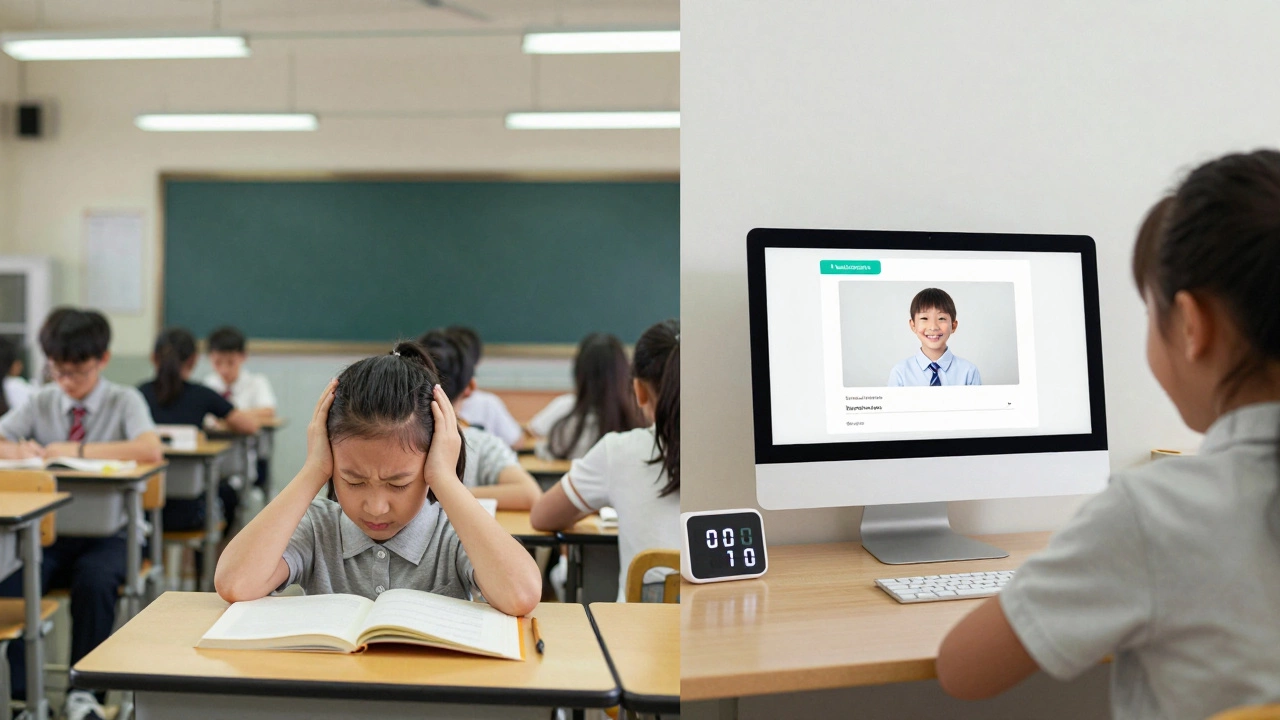
It’s Not All Perfect
Online school isn’t a magic cure. It has real downsides. Some kids struggle with self-motivation. Without a teacher standing in front of them, they forget to log in. They skip assignments. They fall behind. Parents become de facto teachers-and not all parents have the time, energy, or training to fill that role. Also, not all online programs are created equal. Some are just digitized worksheets with no live interaction. Others have trained special educators, small class sizes, and personalized learning plans. The quality matters. And then there’s the loneliness. Even with virtual clubs, some kids miss the daily connection of seeing their friends. Social skills can atrophy without real-world practice.What Makes Online School Work for ADHD?
If you’re considering online school for a child with ADHD, here’s what actually helps:- Live, small-group instruction-at least 2-3 times a week with real teachers who know ADHD.
- Structured daily routines-even if they’re flexible, kids need predictability.
- Clear, written instructions-no vague "do your best" assignments.
- Regular check-ins-not just with parents, but with counselors or learning coaches.
- Access to occupational therapists or ADHD coaches-some programs offer this as part of tuition.
Who Benefits Most?
Online school works best for kids with ADHD who:- Struggle with sensory overload in traditional settings
- Have trouble starting tasks without constant reminders
- Feel embarrassed or anxious around peers
- Learn better visually or through hands-on activities
- Have a parent or guardian who can help with structure (even 1-2 hours a day)
- Need constant external motivation
- Have severe executive function delays without support
- Thrive on routine and predictability that online learning can’t provide
- Are in households with no adult supervision or tech access
Real Stories, Real Results
Lena, 11, had been suspended twice for throwing books in class. Her teachers said she was "defiant." Her mom said she was overwhelmed. They switched to an online school with a 1:1 learning coach. Within three months, Lena was completing all her assignments. She started drawing again-something she hadn’t done since second grade. Her mom says, "I didn’t know she had that in her. The school just let her breathe." Jamal, 15, used to get 2-3 detention notices a week. He hated being told to sit still. His online school let him do math while walking on a treadmill. He passed his algebra final with a B+. He now tutors other kids online. These aren’t outliers. They’re the norm for kids who finally got the right setup.What to Ask Before You Enroll
Don’t sign up without asking these questions:- Do you have staff trained in ADHD and executive function support?
- Are lessons recorded? Can students rewatch them?
- How often do students interact with teachers live?
- Do you offer accommodations like extended time, reduced screen time, or movement breaks?
- Is there a counselor or coach assigned to each student?
- Can I speak to other parents whose kids have ADHD?
The Bottom Line
Online school isn’t better for every kid with ADHD. But for many, it’s the first time they’ve felt like learning is possible-not a punishment. It doesn’t fix the brain. But it fixes the system around it. If your child is drowning in a traditional classroom, online learning might be the air they’ve been gasping for.Can online school replace medication for ADHD?
No. Online school is a learning environment, not a medical treatment. Medication, behavioral therapy, and coaching work together. Online school can reduce stress and improve focus, which may make medication more effective-but it doesn’t replace it. Always consult a pediatrician or psychiatrist before making changes to treatment.
Is online school accredited and recognized by universities?
Yes, if it’s offered by an accredited institution. In Australia, schools registered with the Australian Curriculum, Assessment and Reporting Authority (ACARA) or state education departments are recognized. Always check the school’s accreditation status before enrolling. Reputable online schools list their accreditation on their website.
How do I know if my child is falling behind in online school?
Look for patterns: missed deadlines, skipped logins, sudden silence during live sessions, or increased frustration. Most online schools send weekly progress reports. If you’re not getting them, ask for them. Also, track whether your child is completing tasks independently-or if you’re doing it for them. That’s a red flag.
What if my child hates online school after trying it?
It’s okay to switch back. Many families try online school for a semester, then return to traditional school with new accommodations. Some schools even offer hybrid models. The goal isn’t to stick with something that doesn’t work-it’s to find what does. Talk to the school about why it’s not working. They might adjust the schedule, add more support, or suggest a different program.
Are there free online school options for families with ADHD?
In Australia, some public distance education programs are free, like the Virtual School Victoria or the South Australian Distance Education Program. These are government-funded and open to all students, including those with ADHD. They offer structured curricula, teacher support, and accommodations. Check your state’s education department website for eligibility.
Next Steps
If you’re considering online school for your child with ADHD:- Request a trial period-most schools offer 2-4 weeks.
- Observe how your child responds emotionally and academically.
- Track sleep, mood, and task completion for two weeks.
- Talk to other parents in online ADHD communities.
- Don’t rush. This isn’t a one-time decision-it’s an ongoing adjustment.