

Online School Cost Estimator
Select your educational level and circumstances to estimate potential costs. Note that public K-12 virtual schools are often tuition-free but may have incidental fees.
Select options and click "Estimate Costs" to see results.
You might have heard that you can get a high school diploma without ever stepping foot in a classroom, and for some families, it’s completely free. But is online school a form of distance education where students learn via the internet rather than in a physical building really free for everyone in the United States? The short answer is: it depends on who you ask and what level of education you are seeking. For K-12 students, public virtual schools are often tuition-free, while higher education usually comes with a price tag, though significant aid exists.
The Reality of Tuition-Free K-12 Virtual Schools
If your child is in elementary or high school, you are likely looking at virtual charter schools publicly funded schools that operate primarily online and do not charge tuition to state residents. These institutions are funded by state tax dollars, just like traditional brick-and-mortar public schools. That means if you live in states like Florida, Ohio, Pennsylvania, or California, you can enroll your child in an accredited online program for $0 in tuition fees.
However, "free" doesn't always mean "no cost." While the schooling itself is covered, parents often still pay for extracurricular activities, certain textbooks, or technology fees. Some programs require a one-time enrollment fee or charge for printing services if the student wants hard-copy materials mailed to their home. It’s crucial to read the fine print. If a school asks for monthly tuition for a public K-12 program, it’s likely a private institution masquerading as a public option.
How Public Funding Works for Distance Learning
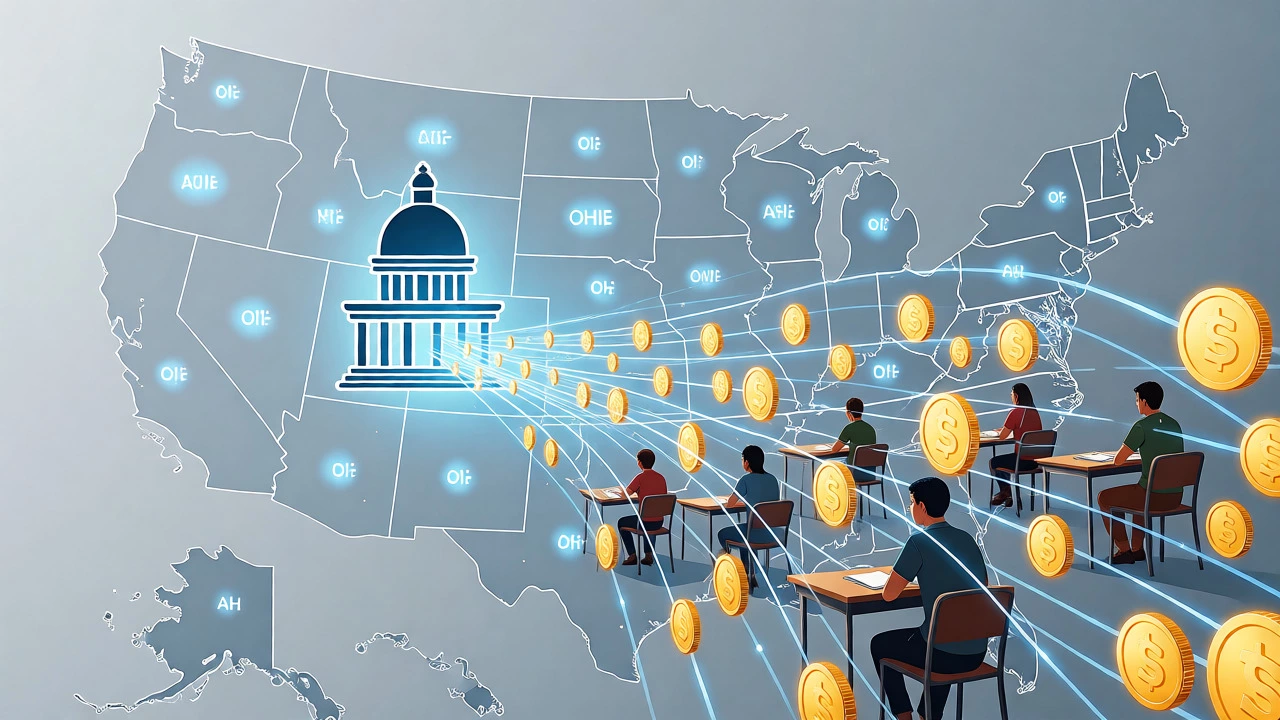
Understanding where the money comes from helps clarify why these schools are free. State departments of education allocate funds based on student enrollment numbers. When a student registers for a distance learning educational method where students and instructors are separated by space and time, using technology to connect course, the state sends funding to the virtual school operator. This model allows providers like Connections Academy or K12 Inc. (now Stride) to offer comprehensive curricula without charging families directly.
This funding structure creates a specific constraint: eligibility. Generally, you must be a resident of the state where the school operates. If you move across state lines, you might lose access to that specific free program unless there is an interstate agreement. Additionally, these schools are held to the same accountability standards as traditional public schools, meaning they administer standardized tests and report graduation rates to the state.
The Cost Landscape for Online Higher Education
Once you graduate high school, the landscape shifts dramatically. Unlike K-12, online college post-secondary education delivered via the internet, offered by both public and private universities is rarely free. However, it is often more affordable than its on-campus counterpart. Public universities typically offer lower tuition rates for in-state students attending online classes. For example, Arizona State University Online or Penn State World Campus charges per credit hour, which can range from $500 to $800 depending on the residency status and program type.
Private non-profit universities also offer online degrees, but their sticker prices are significantly higher. Yet, this is where financial aid monetary assistance given to students for educational purposes, including grants, scholarships, and loans plays a critical role. By completing the FAFSA (Free Application for Federal Student Aid), eligible students can receive Pell Grants, which do not need to be repaid. For low-income students, these grants can effectively make a degree free or nearly free, covering tuition and sometimes living expenses.
Comparing Costs: What You Actually Pay
To give you a clearer picture, let’s look at typical annual costs. Note that these figures vary widely by state and institution prestige.
| Educational Level | Institution Type | Tuition Status | Typical Out-of-Pocket Costs |
|---|---|---|---|
| K-12 | Public Virtual Charter | $0 Tuition | $0 - $300 (fees/materials) |
| K-12 | Private Online School | Paid | $4,000 - $15,000+ |
| Undergraduate | State University (In-State) | Paid | $6,000 - $12,000 |
| Undergraduate | Community College (Online) | Paid | $3,000 - $6,000 |
| Graduate | Private Non-Profit | Paid | $20,000 - $50,000+ |
Notice how community colleges stand out as a budget-friendly gateway to higher education. Many students start at an online community college to complete general education requirements cheaply before transferring to a four-year university. This strategy, often called the "2+2" plan, can save tens of thousands of dollars compared to starting at a expensive private school immediately.
Hidden Costs and Technology Requirements
Even when tuition is waived or low, you cannot ignore the infrastructure required for successful remote learning the process of gaining knowledge through digital technologies and remote interaction. A reliable computer and high-speed internet are non-negotiable. In rural areas of the US, broadband access can be spotty or expensive. Some school districts provide laptops and Wi-Fi hotspots to students in need, but this isn't guaranteed everywhere.
Furthermore, consider the soft costs. Time is a resource. Parents of younger children may need to act as learning coaches, supervising assignments and helping with navigation of learning management systems (LMS). For adults returning to school, the opportunity cost of studying while working full-time can impact earning potential during those years. It’s wise to budget for a quiet workspace, noise-canceling headphones, and potentially software subscriptions if your program requires them.

How to Find Legitimate Free Programs
With so many options, how do you avoid scams or low-quality programs? Start by checking accreditation. Look for recognition from bodies like the Higher Learning Commission (HLC) or regional accreditors for colleges, and state department approvals for K-12. Avoid any "free" online school that asks for credit card information upfront for a "trial" period without clear terms.
- Verify State Residency: Confirm the school accepts students from your specific zip code.
- Check Accreditation: Ensure credits will transfer if you move or change schools later.
- Review Support Services: Does the school offer tutoring, counseling, or career advising?
- Ask About Fees: Get a written list of all potential extra costs before enrolling.
For higher education, explore platforms like Coursera or edX. While they aren't "schools" in the traditional sense, they offer courses from top universities like Harvard and MIT for free (audit mode). If you need a certificate, you pay a small fee, but the knowledge is accessible at no cost. This is excellent for upskilling without the debt burden of a full degree.
Frequently Asked Questions
Are online schools recognized by employers?
Yes, provided the institution is accredited. Employers generally value the degree itself rather than the delivery method, especially if the school has a strong reputation. However, ensure the diploma does not explicitly state "online" if you are concerned about bias, though this stigma is rapidly disappearing.
Can I attend an online school in another state for free?
Usually, no. Public virtual schools are funded by state taxes and typically restrict enrollment to state residents. Some private online schools accept national applicants but charge tuition. Always check the residency requirements before applying.
Do I need my own computer for online school?
Most programs require a laptop or desktop with a webcam and microphone. Some K-12 virtual schools loan devices to students, but you are responsible for maintaining them. A smartphone alone is rarely sufficient for serious coursework.
Is financial aid available for online degrees?
Absolutely. Students enrolled in accredited online degree programs are eligible for federal financial aid, including Pell Grants and student loans, just like on-campus students. You must submit the FAFSA to determine eligibility.
What happens if my child falls behind in an online K-12 program?
Virtual schools monitor progress closely. If a student falls behind, they may be placed on academic probation or required to attend mandatory tutoring sessions. In severe cases, the school may withdraw the student, requiring re-enrollment in a traditional school.