
American High School Diploma: What It Is and How It Compares to UK Qualifications
When you hear American high school diploma, the standard credential earned by U.S. students after completing grades 9 through 12, typically requiring 20-24 credits across core subjects. Also known as a high school graduation certificate, it’s the baseline requirement for college applications, jobs, and military service in the United States. But here’s the thing—it’s not the whole story. Most students aiming for competitive colleges don’t stop at just the diploma. They pile on AP courses, college-level classes offered in high school that can earn students credit before they even step onto campus, or IB diplomas, a rigorous, internationally recognized program that demands critical thinking, research, and global awareness. These aren’t extras—they’re expectations at places like Yale, Stanford, or even UK universities reviewing American applicants.
The American system doesn’t force students into one narrow path like the UK’s A levels. Instead, it gives them flexibility: you can focus on science, arts, or vocational tracks and still earn the same diploma. But that flexibility comes with a catch. Colleges don’t just look at whether you graduated—they look at how you challenged yourself within your school’s options. A student with a 3.5 GPA and four APs is often seen as more competitive than someone with a 4.0 GPA and only basic classes. That’s why the American high school diploma is really a starting line, not a finish line. It’s the foundation, and what you build on top of it—whether that’s AP exams, IB projects, or extracurricular depth—tells the real story.
If you’re from the UK and wondering how this compares to your GCSEs or A levels, you’re not alone. A levels are deep dives into three or four subjects, while the American system spreads effort across more subjects over four years. The SAT or ACT? Those are standardized tests that try to measure readiness, but they’re just one piece. The real equivalent to A levels isn’t a single credential—it’s the combination of the diploma plus AP or IB scores. And if you’re applying to U.S. colleges with UK qualifications, admissions teams will map your A levels to that same combo: diploma + advanced coursework. That’s why understanding this system matters whether you’re a student planning to study abroad, a parent helping your teen navigate options, or a teacher advising international applicants.
What you’ll find below are real, practical insights into how the American high school diploma functions in the real world—how it’s viewed by universities, how it stacks up against UK systems, and what students actually need to do to stand out. No theory. No fluff. Just what works.
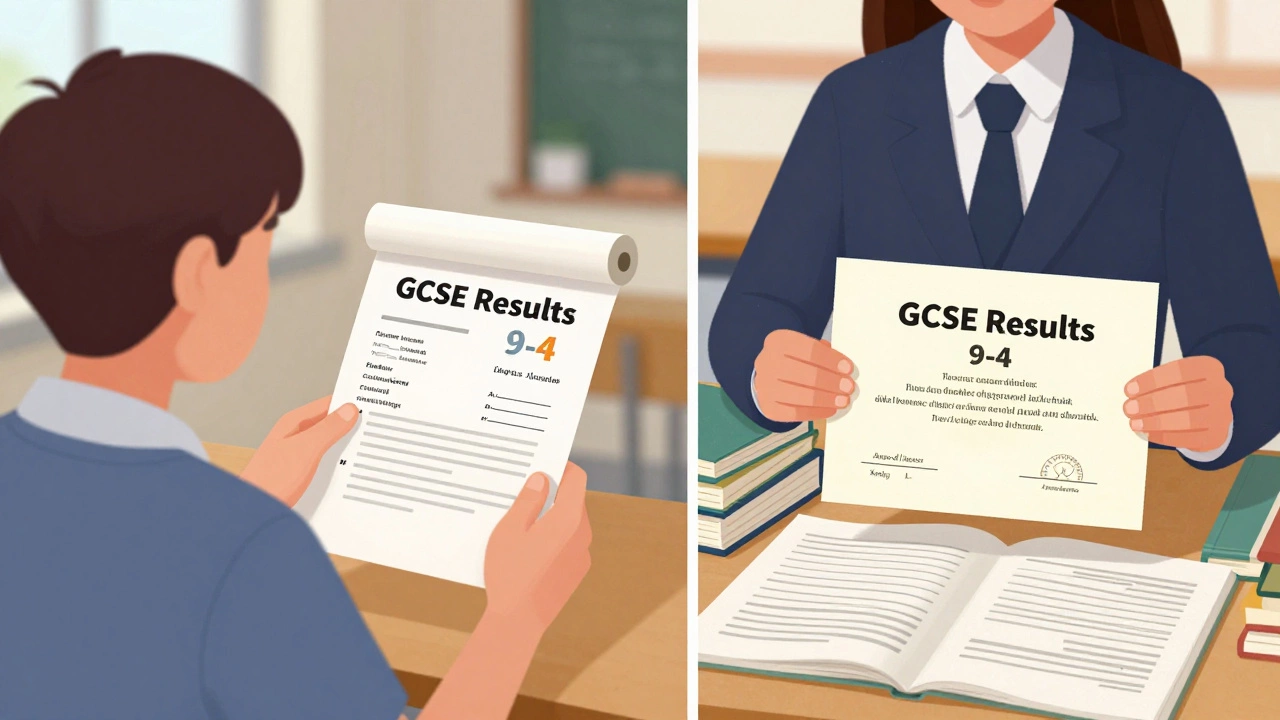
What Is the American Equivalent to GCSEs?
- by Eliza Fairweather
- on 4 Dec 2025
GCSEs are UK exams taken at age 16. The closest U.S. equivalent is the high school diploma, earned after four years of coursework. Learn how GCSE grades compare to U.S. grades and why SATs and GEDs aren't the same.