
GCSE to US System: How UK Qualifications Translate to American Colleges
When you finish your GCSEs, UK secondary school qualifications taken at age 16 that assess knowledge across multiple subjects, you might wonder: how does this fit into the American education system? The short answer? It doesn’t map directly. US colleges don’t look for GCSEs the way UK universities do. Instead, they’re looking at your overall academic journey—your A Levels, advanced UK qualifications taken over two years, often in just 3-4 subjects, your grades, your extracurriculars, and how you’ve challenged yourself. The US high school diploma, the standard credential earned after 12 years of schooling in the United States isn’t the same as a GCSE. It’s more like the end of Year 11 in the UK, but American colleges expect more than just a diploma—they want proof you’ve gone beyond the basics.
That’s where AP courses, college-level classes offered in US high schools that can earn students credit before they even enroll come in. If you’re taking A Levels, think of APs as the American version of the same thing: advanced, subject-specific, and highly respected by top schools like Yale and Harvard. You don’t need to take APs if you’re doing A Levels, but colleges know the difference. They understand that A Levels are rigorous. In fact, many US universities treat a full IB Diploma, an internationally recognized program with broad subject coverage and critical thinking requirements as equivalent to a strong A Level profile. What matters isn’t the name of the qualification—it’s how much you’ve pushed yourself within the system you have. A student with four A Levels at A* grades is seen as just as strong as one with five APs and top scores. But if you’re applying from the UK, you need to make sure your transcript and references explain what your grades mean. A 7 in IB? That’s a 5 on the AP scale. An A* in A Level Maths? That’s the kind of grade that catches an admissions officer’s eye.
It’s not just about grades. US colleges care about context. If you took your GCSEs in a school with limited resources, they’ll notice. If you balanced A Levels with part-time work or family responsibilities, they’ll value that too. The GCSE to US system isn’t about converting numbers—it’s about telling your story clearly. You don’t need to chase AP exams if you’re already excelling in A Levels. But you do need to make sure your application shows depth, not just breadth. Below, you’ll find real comparisons, student experiences, and expert breakdowns that show exactly how UK qualifications are understood across the Atlantic—and what you can do to make sure your achievements aren’t lost in translation.
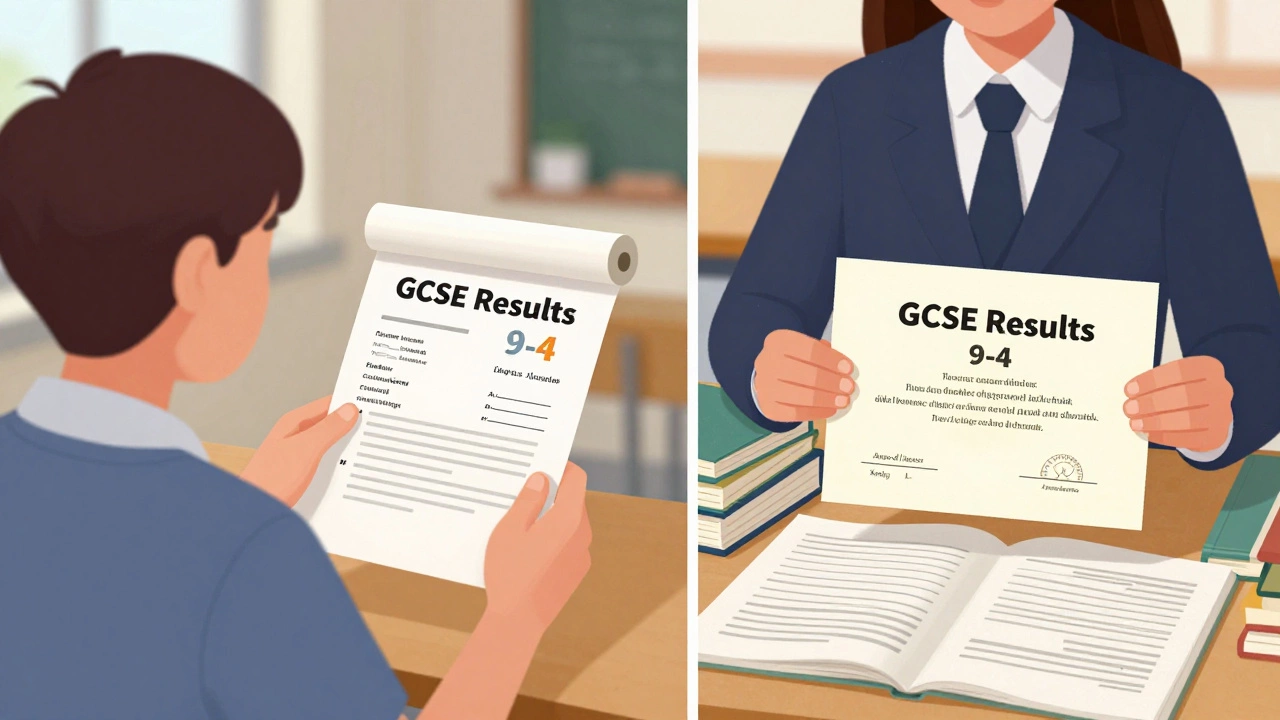
What Is the American Equivalent to GCSEs?
- by Eliza Fairweather
- on 4 Dec 2025
GCSEs are UK exams taken at age 16. The closest U.S. equivalent is the high school diploma, earned after four years of coursework. Learn how GCSE grades compare to U.S. grades and why SATs and GEDs aren't the same.