
Severe Learning Disability Screening Tool
This tool helps identify potential signs of severe learning disability based on developmental milestones. It is not a diagnosis tool. If you have concerns, consult a developmental pediatrician or psychologist for professional evaluation.
Important: This assessment should not replace professional diagnosis. Results indicate potential areas of concern but do not confirm a disability.
Total score: 0
Not applicable
How to interpret your score
Each checked item scores 1 point. Higher scores indicate greater potential concerns.
This assessment shows minimal concerns based on current information. However, if you have ongoing concerns, discuss with a professional.
Some developmental concerns identified. It's recommended to discuss these milestones with a pediatrician for further evaluation.
Multiple developmental concerns identified. Please schedule an evaluation with a developmental pediatrician or clinical psychologist as soon as possible.
A severe learning disability isn’t just about struggling in school. It’s when a person has deep, lasting challenges with understanding, communicating, or doing everyday tasks - even with support. These aren’t temporary setbacks. They’re rooted in how the brain processes information, and they show up early, often before a child even starts talking. Unlike mild learning difficulties, which can be managed with extra help or better teaching, severe learning disabilities affect nearly every part of life - from speaking and eating to dressing and staying safe.
How severe learning disabilities are different from mild ones
Mild learning disabilities might mean someone reads slowly, has trouble with math facts, or forgets homework. With the right tools - like audiobooks, extra time on tests, or speech apps - they can keep up with peers. A severe learning disability is different. It’s not about working harder. It’s about needing constant, lifelong support.
Someone with a severe learning disability might not speak in full sentences by age five. They might not understand simple instructions like ‘put your shoes on’ or ‘wait your turn.’ They may not recognize familiar faces, have trouble eating without help, or be unable to use the toilet independently. These aren’t behaviors you can train away with repetition. They’re signs of a brain that doesn’t develop the basic building blocks of learning the way most people’s do.
One key difference is IQ. Most people with mild learning disabilities have average or above-average intelligence but struggle in specific areas. People with severe learning disabilities often have an IQ below 50. That means they process information much more slowly, remember less, and need things explained in the simplest way possible - over and over.
What causes a severe learning disability?
There’s no single cause. It’s often a mix of genetics, brain development issues, and sometimes events before or during birth. Chromosome conditions like Down syndrome, Fragile X syndrome, or severe autism spectrum disorder are common causes. These aren’t choices. They’re biological differences that affect how the brain grows.
Some children are born with brain damage from infections like meningitis, lack of oxygen at birth, or extreme prematurity. Others have rare genetic disorders that doctors can’t fully explain yet. What’s clear is this: severe learning disabilities aren’t caused by bad parenting, lack of discipline, or not trying hard enough. They’re neurological.
When a child is diagnosed with a severe learning disability, doctors and educators look at three things: cognitive ability, communication skills, and daily living skills. If all three are significantly below what’s expected for their age, it’s classified as severe.
What does daily life look like?
Imagine needing help to brush your teeth, get dressed, and eat every single day. That’s normal for many people with severe learning disabilities. They might not understand danger - walking into traffic, touching hot stoves, or swallowing small objects. They may not be able to tell you when they’re sick, hurt, or scared. Communication is often limited to sounds, gestures, or simple pictures.
Many can’t learn to read or write at all. Even basic counting or recognizing colors can take years of one-on-one teaching - and they might never fully master it. Social interaction is hard. They might not understand jokes, personal space, or turn-taking in conversation. They often rely on routines. Change - even a different route to school - can cause panic or meltdowns.
Some people with severe learning disabilities also have physical conditions: epilepsy, vision or hearing loss, or muscle stiffness. These make learning even harder. But the core issue is always the brain’s ability to process and use information.

How schools and services respond
Public schools in the U.S. and many other countries are required to provide free, appropriate education for children with disabilities - including severe ones. This means individualized plans, trained staff, and support like speech therapists, occupational therapists, and behavior specialists.
But here’s the truth: most classrooms aren’t built for severe learning disabilities. A child who can’t sit still, speak, or follow directions needs a team, not a teacher with 25 other kids. That’s why many are placed in special education classrooms with low student-to-staff ratios - sometimes one adult for every two students.
These classrooms focus on life skills: washing hands, using a fork, waiting in line, saying ‘please’ and ‘thank you.’ Academic learning is secondary. The goal isn’t to make them pass algebra. It’s to help them be as independent and safe as possible.
Outside school, families often rely on government programs for respite care, home nursing, and adult day services. Some children never outgrow the need for full-time support. Others learn enough to live in group homes with staff nearby. A few, with intensive therapy and family support, can live semi-independently - but they’ll always need help with complex tasks like managing money or navigating public transport.
Common misconceptions
People often confuse severe learning disabilities with autism, intellectual disability, or behavioral problems. They’re related, but not the same.
Autism is about how the brain processes sensory input and social cues. You can be autistic and have average intelligence - even genius-level in some areas. Severe learning disability means the brain struggles with basic thinking, memory, and understanding - no matter the person’s personality or interests.
Intellectual disability is often used interchangeably with severe learning disability. In fact, many experts consider them the same thing. The term ‘intellectual disability’ is now preferred in medical settings because it’s clearer: it means significantly below-average intellectual functioning plus limited adaptive behavior.
And no, it’s not ‘just a slow learner.’ Slow learners catch up. Children with severe learning disabilities don’t. Their brain doesn’t develop the same way. No amount of tutoring, apps, or yelling will change that.
What support actually works
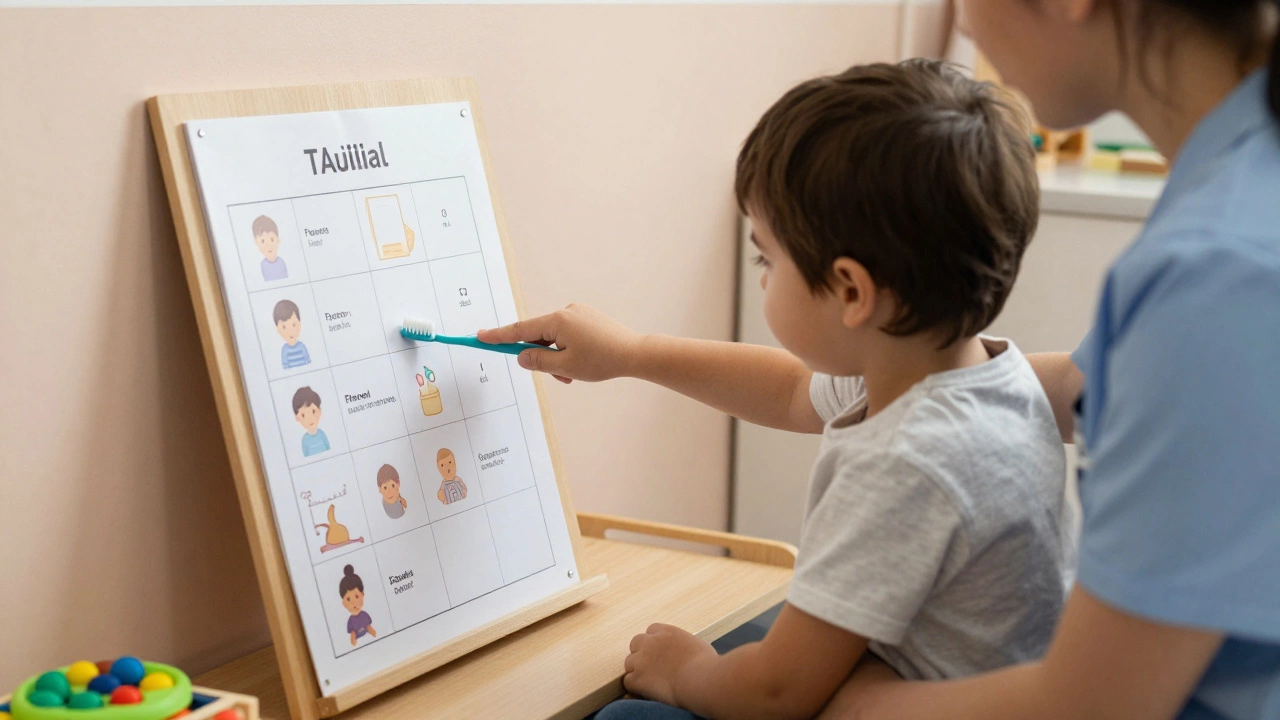
Therapy helps - but not in the way most people think. Speech therapy doesn’t turn a nonverbal child into a talker. It helps them communicate with pictures, signs, or devices. Occupational therapy doesn’t make them write their name. It helps them hold a spoon, button a shirt, or use a toothbrush.
Positive behavior support is key. Instead of punishing tantrums, teams figure out what the child is trying to say. Is the meltdown because they’re in pain? Overstimulated? Bored? Once you understand the reason, you can change the environment - not the child.
Technology helps too. Communication devices with voice output, visual schedules, and apps that turn pictures into words give people a way to express themselves. These tools don’t fix the disability. They give people a voice when they can’t speak.
Family support is the biggest factor. Parents who learn how to communicate with their child, advocate for services, and take care of their own mental health make the biggest difference. It’s not about being perfect. It’s about showing up, every day.
Long-term outlook
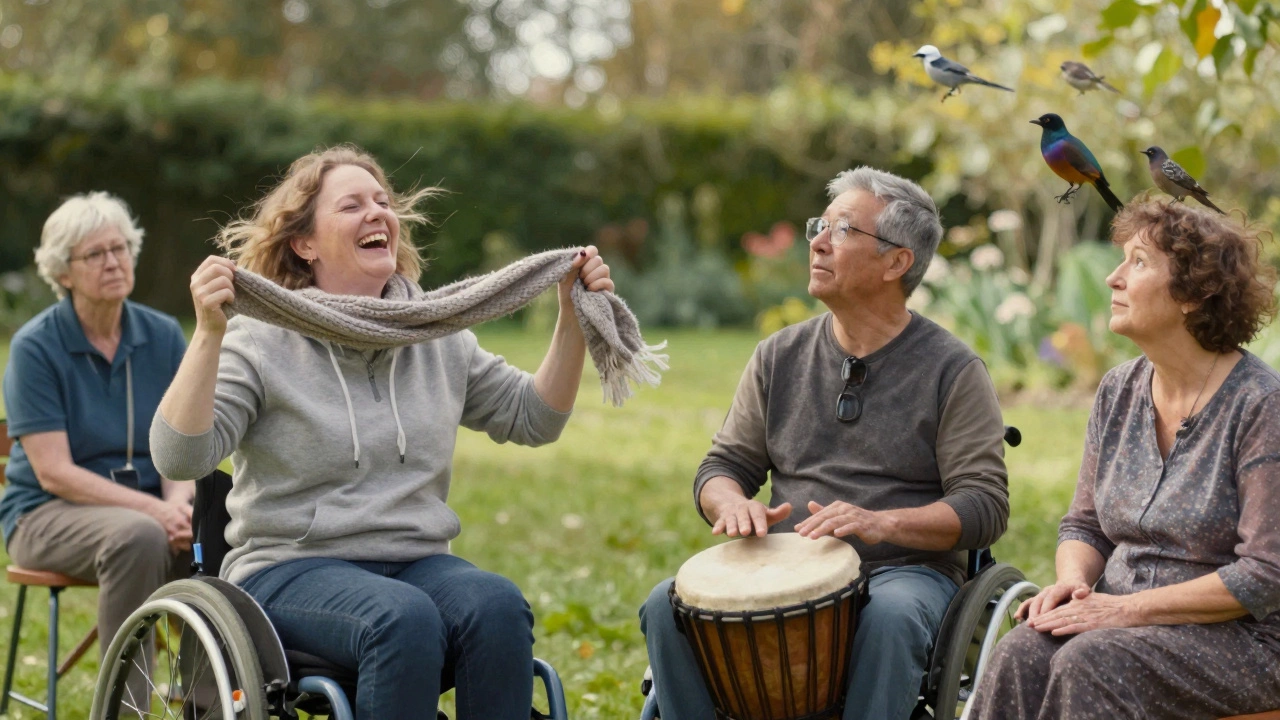
There’s no cure. But with the right support, people with severe learning disabilities can live full, meaningful lives. They can laugh, enjoy music, feel love, and form bonds. They can learn to enjoy walks, favorite foods, or quiet time with a blanket.
Many live into their 60s and beyond. Their needs don’t disappear with age - they change. Adults need housing, day programs, and medical care tailored to their level of ability. Some need round-the-clock help. Others can live with minimal support.
The goal isn’t to make them ‘normal.’ It’s to help them live with dignity, safety, and joy - on their own terms.
Can a child outgrow a severe learning disability?
No. Severe learning disabilities are lifelong. The brain doesn’t develop the missing skills later on. But with the right support, people can learn new ways to communicate, move, and interact with the world - even if they never master tasks most people take for granted.
Is a severe learning disability the same as intellectual disability?
Yes, in most cases. The terms are often used interchangeably. Medical professionals now prefer ‘intellectual disability’ because it clearly describes both low intellectual functioning and limited ability to do everyday tasks. Both terms mean the person needs lifelong support in areas like communication, self-care, and safety.
Can someone with a severe learning disability go to college?
Not in the traditional sense. Most college programs require reading, writing, abstract thinking, and independent study - skills that are beyond reach for someone with a severe learning disability. But some colleges offer transition programs for adults with disabilities that focus on life skills, job training, and social activities. These aren’t degrees - they’re pathways to independence.
How do you know if a child has a severe learning disability?
Signs appear early: no babbling by 12 months, no pointing or gesturing by 18 months, no words by age two, inability to follow simple instructions, lack of eye contact, or not responding to their name. If a child also has trouble eating, sleeping, or calming down - and doesn’t improve with time - it’s time for a full evaluation by a developmental pediatrician or psychologist.
Do medications help with severe learning disabilities?
No. There’s no pill that fixes how the brain learns. Medications might help with co-occurring conditions like seizures, ADHD, or anxiety - but they won’t improve thinking, memory, or communication skills. The real help comes from therapy, routines, communication tools, and supportive people.