
Key Takeaways
- Adult brains shift from fluid intelligence (fast processing) to crystallized intelligence (experience-based).
- Psychological barriers, like the fear of failure, often hinder progress more than cognitive decline.
- Learning requires a shift from pedagogical (child-led) to andragogical (adult-led) methods.
- Strategic breaks and active recall can bypass the natural decline in short-term memory.
The Biological Shift: Neuroplasticity and Aging
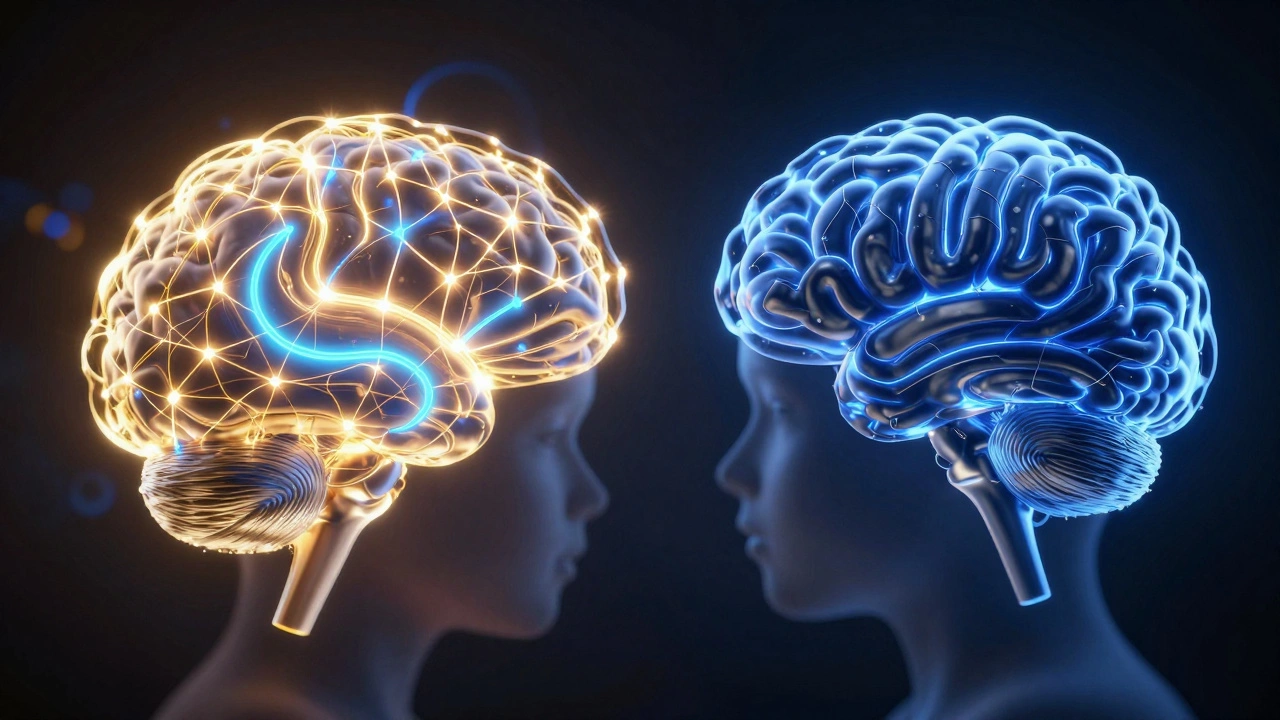
When we're kids, our brains are in a state of hyper-plasticity. Neuroplasticity is the brain's ability to reorganize itself by forming new neural connections throughout life. In childhood, this happens rapidly and effortlessly. However, as we enter adulthood, the brain starts prioritizing stability over flexibility. This doesn't mean you can't learn; it just means the "cost" of creating a new pathway is higher.
You've probably noticed that you can't just memorize a list of random words as easily as a teenager can. This is because adults rely more on Crystallized Intelligence-the ability to use skills, knowledge, and experience-rather than Fluid Intelligence, which is the capacity to solve new problems without prior knowledge. While your speed of processing might dip, your ability to connect new information to things you already know is actually a superpower if you use it correctly.
The Weight of the "Adult Brain": Cognitive Load
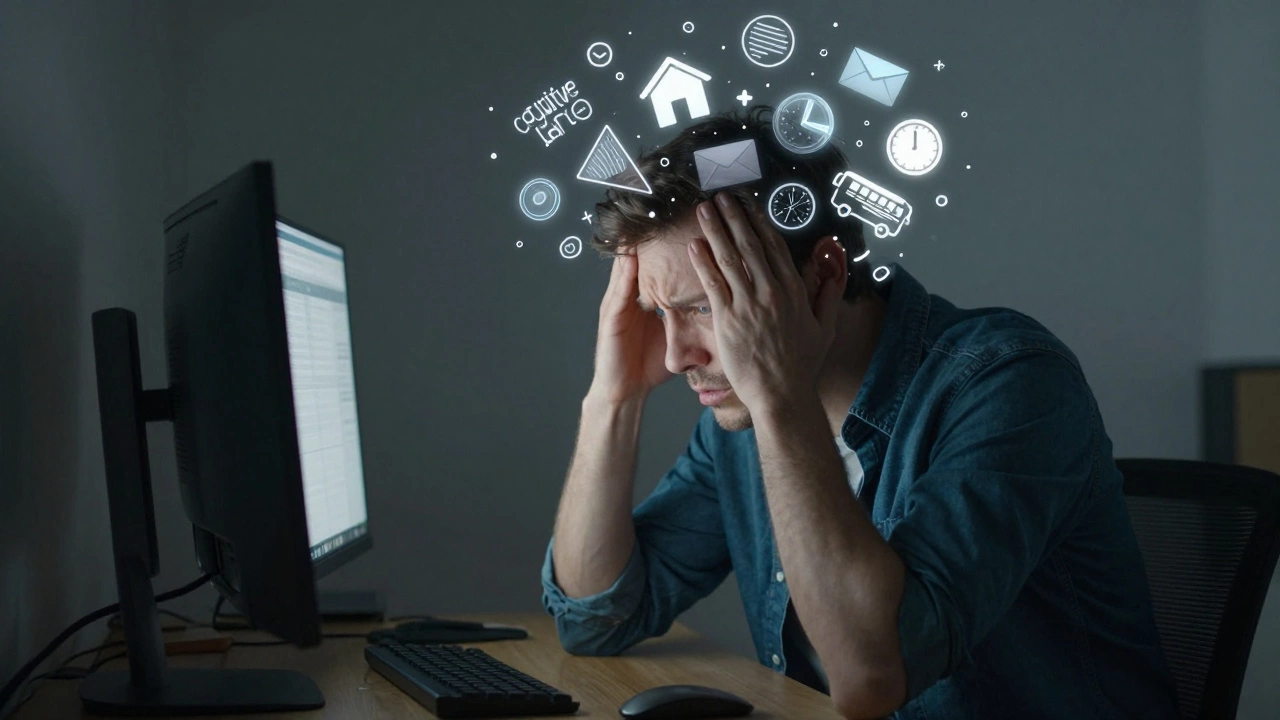
Learning is difficult for adults because we never actually have a "blank slate." Every new piece of information must compete with decades of existing beliefs and habits. This creates a massive Cognitive Load, which is the total amount of mental effort being used in the working memory. When a child learns that a "bridge" is a structure over water, they just accept it. When an adult learns a new concept in project management, they are simultaneously thinking about their mortgage, their kids' school schedule, and that awkward email they sent to their boss three hours ago.
This mental clutter leads to what experts call interference. Proactive interference happens when old memories block new ones. For example, if you've used a specific software for ten years and suddenly switch to a new version, your brain will instinctively try to use the old shortcuts, slowing down your learning curve. You aren't struggling because you're "slow"; you're struggling because you have too much data already installed.
The Psychology of Fear and Fixed Mindsets
One of the biggest hurdles in adult education isn't cognitive-it's emotional. Children are generally encouraged to fail. If a five-year-old draws a dog that looks like a potato, they're still praised for trying. Adults, however, often tie their intelligence to their ego. The fear of looking stupid in a classroom or failing a certification exam can trigger a stress response in the brain.
When you feel anxious, your brain releases cortisol. High levels of cortisol inhibit the function of the Hippocampus, the part of the brain responsible for forming new memories. Essentially, the fear of failing to learn actually shuts down the biological machinery required to learn. This is where a Fixed Mindset-the belief that your abilities are set in stone-becomes a self-fulfilling prophecy. If you believe you're "too old to learn a new language," your brain will treat the effort as a waste of energy and stop engaging.
Andragogy vs. Pedagogy: Why School Methods Fail Us
Most of us were taught using Pedagogy, which is the method and practice of teaching children. Pedagogy is typically teacher-directed; the teacher decides what is important, and the student absorbs it. Adults, however, require Andragogy, which is the art and science of helping adults learn. Adults are self-directed and need to know *why* they are learning something before they can effectively engage with it.
If you're in a course that just tells you to "memorize this list for the test," you'll likely struggle. An adult brain asks, "How does this solve my current problem?" If the information doesn't have immediate practical application, the brain often flags it as irrelevant and discards it during sleep. This is why vocational training or "just-in-time" learning is so much more effective for adults than traditional academic lecturing.
Practical Strategies to Overcome the Adult Learning Gap
Since we know the obstacles, we can build workarounds. The goal isn't to try and mimic a child's brain, but to leverage the adult brain's strengths. Here are some concrete ways to make learning stick:
| Challenge | Strategy | Why it Works |
|---|---|---|
| Poor Memorization | Active Recall | Forces the brain to retrieve data, strengthening the neural path. |
| Mental Fatigue | Pomodoro Technique | Prevents cognitive overload by introducing timed breaks. |
| Lack of Focus | Interleaving | Mixing different topics prevents the brain from going on autopilot. |
| Overwhelming Info | Chunking | Breaking big concepts into small, manageable pieces. |
One of the most effective methods is Spaced Repetition. Instead of cramming for eight hours on a Sunday, study for 30 minutes every day for two weeks. This aligns with the way the adult brain consolidates memory during REM sleep. By revisiting the material just as you're about to forget it, you signal to your brain that this information is critical for survival, forcing it to move from short-term to long-term storage.
Navigating the Modern Learning Environment
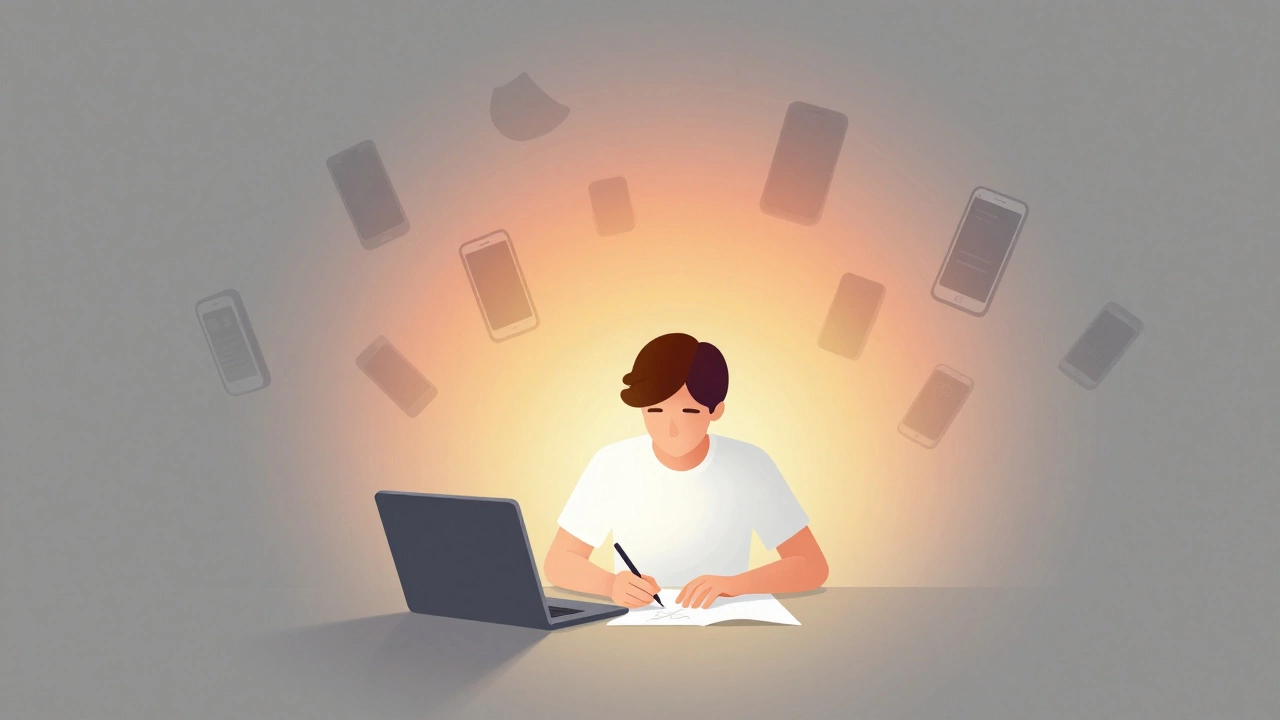
In 2026, we have more tools than ever, but these tools often work against the adult brain. The constant stream of notifications from smartphones creates a state of "continuous partial attention." This prevents us from entering a Flow State, the mental state of deep immersion where the most complex learning occurs.
To fight this, adult learners should embrace "monotasking." Turn off the phone, close the 20 open browser tabs, and focus on one single concept for 25 minutes. Use the "Feynman Technique": try to explain the concept you just learned to a friend or even a rubber duck. If you can't explain it simply, you don't understand it yet. This process of simplification strips away the noise and highlights the gaps in your knowledge.
Can adults actually learn as fast as children?
Generally, no, but it depends on what you're learning. Children are faster at absorbing raw data and phonetic sounds (like in language learning) due to high neuroplasticity. However, adults are significantly faster at learning complex systems and conceptual frameworks because they can relate new info to existing knowledge.
What is the "critical period' hypothesis?
The critical period hypothesis suggests there's a specific window in early life where certain skills, especially language, can be acquired effortlessly. While this window closes, adults can still achieve fluency; it just requires more intentional effort and different strategies than a child would use.
How does stress affect adult learning?
Stress triggers the release of cortisol, which interferes with the hippocampus. This makes it physically harder to form new memories and retrieve existing ones, often leading to a "mental block" during exams or presentations.
Why is it harder to learn a new language as an adult?
It's a mix of biological and psychological factors. Biologically, the brain's auditory processing centers are less flexible. Psychologically, adults are more self-conscious about making mistakes, which prevents them from practicing in the immersive, fearless way children do.
What is the best way for an adult to start a new hobby or skill?
Start with "micro-learning." Instead of committing to a 10-hour course, spend 15 minutes a day on the most practical aspect of the skill. Focus on immediate application (learning by doing) rather than theoretical study to keep your motivation high.
Next Steps for Adult Learners
If you're feeling stuck, start by auditing your environment. Are you trying to learn in a noisy room with a phone buzzing next to you? That's a recipe for cognitive failure. Try a "low-stimulation" environment for one hour a day. If you're struggling with a specific subject, stop reading the textbook and start trying to solve a real-world problem using that knowledge. Whether you're picking up a new programming language or learning to paint, the key is to move from passive consumption to active production as quickly as possible.