

Dyslexia Awareness Quiz
Quiz Complete!
You scored:
You’re sitting in a classroom or helping your child at the kitchen table. The words on the page look like they’re swimming. You know the letters, you’ve seen them a thousand times, but putting them together into meaning feels like trying to solve a puzzle with missing pieces. If this sounds familiar, you aren’t alone. In fact, if you are struggling with reading and writing despite having average or above-average intelligence, you might be dealing with the most common learning challenge of all.
So, what is the number 1 learning disability? The answer is dyslexia. It isn’t just a buzzword in educational circles; it affects an estimated 5% to 10% of the global population. That means in a standard classroom of 30 students, two or three are likely navigating the world with a brain that processes language differently. But knowing the name is only the first step. Understanding how it works, why it’s so prevalent, and what actually helps is where the real value lies.
Why Dyslexia Tops the List
Dyslexia isn’t the most common because it’s mild; it’s common because it’s highly visible. Unlike some other learning differences that might fly under the radar until high school or adulthood, dyslexia hits early. Reading is one of the first academic skills we test for. When a child can’t decode text by age seven, red flags go up. This visibility skews perception, but the data backs it up. According to the International Dyslexia Association, dyslexia accounts for the vast majority of diagnosed specific learning disabilities.
It’s crucial to clear up a myth right away: dyslexia is not a disease, and it has nothing to do with laziness or low IQ. It is a neurobiological condition. Brains with dyslexia process written language differently. Specifically, the areas responsible for mapping letters to sounds (phonology) don’t activate as efficiently. This makes decoding text laborious. While other disabilities like ADHD or autism spectrum disorder are also prevalent, dyslexia remains the leading diagnosis specifically within the category of "learning disabilities" as defined by educational standards.
The Science Behind the Struggle
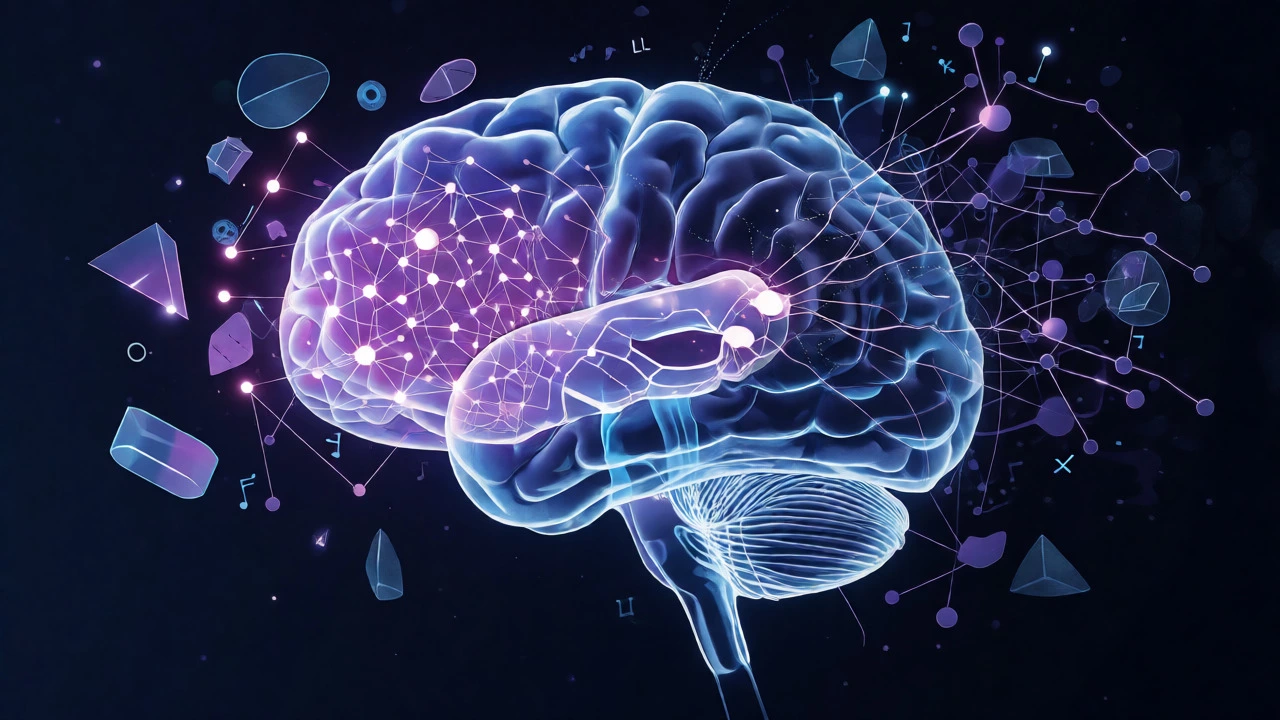
To understand why dyslexia is so pervasive, you have to look at the mechanics of reading. Reading isn’t natural; it’s an invented technology. Our brains weren’t designed to read; they were designed to speak and listen. For most people, the brain quickly automates the connection between visual symbols (letters) and auditory units (sounds). This is called phonological processing.
In individuals with dyslexia, this automation fails. The neural pathways connecting the visual cortex to the language centers in the left hemisphere of the brain are less efficient. Imagine trying to drive a car while manually shifting gears every single time you touch the gas pedal. That’s what reading feels like for someone with severe dyslexia. They spend so much cognitive energy on decoding individual words that they have little mental bandwidth left for comprehension. They can read the word "cat," but they might miss the point of the sentence about the cat chasing the mouse.
This deficit is often hereditary. Research suggests that up to 40% of children with dyslexia have a parent who also struggles with reading. If you struggled in school, there’s a good chance your child might too. This genetic link explains why it persists across generations and demographics.
Signs You Might Be Dealing With Dyslexia
Dyslexia looks different at every age. A toddler might show signs through delayed speech or trouble rhyming. By school age, the signs become more concrete. Here is what educators and psychologists typically look for:
- Phonological Awareness Issues: Difficulty hearing or manipulating sounds in words. For example, being unable to identify that "cat" starts with the /k/ sound.
- Slow Reading Rate: Reading aloud is halting, inaccurate, and requires significant effort.
- Poor Spelling: Spelling is often inconsistent. The same word might be spelled three different ways in one paragraph.
- Trouble with Sequencing: Confusing directions, days of the week, or mathematical procedures.
- Avoidance Behaviors: Children may act out or claim headaches when asked to read, masking their frustration.
It’s important to note that these signs exist on a spectrum. Not everyone with dyslexia reverses letters-that’s largely a media myth. Many adults with dyslexia develop coping strategies that hide their struggles, making diagnosis harder later in life. They might rely heavily on context clues or memorize whole words rather than decoding them.
Beyond Dyslexia: Other Common Contenders
While dyslexia holds the top spot for specific learning disabilities, it rarely travels alone. Comorbidities are common. You might hear terms like dysgraphia (difficulty with writing) or dyscalculia (difficulty with math). These are distinct conditions, though they share similar neurological roots.
| Disability | Primary Challenge | Prevalence Estimate | Key Indicator |
|---|---|---|---|
| Dyslexia | Reading & Phonology | 5-10% | Difficulty decoding words; slow reading speed |
| ADHD | Attention & Impulse Control | 5-7% (children) | Difficulty sustaining focus; hyperactivity |
| Dysgraphia | Writing Mechanics | ~10% (often co-occurs) | Painful handwriting; poor organization of thoughts on paper |
| Dyscalculia | Mathematics | ~5% | Difficulty understanding numbers; poor estimation skills |
Note that ADHD is technically classified as a neurodevelopmental disorder, not strictly a "specific learning disability" in many diagnostic manuals, which is why dyslexia retains the #1 title in that specific bucket. However, nearly 30% of people with ADHD also have a learning disability, most commonly dyslexia. This overlap complicates diagnosis. A child might be misdiagnosed with ADHD because they can’t sit still during reading tasks, when the root cause is actually the frustration of dyslexia.
How Diagnosis Works
If you suspect dyslexia, guesswork won’t cut it. You need a formal evaluation. This usually involves a psychologist or a specialized educational therapist. They don’t just give you a reading test. They look at the whole picture.
The assessment typically includes:
- Intelligence Testing: To rule out general intellectual delays. Most people with dyslexia have normal or high IQs.
- Academic Achievement Tests: Measuring actual performance in reading, spelling, and math against grade-level expectations.
- Phonological Processing Tests: Assessing the ability to hear, store, and manipulate sounds.
- Rapid Naming Tasks: How quickly can the person retrieve names for colors, objects, or letters?
In Australia, where I live, schools often use Response to Intervention (RTI) models before referring for formal diagnosis. This means providing extra support first to see if the student improves. If they don’t, a referral to a pediatrician or educational psychologist follows. Don’t wait for a crisis. Early intervention changes trajectories.

Effective Strategies and Support
There is no cure for dyslexia because it’s not a sickness. It’s a wiring difference. But with the right tools, the struggle diminishes significantly. The gold standard for teaching reading to dyslexic learners is Structured Literacy, often associated with the Orton-Gillingham approach.
This method is explicit, systematic, and multisensory. Instead of guessing words from pictures, students learn rules. They trace letters in sand while saying the sound. They break words into syllables using color-coded blocks. It rebuilds the neural pathways for reading from the ground up.
Technology also plays a huge role now. Text-to-speech software allows users to listen to documents, bypassing the decoding bottleneck. Speech-to-text lets them express ideas without getting stuck on spelling. Audiobooks level the playing field for content consumption. These aren’t crutches; they are accessibility tools, much like glasses are for vision.
For parents and teachers, the emotional component is just as critical as the academic one. Kids with dyslexia often internalize failure. They think they’re stupid. Rebuilding confidence requires celebrating small wins and focusing on strengths. Many successful entrepreneurs, artists, and engineers have dyslexia. Their brains excel at big-picture thinking, creativity, and problem-solving-skills that rote reading tests often miss.
Frequently Asked Questions
Is dyslexia considered a disability?
Yes, dyslexia is classified as a specific learning disability under laws like the Individuals with Disabilities Education Act (IDEA) in the US and similar frameworks globally. It qualifies for accommodations such as extra time on tests, access to audiobooks, and specialized instruction.
Can dyslexia go away?
No, dyslexia is lifelong. However, its impact can change. With proper instruction and practice, individuals develop strong compensatory strategies. An adult with dyslexia may read fluently but still find spelling difficult or tire easily when reading dense technical material.
Does reversing letters mean my child has dyslexia?
Not necessarily. Reversing 'b' and 'd' is common in young children up to age 7 or 8. It becomes a concern if it persists beyond this age alongside other symptoms like difficulty sounding out words or poor reading comprehension. Letter reversal alone is rarely enough for a diagnosis.
Is dyslexia related to intelligence?
No. Dyslexia occurs across the entire IQ spectrum. Many people with dyslexia have superior intelligence. The discrepancy between potential (IQ) and achievement (reading score) is often a key indicator used in diagnosis.
What is the difference between dyslexia and ADHD?
Dyslexia primarily affects language processing and reading. ADHD affects attention, impulse control, and executive function. While they often occur together, they are distinct conditions. A person can have one without the other, though treating both simultaneously yields the best results.